Merino wool is worth it for men's T-shirts in 2026 if you value odour resistance, comfortable layering and packing fewer clothes for travel. It is not the automatic winner for everyday wear: fabric weight, skin comfort and washing requirements matter more than the merino label alone.
- Is merino wool worth it for t-shirts? Yes for travel and layering; not automatically for everyday wear.
- Merino wool resists odour, but it still needs washing when dirty or sweaty.
- Choose fabric weight, fit and care instructions before choosing pure merino over a blend.
- BLKWD suits men shopping for everyday T-shirts; check each garment's composition before comparing it with merino.
Why this matters
A T-shirt that feels good in a fitting room still has to work through your commute, lunch break and washing routine. Merino's useful properties do not cancel out a scratchy neckline, a transparent knit or a cut you dislike.
For your 2026 wardrobe, start with the job the shirt needs to do. If you are comparing shapes as well as fabrics, the men's T-shirts in Australia guide is a useful next step. Buy for the way you wear a T-shirt, not for the fibre name on the label.
Is merino wool worth it for men's T-shirts in 2026?
Merino earns its place when odour resistance and next-to-skin comfort solve a recurring problem for you. Wool absorbs moisture vapour within its fibres and resists odour build-up, making merino useful for travelling and wearing beneath other clothes. Those properties do not make every merino garment cool, soft or suitable for vigorous exercise.
The comparison below separates the material's strengths from the compromises you still need to consider.
| T-shirt material | Best for | Main advantage | Main limitation |
|---|---|---|---|
| Merino wool | Travel and next-to-skin layering | Odour resistance and moisture-vapour absorption | Care requirements and skin feel need checking |
| Cotton | Casual everyday dressing | Familiar feel and broad styling possibilities | Absorbs liquid sweat and can feel damp against your skin |
| Polyester | Exercise where drying matters | Low moisture absorption supports quick drying | Odour retention can be a drawback |
| Merino blend | Combining wool with other fibre properties | Construction can balance comfort, drying and wear resistance | Performance depends on the actual blend and knit |
None of these materials wins every category. A loose, light cotton tee and a dense cotton tee behave differently; the same is true of merino. Compare the finished garments, not just their composition labels.
Pure merino: best for prioritising wool's properties
A label stating 100% merino wool tells you the fibre composition, not whether the shirt will suit your skin or daily routine. Yarn, knit structure, fabric weight and finishing all affect how it feels and wears.
Pure merino makes sense when you specifically want wool's odour resistance and moisture handling. It also gives you a straightforward composition to assess rather than a blend whose balance needs closer reading.
The trade-off is that pure wool is not automatically the right choice for repeated abrasion or an unrestricted washing routine. Check the care label and inspect the knit before deciding it belongs beneath a backpack or in your regular laundry load.
Recommendation: choose pure merino for its wool properties, not as a shortcut to judging quality. A well-made blend can suit your use better than a pure-wool shirt.
Merino blends: best for a particular balance of properties
A merino blend combines wool with another fibre, such as nylon, polyester or elastane. Each addition changes the fabric, but its name alone does not establish the finished shirt's durability, stretch or drying performance.
Read the percentages first. Then look for garment-specific information about construction and care rather than assuming every wool blend offers the same compromise.
The advantage is choice: you can look for wool content alongside other properties that matter to you. The drawback is complexity, because a blend label does not explain how the garment will feel after a day of wear.
Recommendation: choose a merino blend when its stated construction matches your needs. Do not assume a blend is either inferior to pure wool or automatically stronger.
Why merino T-shirt performance varies
The useful question is not simply whether merino is good. It is whether a particular merino shirt fits the conditions in which you will wear it.
- Fibre fineness: finer wool generally feels softer against the skin, but personal sensitivity still matters.
- Fabric weight: a lighter knit provides a different balance of coverage and warmth from a heavier one.
- Knit structure: an open or loose structure changes airflow, opacity and the way the shirt hangs.
- Fibre blend: other fibres change the material's properties; read the full composition rather than the headline description.
- Garment fit: a close-fitting base layer and a relaxed casual tee serve different purposes.
- Care instructions: the recommended wash and dry method determines whether the garment fits your routine.
Use these factors together. A fine fibre does not fix a poor cut, and a suitable cut does not make an unsuitable care routine disappear.
Is merino better than cotton for Australian summer?
Merino is not automatically better than cotton for an Australian summer. A light, breathable construction and a comfortable fit matter more than choosing wool by default.
Cotton is a practical casual option when you like its feel and change into a fresh shirt after sweating. Merino is useful when odour resistance matters, but it does not stop perspiration or guarantee a cooler experience in humid conditions.
For summer 2026, compare coverage as well as comfort. Hold a light-coloured shirt against the light, check how closely it sits around your torso and consider whether you intend to wear anything underneath it.
Best for everyday casual dressing: cotton that suits your preferred fit. Best for odour-conscious travel: lightweight merino that feels comfortable on your skin. Neither recommendation replaces checking the actual garment.
Is merino better than polyester for exercise?
Merino is not the default choice when your main priority is drying quickly after heavy sweating. Polyester absorbs little moisture into the fibre, which supports quick drying, although fabric construction and garment conditions still affect the result.
Merino's advantage is odour resistance, not immunity to sweat. A wet wool shirt still needs time to dry, and wearing it beneath another layer changes the experience again.
Choose according to the activity. Best for drying-focused exercise: a suitable polyester sports tee. Best for lower-intensity wear where odour matters: merino. The limitation of either recommendation is fit: rubbing seams or restricted movement can outweigh a fibre advantage.
How do you choose a merino T-shirt without buying the wrong one?
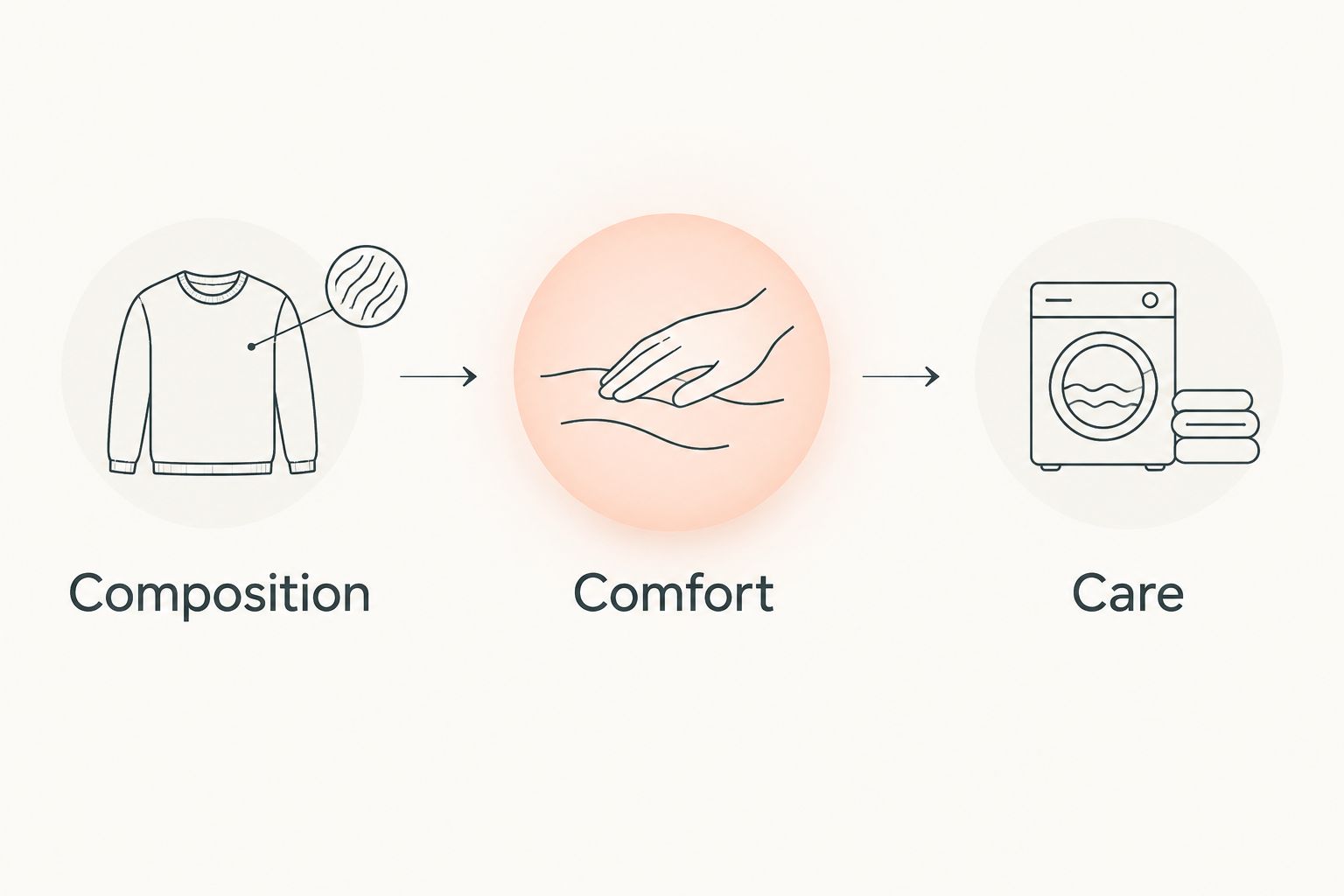
Use 3 checks before adding a merino tee to your 2026 wardrobe: composition, comfort and care. These checks tell you more than an unsupported performance slogan.
- Composition: read the fibre percentages and any stated fabric weight. Decide whether you want pure wool or a blend for a particular reason.
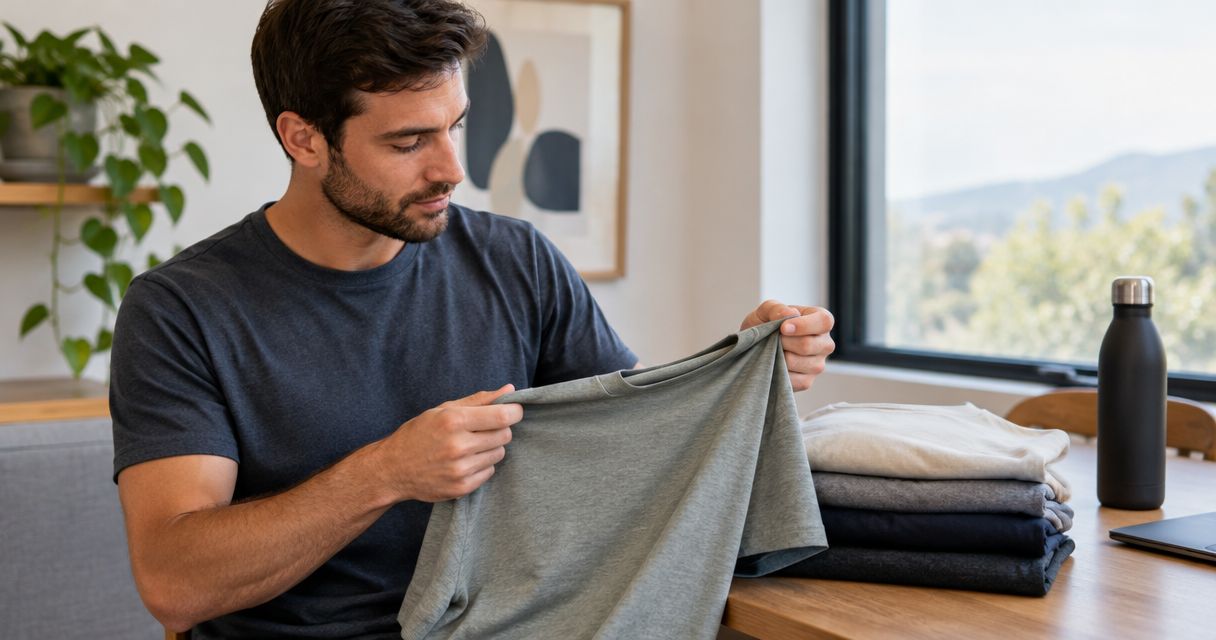
- Comfort: assess the neckline, shoulders, underarms and how the fabric rests against your torso. Move your arms and sit down rather than judging only a standing pose.
- Care: read the washing and drying instructions before purchase. Choose a garment whose routine you will actually follow.
Compare measurements with a T-shirt you already enjoy wearing. The online men's shirt sizing guide helps you approach fit without relying only on a familiar size letter.
Do not replace an entire drawer at once. Start with 1 merino T-shirt as a personal trial, then judge it through your normal wearing and washing routine before buying more.
When an everyday T-shirt makes more sense
BLKWD is best for men shopping for everyday T-shirts to wear alone or under an open shirt. That is a different buying decision from choosing a specialist wool layer for travel.
For example, BLKWD's PERCY - T-SHIRT is a short-sleeve tee in petrol, described for weekend wear or layering beneath an open shirt. Its best use here is as an everyday styling option, not as evidence of merino performance.
The benefit is a clear casual-wear purpose. The limitation is equally important: colour and styling information do not establish fibre performance, so check the garment's composition and care details before comparing it with wool.
You do not need every T-shirt to do the same job. Keep the everyday shape you enjoy wearing, then add merino only where it solves a separate need. Choose BLKWD for everyday T-shirt styling; assess merino separately for its material properties.
How should you wash a merino T-shirt?
Follow the garment's care label rather than applying a single rule to all merino. Some wool garments permit machine washing under specified conditions, while others require a different approach.
Use the recommended detergent and programme. Avoid assuming that a normal hot wash or tumble-drying cycle is suitable, because wool can shrink or felt under unsuitable conditions.
Dry the garment as instructed, supporting its shape where required. If your routine depends on putting every tee through the same unrestricted wash and dry cycle, choose clothing labelled for that routine instead.
Air a shirt between suitable wears, but do not confuse reduced odour with cleanliness. Food spills, visible dirt and accumulated sweat still need proper washing.
FAQ
Is merino wool worth it for T-shirts in 2026?
Merino wool is worth it for T-shirts when odour resistance, travel and next-to-skin layering matter to you. It is not automatically the better choice for casual dressing or drying quickly after exercise.
Can I wear a merino T-shirt in hot weather?
You can wear a merino T-shirt in hot weather, but choose its weight, knit and fit carefully. Wool content alone does not guarantee that a shirt will feel cool.
Is a merino blend better than pure merino?
A merino blend is better only when its particular construction suits your needs better than pure wool. Read the fibre percentages and garment details rather than assuming every blend has the same properties.
Will a merino T-shirt feel itchy?
A merino T-shirt can feel itchy if its fibres or construction irritate your skin. Finer wool generally feels softer, but personal sensitivity makes a wear check important.
Can I machine wash a merino T-shirt?
Machine wash a merino T-shirt only when its care label permits it, using the specified conditions. Do not assume that every merino garment tolerates your usual wash programme.
Does merino stop a T-shirt from smelling?
Merino resists odour build-up, but it does not make a T-shirt odour-proof or remove the need for washing. Clean the garment when it is dirty or needs refreshing.
Should I replace all my cotton T-shirts with merino?
Do not replace all your cotton T-shirts simply because merino offers useful properties. Trial a merino tee for a specific use, then keep the materials and cuts that work for your routine.
One last thing
A fibre label cannot tell you whether you will enjoy wearing the shirt. The most useful test is ordinary use: how it feels at the neckline, whether it hangs the way you like and whether washing it becomes a chore.
For 2026, give merino a specific job before you buy it. If that job is travel or comfortable layering with less odour build-up, it has a clear purpose; if the job is simply a weekend tee, your preferred fit and feel remain the deciding factors.