Yes, you can tailor an off-the-rack suit to fit better, especially by adjusting trouser hems, sleeve length and excess fabric around the waist. The limit is the suit’s construction: shoulders, jacket length and tight areas without spare fabric are harder to change. For a suit purchase in 2026, choose the right shoulders and overall proportions first, then alter the details.
- Can you tailor an off the rack suit? Yes—start with sound shoulder fit and adjust the details.
- Trouser hems and waist shaping are better alteration candidates than major shoulder or jacket-length changes.
- Blkwd sells ready-to-wear menswear; assess each garment’s fit before planning alterations.
- A tailor must inspect seam allowances, sleeve buttons and pocket placement before confirming what is possible.
Can you tailor an off-the-rack suit to fit better?
An off-the-rack suit can fit better after alterations, but tailoring works within the original garment’s shape and available fabric. Taking excess fabric out is generally more straightforward than adding room where no spare cloth exists.
Use this comparison to separate finishing adjustments from changes that need closer inspection. No alteration is guaranteed until a tailor examines the actual suit.
| Alteration | Best for | Benefit | Main limitation |
|---|---|---|---|
| Trouser hemming | Trousers that bunch over your shoes | Sets the finished length and break | Lengthening depends on fabric inside the hem |
| Trouser waist adjustment | A waistband that gaps or feels slightly restrictive | Improves how the trousers sit | Seam allowances and pocket position limit changes |
| Trouser tapering | Excess width through the leg | Refines the silhouette | Removing too much restricts movement |
| Jacket waist shaping | Loose fabric around the torso | Gives the jacket more definition | Over-shaping creates pulling and distorts balance |
| Sleeve shortening | Sleeves that cover too much of your hands | Improves sleeve length | Working buttonholes complicate cuff alterations |
| Shoulder alteration | A specific construction issue assessed by a tailor | Changes the jacket’s underlying shape | Involves structural work rather than simple finishing |
| Jacket shortening | A small length correction approved by a tailor | Adjusts the hem position | Cannot move pockets or button placement proportionately |
For the wider buying decision, the guide to men’s suits in Australia gives you a starting point before you assess individual garments.
Why this matters
A suit that feels comfortable standing still can pull when you sit, reach or walk. Alterations should improve both the appearance and the way you move, not simply make every part tighter.
For your 2026 wardrobe, separate fit problems from style preferences. A clean, comfortable jacket is a fit goal; choosing a narrow trouser leg or a fuller silhouette is a preference. Tell the tailor which result you want rather than asking for the suit to be made smaller everywhere.
Which suit alterations are the best starting point?
Trouser hems: best for correcting excess length
Hemming is a sensible starting point when the waistband, seat and thighs already fit. Wear the shoes you intend to use with the suit so the tailor can pin the hem against the actual footwear.
Decide whether you want a clean line or some fabric resting on the shoe. Neither choice fixes trousers that sag at the waist or pull across the seat; settle those issues before finalising the hem.
Jacket waist shaping: best for removing torso excess
A tailor can shape a jacket through its existing seams where the construction permits. This helps when the shoulders and chest fit but the middle looks loose.
The jacket should still close without strain. If tightening the waist creates diagonal pulling around the fastening, the alteration has gone beyond a clean fit. Aim for shape without tension.
Sleeve adjustments: best for refining the finishing details
Sleeve length is worth checking after the jacket sits correctly on your shoulders. Bring the shirt you plan to wear because its cuffs affect how the finished jacket sleeve looks.
Ask the tailor to inspect the sleeve buttons before agreeing to shortening. Decorative buttons and working buttonholes present different constraints, and shortening from the shoulder is not the same job as adjusting the cuff.
Trouser tapering: best for reducing unwanted leg width
Tapering changes the line of the trouser leg, but it should preserve room at the knee, calf and thigh. Ask the tailor to pin the proposed shape before cutting.
Sit and bend your knees while the trousers are pinned. If fabric catches on your calves or pulls tightly across your thighs, reconsider the taper rather than accepting restricted movement as the price of a slimmer outline.
Which fit problems should you avoid buying?
Choose another size or cut when the suit needs structural rescue before it needs finishing. A different pattern can solve a problem that alterations would otherwise have to work around.
Check the jacket from the front, side and back. Shoulder overhang, a collar that stands away from your neck, a chest that strains and a hem that looks markedly out of proportion all deserve attention before purchase.
These signs do not identify the repair by themselves. A collar gap, for example, needs assessment of the jacket’s balance and your posture; simply taking in the waist does not address every cause.
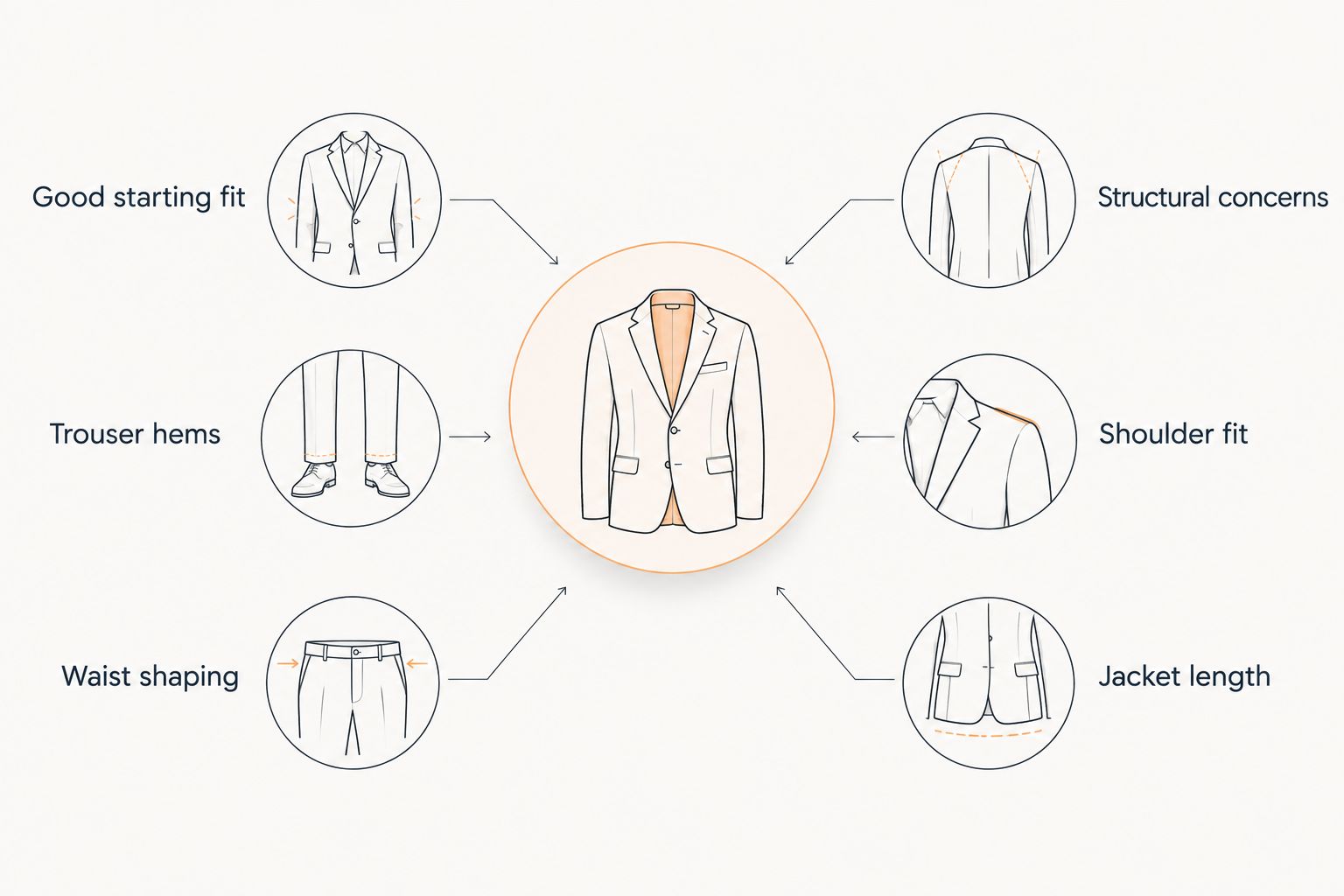
Shortening a jacket also changes the distance between its hem, pockets and buttons. Removing fabric cannot move all those features together, so a shorter jacket is not automatically a better-proportioned jacket.
Why alteration possibilities vary
The same request can involve different work on different suits. These construction details determine what a tailor can change:
- Seam allowances: spare fabric inside a seam provides room for letting a garment out. Without it, adding space requires a different approach rather than a simple adjustment.
- Sleeve buttonholes: working buttonholes constrain how much fabric can come off at the cuff without affecting the button arrangement.
- Jacket structure: shoulder padding, lining and internal construction affect access to seams and the work involved in reshaping them.
- Pocket and vent placement: altering nearby fabric must preserve the way pockets sit and vents hang.
- Fabric pattern: stripes and checks make alignment part of the job. Changes need to preserve a deliberate-looking pattern across adjoining sections.
- Existing alterations: a previously shortened hem or trimmed seam allowance leaves less material for later changes.
Ask the tailor to explain the limiting feature on your suit. A specific answer about cloth, seams or buttonholes is more useful than a general promise that anything can be altered.
How should you prepare for a suit fitting?
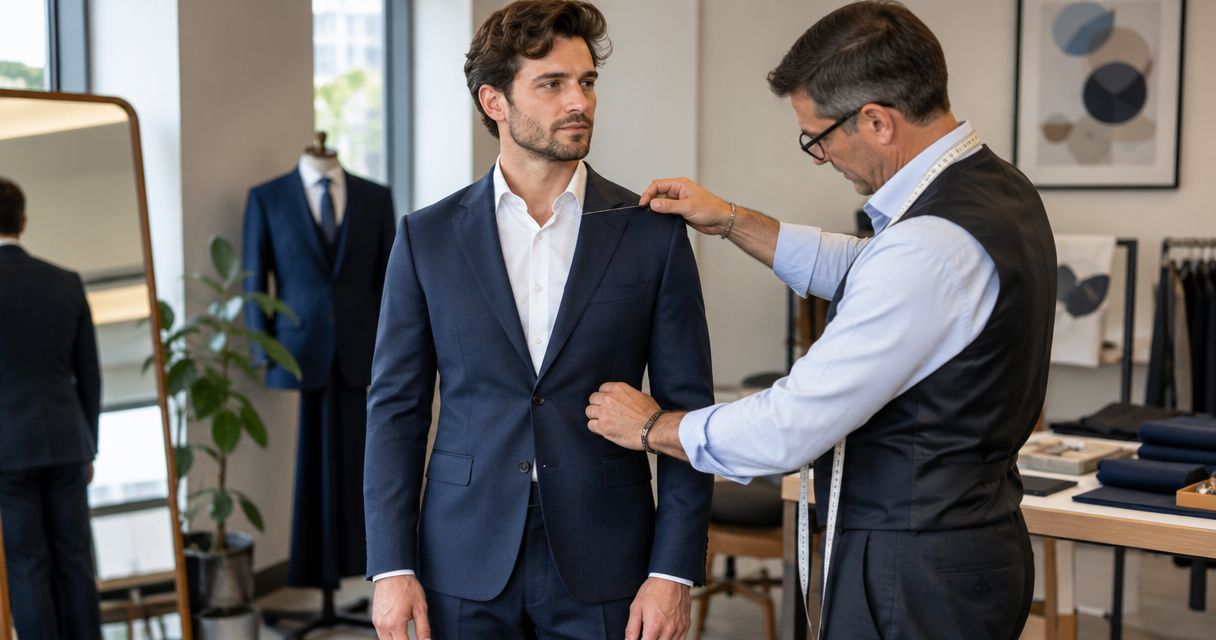
Bring the complete outfit to your 2026 fitting, not just the garment you want changed. Your shirt, shoes and usual trouser support help the tailor assess how the suit will actually sit.
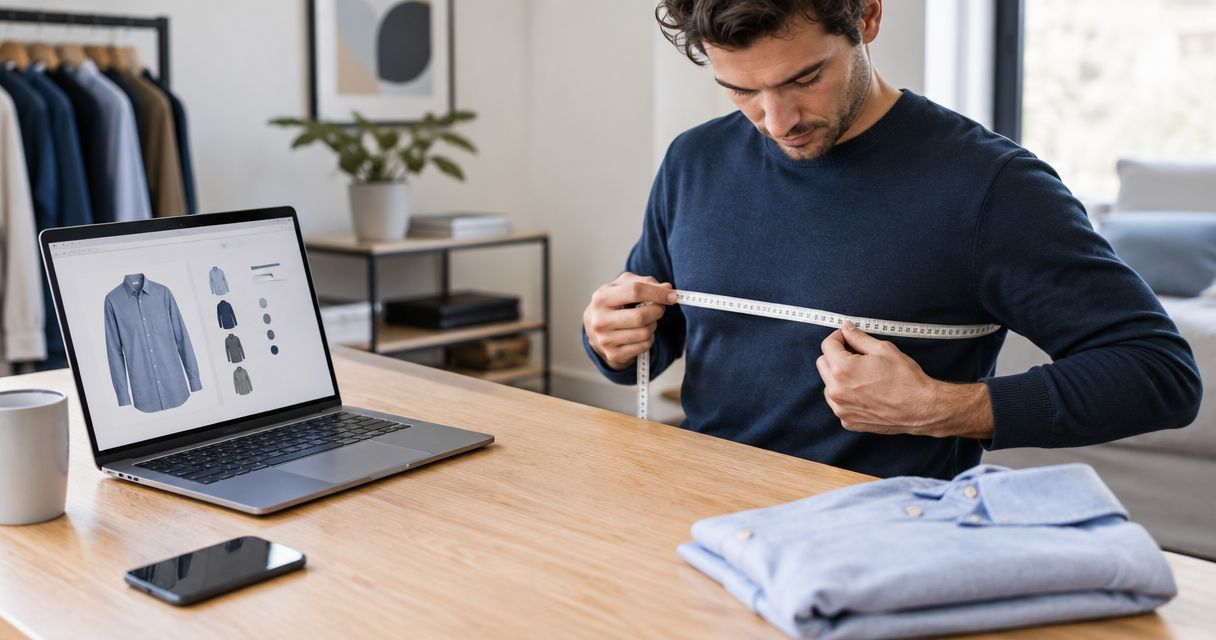
- Wear the intended shirt. Fasten it as you normally would, and let the cuffs sit naturally. Start with how to tell if a men’s shirt fits properly if the shirt itself pulls or bunches.
- Set the waistband. Position the trousers where you intend to wear them. Do not pull them higher just to disguise excess leg length.
- Check the jacket. Stand naturally, with your arms relaxed. Show the tailor the shoulder, collar or fastening issue before discussing a narrower waist.
- Test movement. Sit, walk and reach gently while the proposed adjustments are pinned. Explain where you feel restriction.
- Confirm the finish. Agree on trouser break, sleeve appearance and the overall silhouette before the tailor cuts fabric.
Avoid posing with your chest pushed out or your shoulders held unnaturally back. The finished suit needs to fit your everyday posture, including any natural difference between your shoulders.
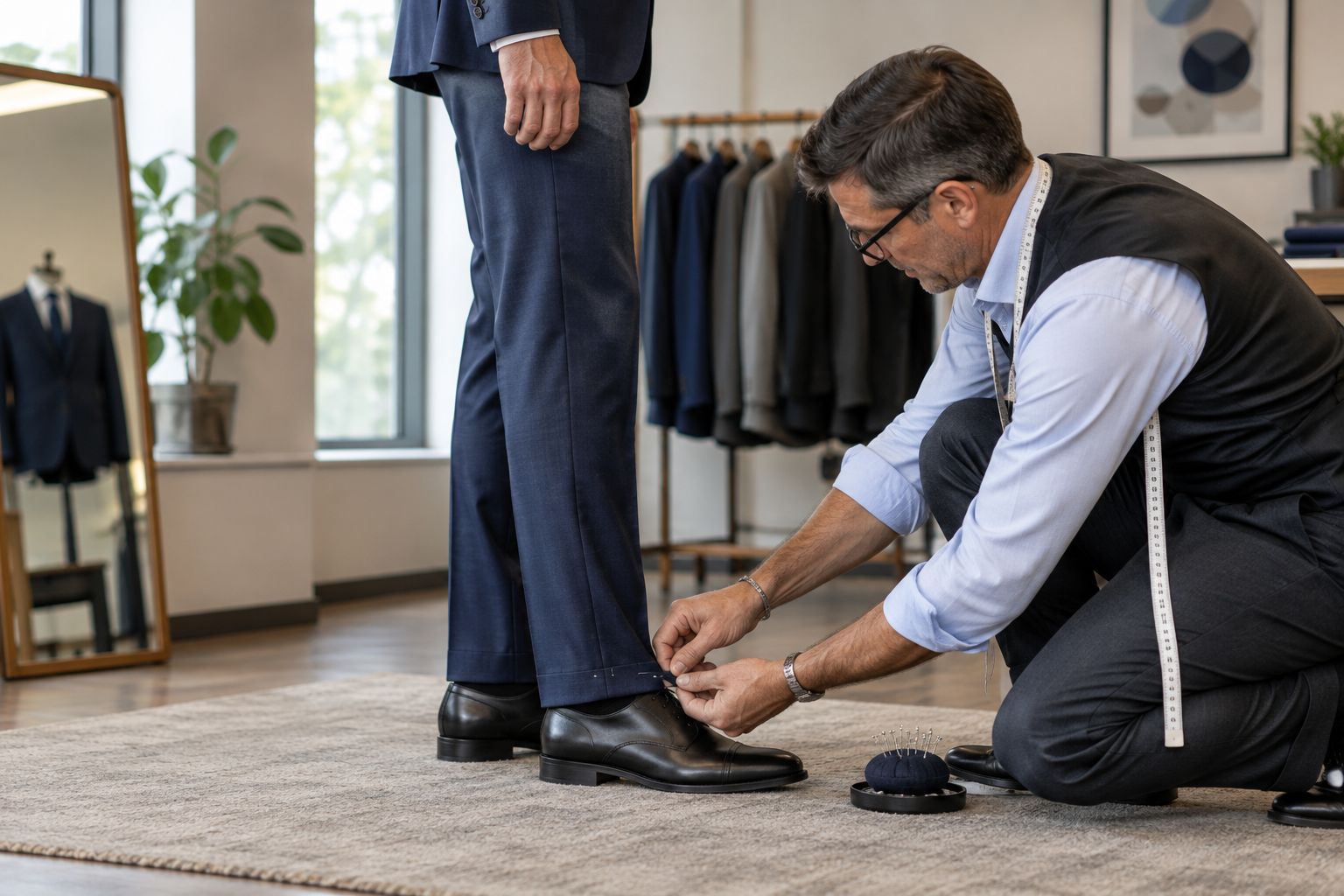
At collection, repeat the movement checks rather than judging the suit only in the mirror. Tell the tailor immediately if an adjusted seam pulls, a vent opens at rest or the trousers no longer move comfortably.
Can you make an off-the-rack suit bigger?
You can make some areas bigger only when the construction and spare fabric allow it. A tailor needs to open or inspect the relevant seams before confirming the available room.
Trouser waists and some jacket seams can contain usable allowances, but their presence is not a promise of a particular size increase. Lengthening sleeves or trousers also depends on the folded fabric inside the existing finish.
Do not buy a tight suit on the assumption that every seam can be let out. If your chest strains against the jacket or the seat restricts sitting, compare another size or cut first.
Can a tailor make a suit slim fit?
A tailor can reduce excess fabric in suitable areas, but cannot turn every suit into a different pattern. Waist shaping and trouser tapering refine the existing silhouette; they do not reposition the jacket’s armholes, pockets or buttons.
Choose a cut close to your preferred silhouette before booking alterations. In 2026, a comfortable regular fit is still a valid choice; tailoring does not require the narrowest possible result.
Is tailoring better than buying another suit?
Tailoring is the better next step when the suit’s structure fits and the remaining issues are local adjustments. Another suit is the better starting point when the shoulders, chest or overall proportions are wrong.
Ask a tailor to assess the garment before committing to extensive changes. For an existing suit, explain what bothers you and ask which adjustments address that problem without introducing another one.
How should you shop for clothes you plan to alter?
Blkwd is best for men seeking ready-to-wear shirts and blazers for smart-casual dressing. The retailer also sells suits, but you should assess each garment on its own fit rather than assuming a familiar size will behave identically across different cuts.
When browsing Blkwd, treat the listed fit and product description as a starting point, not an alteration assessment. The benefit of ready-to-wear is choosing an existing garment; the limitation is working within its original pattern and construction.
Keep the dress code separate from the tailoring decision. A well-fitted blazer with contrasting trousers is not a matching suit, and changing its fit does not change that distinction. For an event outfit, the wedding guest blazer guide helps you consider that alternative.
FAQ
Can you tailor an off the rack suit after you’ve worn it?
Yes, a tailor can assess a suit you already wear. Explain what feels wrong, and bring the shirt and shoes you normally wear with it so the proposed changes suit the complete outfit.
Can a tailor fix suit shoulders that are too wide?
Shoulder alterations are structural work, not a simple finishing adjustment. Have a tailor inspect the jacket, and compare another size or cut before committing to reconstruction.
Can you lengthen suit trousers that are too short?
You can lengthen suit trousers only if the existing hem contains enough usable fabric. A tailor must also assess whether the old fold or wear marks will remain visible.
Should I buy a suit bigger so it can be tailored?
Do not deliberately buy an oversized suit just to have it reduced. Start with shoulders, chest and overall proportions that fit, then assess local areas of excess fabric.
Can a tailor shorten jacket sleeves with working buttonholes?
Working buttonholes complicate sleeve shortening because the cuff and button placement must remain workable. Ask a tailor to inspect the sleeve construction before confirming the method.
Do I need to bring shoes to a suit fitting?
Yes, bring the shoes you intend to wear with the suit. They let the tailor pin the trouser hem against the actual shape and height of your footwear.
Can I assume a Blkwd suit includes alterations?
Do not assume a Blkwd suit includes alterations. Confirm any alteration arrangements separately before planning your fitting or event outfit.
One last thing
A tighter suit is not necessarily a better-fitting suit. Closing vents, clean lapels and comfortable movement tell you more than how closely the cloth follows your body.
Before your final fitting in 2026, write down the original problem: sleeves covering your hands, trousers pooling over shoes or loose fabric around the waist. Check that the finished alteration solves that problem without creating a new restriction.