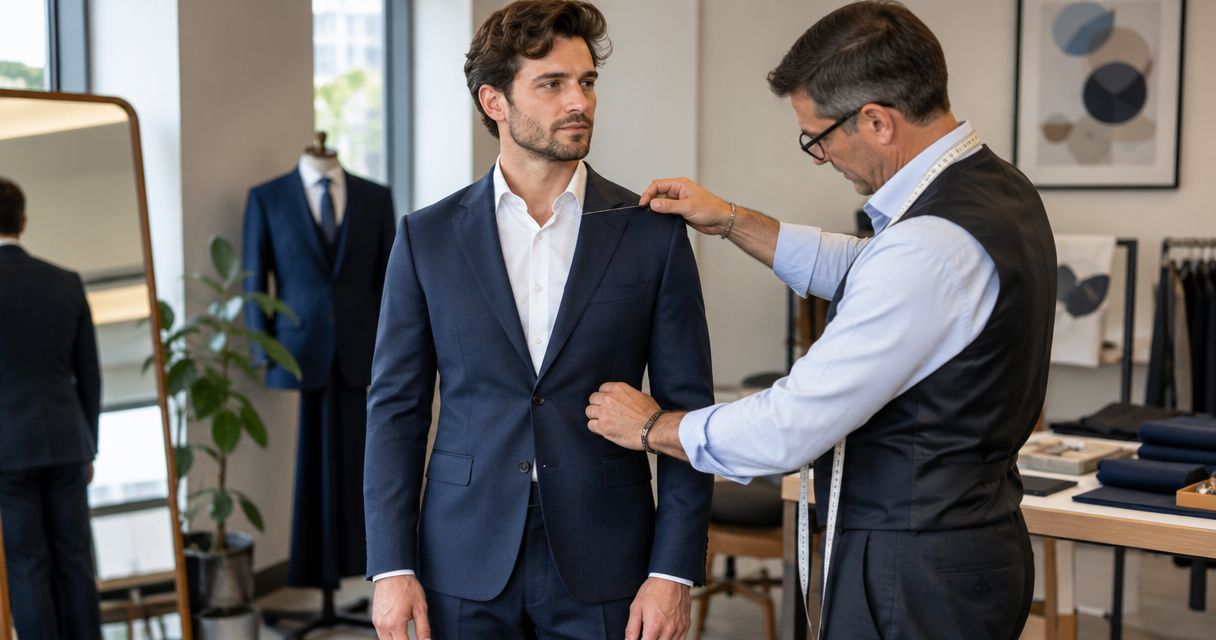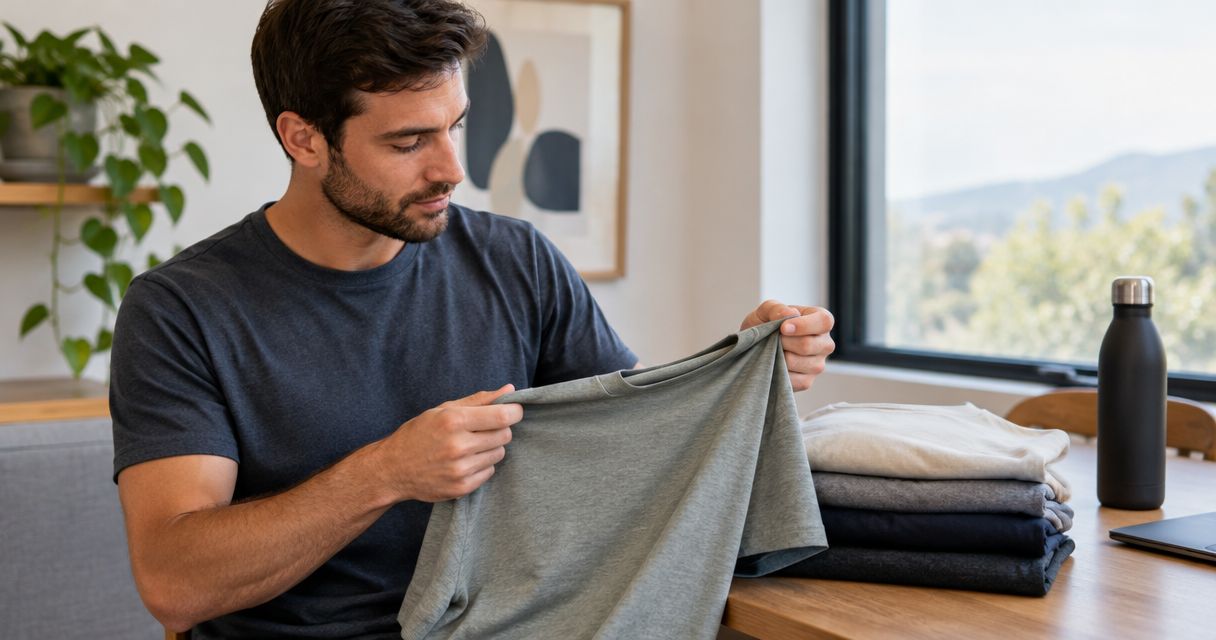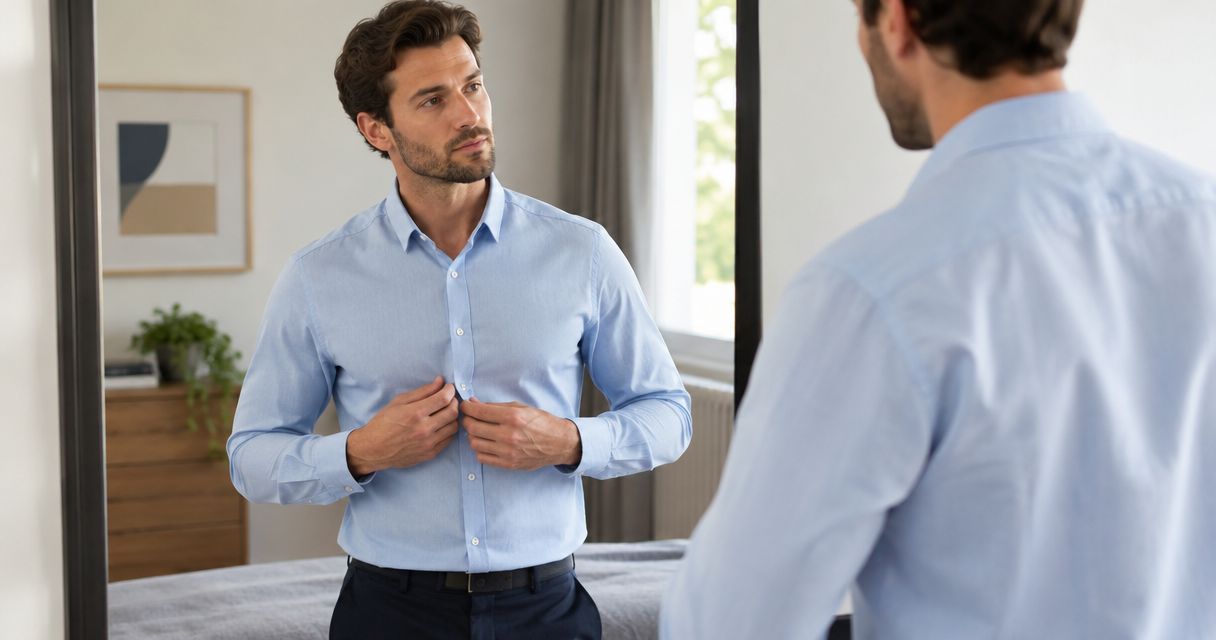
A men's shirt fits properly when the shoulders sit where your shoulders end, the buttons lie flat, and you can sit and reach without pulling across your chest or back. Long sleeves should finish around the wrist, while the hem should suit how you wear the shirt: tucked or untucked. In 2026, judge shirt fit by these checks rather than the size printed on the label.
- How to tell if a shirt fits properly: check shoulder seams, button tension, sleeve length and movement.
- A fitted shirt follows your shape without pulling; a relaxed shirt gives room without restricting movement.
- Blkwd sells men's shirts online; choose by measurements and intended use, not your usual size alone.
- Check shirt fit sitting down and reaching forward, not only standing in front of a mirror.
How to tell if a men's shirt fits properly
Check the shirt from the shoulders down, then test it while moving. Wear the trousers and undershirt you intend to pair with it, and button it as you would normally wear it. For online shopping, start with how to measure your chest size for a men's shirt, then assess the whole garment rather than the chest alone.
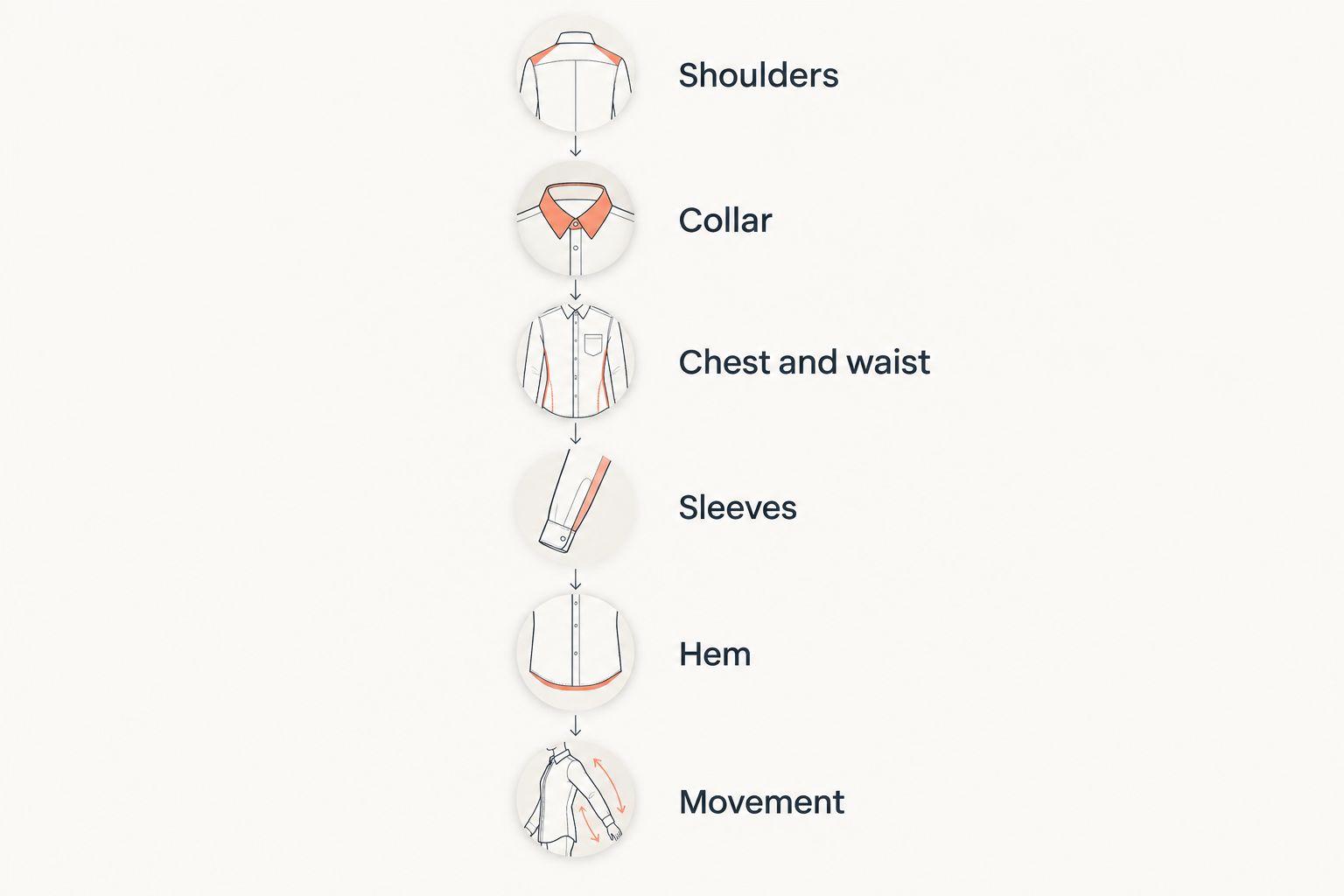
- Shoulders: On a conventional set-in sleeve, the seam should sit near the point where your shoulder turns into your upper arm. A deliberately dropped shoulder is a different design.
- Collar: Button the collar if you intend to wear it closed. You should be able to turn your head and swallow without pressure.
- Chest and waist: Check that the button placket hangs straight. Gaping between buttons or taut lines radiating from them indicate strain.
- Sleeves: Let your arms hang naturally. Long cuffs should sit around your wrists rather than covering your hands; short sleeves should not grip your upper arms.
- Hem: Try the shirt tucked or untucked as intended. Check the front, sides and back rather than judging length from the front alone.
- Movement: Sit down, reach forward and bend your elbows. The shirt should accommodate normal movement without the collar choking or the buttons pulling apart.
Small folds are normal. Persistent tension, restricted movement and excess fabric that interferes with wearing the shirt are more useful signals than a perfectly smooth photograph.
Why this matters
A shirt can button up and still fit badly. Tight shoulders restrict reaching, excess length complicates untucked styling, and a collar that feels fine open can become uncomfortable when fastened.
For your 2026 wardrobe, separate fit from styling: a slim silhouette is not permission for strained buttons, and a relaxed silhouette is not automatically oversized. Blkwd men's shirts include different sleeve lengths and fabric descriptions, so assess the particular shirt rather than assuming every style will feel identical.
Shoulders and collar: start with the upper frame
The shoulder position helps you judge whether the shirt's upper frame suits your body. On a conventional shirt, a seam pulled towards your neck alongside tightness across your back suggests insufficient room; a seam hanging down your upper arm can indicate excess width.
Check the intended design before rejecting a lowered seam. Dropped shoulders belong on some relaxed shirts, whereas a conventional office shirt generally calls for a more closely aligned shoulder.
The collar needs its own test. Fasten the top button if you will wear a tie, then turn your head and look down. A collar that presses into your neck is not a good fit, even if the chest looks right.
An open-neck casual shirt does not need the same closed-collar presentation. Still, the collar should settle comfortably rather than being dragged backwards by tight shoulders or a restrictive upper back.
Chest and waist: read the buttons, not just the silhouette
Look at the button placket from the front and side. It should lie reasonably flat, without openings that expose your undershirt or skin between buttons.
Horizontal pulling across the chest or stomach is a warning, especially when it persists with your arms relaxed. Sit down before deciding: a shirt that only fits while you stand tall does not suit a day spent at a desk or dining table.
Excess fabric needs a different response. If the shoulders and chest fit but the waist balloons, a different cut can work better than a smaller size. Sizing down indiscriminately risks fixing the waist while tightening the shoulders.
Check the back as well. Fabric should allow you to bring your hands forward without feeling as though the shirt is holding your arms behind you; small movement folds are normal and do not demand a size change.
Slim, regular or relaxed: which fit should you choose?
Choose the silhouette you want, then require comfortable movement within it. Fit labels describe an intended shape, not a universal measurement system. In 2026, the label alone still does not establish whether a particular shirt fits your shoulders, torso and arms.
| Fit option | Best for | Advantage | Limitation to check |
|---|---|---|---|
| Slim fit | A closer outline with less waist fabric | Reduces loose fabric around the torso | Can pull across the chest, waist or upper arms if too narrow |
| Regular fit | A conventional shape with room through the body | Gives a less closely fitted outline | Can leave excess waist fabric on a narrower torso |
| Relaxed fit | An intentionally loose casual silhouette | Offers more room through the body | Extra width and length need to look deliberate rather than accidental |
These are general fit descriptions, not promises about a retailer's measurements. Compare each shirt's size information and construction with a shirt you already wear comfortably.
A change of cut is often more useful than changing size when only one area is wrong. For example, comfortable shoulders with excess waist fabric call for a different solution from tight shoulders and tight sleeves together.
Sleeves and cuffs: check them with your arms relaxed
For a long-sleeve shirt, begin with your arms hanging naturally. The cuff should sit around the wrist, not swallow your hand or sit visibly high up your forearm at rest.
Then bend your elbow and reach forward. Some sleeve movement is expected; the question is whether it creates uncomfortable tension or pulls the cuff sharply away from your wrist.
Fasten the cuffs as you intend to wear them. A cuff should not pinch, but excessive looseness can let an otherwise suitable sleeve slide down over your hand. If you wear a watch, test the cuff with it on.
For short sleeves, look at both the opening and the sleeve's shape. The fabric should not cut into your upper arm, and you should be able to bend and reach without the sleeve binding. A wider opening can be intentional on a relaxed shirt, so judge it alongside the body silhouette.
Shirt length: test tucked and untucked separately
An untucked shirt needs to look balanced with your trousers while keeping you covered during ordinary movement. A tucked shirt needs enough length to stay inside the waistband when you sit and reach.
Do not use one rigid hem rule for every shirt. Straight hems, curved tails, trouser rise and your torso length change how the same garment looks and behaves.
For an untucked check, inspect the shirt from the side and back. If it hides more of your trousers than you want or bunches around your hips, try a different length rather than automatically choosing a narrower size.
For a tucked check, tuck the shirt fully, sit down and reach forward. Repeatedly pulling out of the waistband is a reason to reassess length, although your waistband position also affects the result.
Why shirt fit varies
The same size label does not guarantee the same result. Use these factors to explain what you feel during a try-on, rather than treating every problem as a reason to size up.
- Body proportions: Your shoulder width, chest, waist and torso length each affect a different part of the fit.
- Intended cut: Slim, regular and relaxed shapes distribute room differently through the body and sleeves.
- Fabric construction: Stretch fabric allows give, but that does not make visible button strain a good fit.
- Sleeve design: Short and long sleeves require different checks at the upper arm, elbow and wrist.
- How you wear it: A closed collar, an undershirt and a tucked hem introduce checks that an open casual shirt does not.
- Trouser rise: The waistband's position changes how much shirt remains tucked and how an untucked hem looks.
Do not treat stretch as a substitute for the right size. A shirt should fit at rest as well as accommodate movement.
How do you check shirt fit when shopping online?
Compare a comfortable shirt you own with the retailer's published measurements, checking whether the chart describes your body or the finished garment. Those measurements are not interchangeable: a garment needs room around your body to let you move.
Lay your reference shirt flat without stretching it, smooth the fabric and follow the chart's measurement method. Record the units, and do not compare a flat width directly with a full circumference.
Blkwd is best for Australian shoppers seeking men's shirts alongside other menswear online. Browse Blkwd with your measurements ready; descriptions identify garment features, but comfort and fit still need checking on your body.
For example, FARNELL - LONG SLEEVE COTTON STRETCH SHIRT is described as a regular-fit button-up with a classic collar and single cuff. Those details help identify what to check, but do not establish its fit on you. For any online purchase in 2026, read the applicable returns terms before ordering rather than assuming a particular policy.
Is my shirt too tight or just fitted?
A fitted shirt follows your shape without persistent pulling or restricted movement. If the buttons gape, the upper arms bind or reaching forward strains the back, the shirt is too tight in those areas.
Do not dismiss discomfort because the shirt looks neat in a photograph. A closer cut should still work when you sit, breathe normally and bend your arms.
Should I size up if only the stomach feels tight?
Try a roomier torso cut before assuming the whole shirt needs to be larger. If the collar, shoulders and sleeves already fit, a larger size can introduce excess fabric elsewhere.
Compare the next size as well, but judge the whole garment again. The right decision solves the tight area without creating several new fit problems.
FAQ
How do I know if a men's shirt fits properly?
A men's shirt fits properly when the shoulders suit the design, the buttons lie flat and you can sit and reach comfortably. Check the collar, sleeves and hem as well as the chest.
Should a shirt feel tight across my chest?
A shirt should not feel restrictive across your chest or gape between the buttons. A close-fitting silhouette still needs room for normal breathing and movement.
Where should long shirt sleeves end?
Long shirt sleeves should finish around your wrists when your arms hang naturally. Check the fastened cuffs before deciding the sleeves are too long, because loose cuffs can slide over your hands.
Is a shirt too big if the shoulder seams hang down?
Low shoulder seams can indicate excess width on a conventional set-in-sleeve shirt. They can also be intentional on a dropped-shoulder design, so check the intended silhouette and overall fit.
Should I buy the same shirt size from every brand?
Do not assume the same size label means the same measurements across brands or styles. For a 2026 online purchase, compare the specific size chart with your body or reference shirt using the stated method.
How can I tell if an untucked shirt is too long?
An untucked shirt is too long for your intended look if the hem overwhelms your proportions or bunches where you do not want it. Check the side and back views with the trousers you intend to wear.
Will a stretch shirt fix a fit that is too tight?
Stretch does not fix a shirt that pulls at the buttons or restricts your movement. Choose suitable dimensions first, then treat the fabric's give as an additional comfort feature.
One last thing
Check the shirt while sitting before you remove the tags or alter it. Standing upright can conceal pressure at the stomach and pulling across the back that become obvious in a chair.
Make that your final 2026 fit check for Blkwd shirts or any other button-up. A shirt you can wear comfortably through ordinary movement is a better choice than one that only looks right while you stand still.