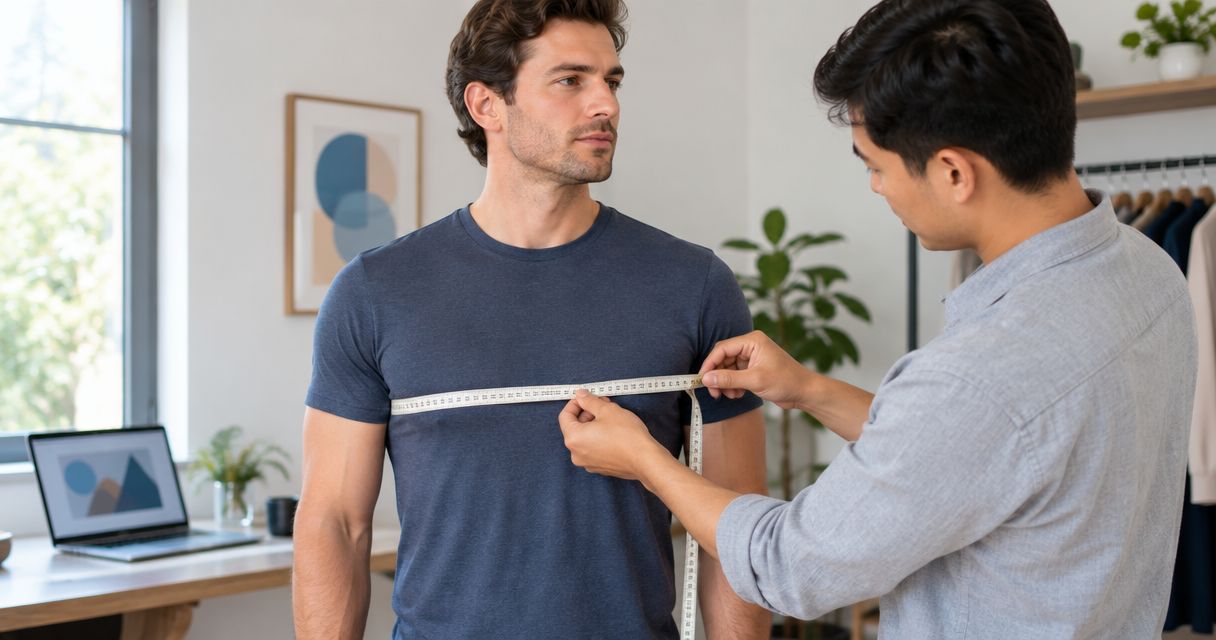
To measure your chest size for a men's shirt, wrap a flexible measuring tape around the fullest part of your chest, under your armpits and across your shoulder blades. Keep the tape level, lower your arms, breathe normally and record the measurement without pulling the tape tight. Then check whether the shirt's size chart lists body measurements or finished garment measurements: they are not interchangeable.
- How to measure chest size for shirt sizing: keep the tape level around your fullest chest, with arms relaxed.
- Body chest circumference and a shirt's flat chest width are different measurements; check the size chart's instructions.
- Blkwd sells men's shirts online; use the relevant sizing information rather than assuming your usual letter size.
- Measure your body without adding extra room; assess fit allowance separately when comparing finished garment measurements.
Why this matters
An accurate chest measurement only helps if you compare it with the right kind of size chart. A body measurement describes you. A garment measurement describes the shirt, including the space its cut provides around your torso.
For your 2026 shirt purchases, save the measurement and its unit rather than relying on a familiar size label. Blkwd is best for men who want shirts and other menswear from an Australian online retailer. Online shopping lets you compare styles, but you still need to check the sizing instructions before choosing a size.
How do you measure your chest size for a men's shirt?
Use a flexible dressmaker's tape and measure around your body, not across the front alone. A mirror helps you check the tape at the back; another person makes it easier to keep your arms relaxed while reading the result.
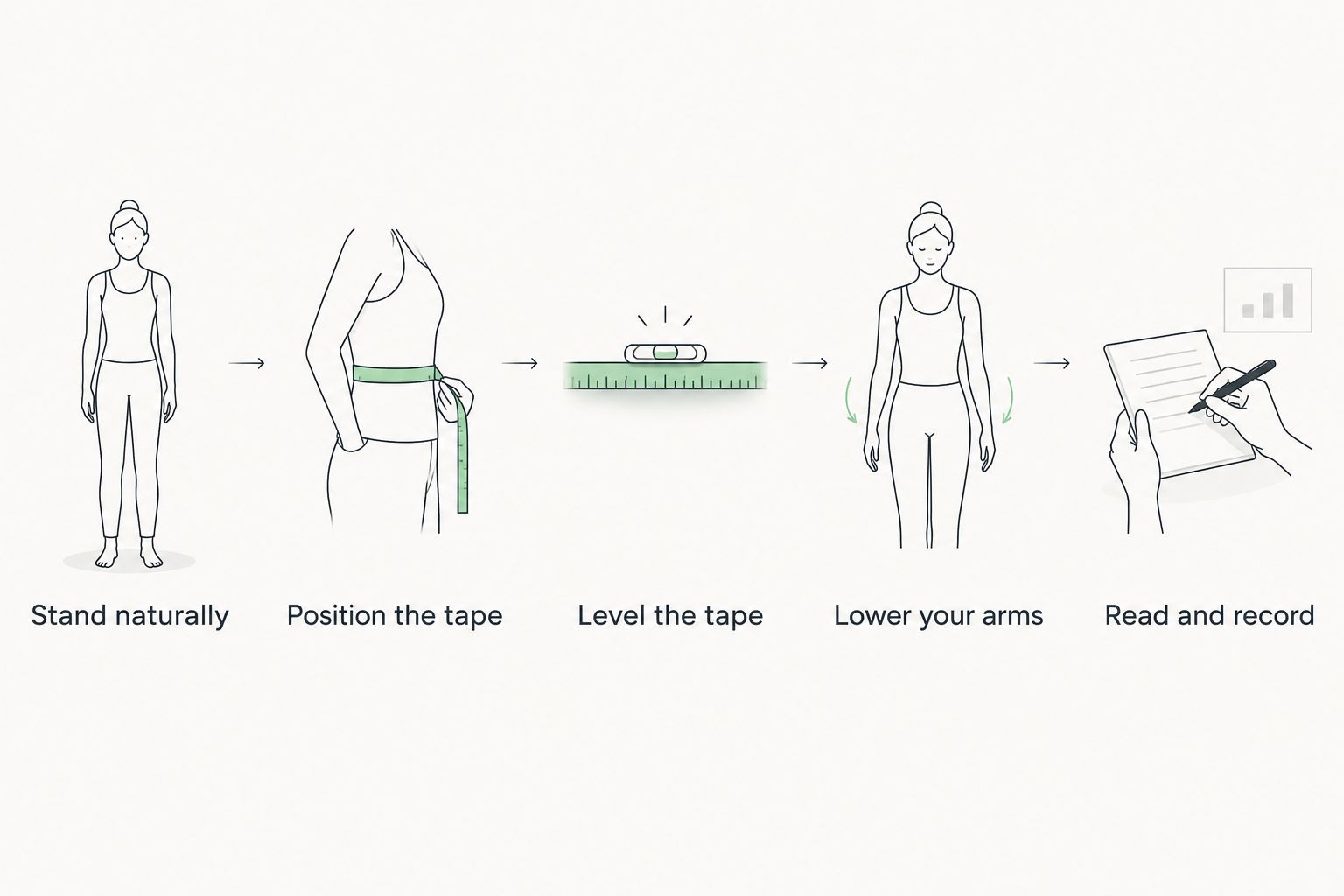
- Prepare the tape. Check that it lies flat and that you are reading the intended scale. Measure against bare skin or over a thin, close-fitting layer, not a jumper or jacket.
- Stand naturally. Keep your feet comfortable, shoulders relaxed and chest in its usual position. Do not stand to attention, puff out your chest or deliberately pull your shoulders back.
- Position the tape. Pass it under your armpits and around the fullest part of your chest. Across your back, it should pass over your shoulder blades rather than dropping towards your waist.
- Level the tape. Check the front, sides and back. A diagonal tape follows a different path around your body and makes the result less useful for a standard chest measurement.
- Lower your arms. Raise them only to position the tape, then let them rest naturally. Keep the tape in contact with your body without pressing it into your skin.
- Read and record. Breathe normally, take the reading without holding an exaggerated breath, then remove and reposition the tape to check that you can reproduce it.
Write down the result as a body chest circumference, including centimetres or inches. Do not add a fit allowance to this number: the purpose is to record your body, not to estimate the finished shirt.
Check the measurement before choosing a size
If repeated readings differ, inspect the tape rather than averaging results taken in different positions. Check whether it slipped at the back, twisted under an arm or tightened as you reached down to read it.
For a 2026 sizing note you can reuse, record the date, unit and measuring method together. Keep a body measurement separate from any measurements taken from a favourite shirt.
Body chest measurement versus shirt chest measurement
Measure your body for a body-size chart; measure a shirt for a garment-size chart. The words beside the measurement matter more than the size label at the top of the column.
| Measurement | How you take it | Best for | Main limitation |
|---|---|---|---|
| Body chest circumference | Wrap the tape around your fullest chest | Charts that specify body measurements | Does not describe the shirt's finished dimensions |
| Flat shirt chest width | Measure a laid-flat shirt across the chest at the stated points | Charts labelled flat width or half chest | Measures the garment, not your body |
| Finished shirt chest circumference | Follow the retailer's garment-measuring instructions | Charts specifying garment circumference | Includes the shirt's fit allowance |
A flat width is not a circumference. When the measuring instructions specify a straight half-chest width, doubling that width gives the corresponding garment circumference; it does not give the wearer's body measurement.
Do not double a number already labelled circumference. Equally, do not compare your full chest measurement directly with a column labelled half chest.
How to measure a shirt you already like
Choose a shirt that fits the way you want the new shirt to fit. A relaxed weekend shirt is not a useful reference if your goal is a close-fitting shirt to wear under a blazer.
Button the shirt, lay it on a flat surface and smooth the fabric without stretching it. Follow the new retailer's measuring points exactly: if the instructions specify underarm to underarm, measure straight across between those points.
Record the flat width separately from your body measurement. Also note the reference shirt's fabric and fit, because a stretchy shirt worn close to the body is a different starting point from a loose woven shirt.
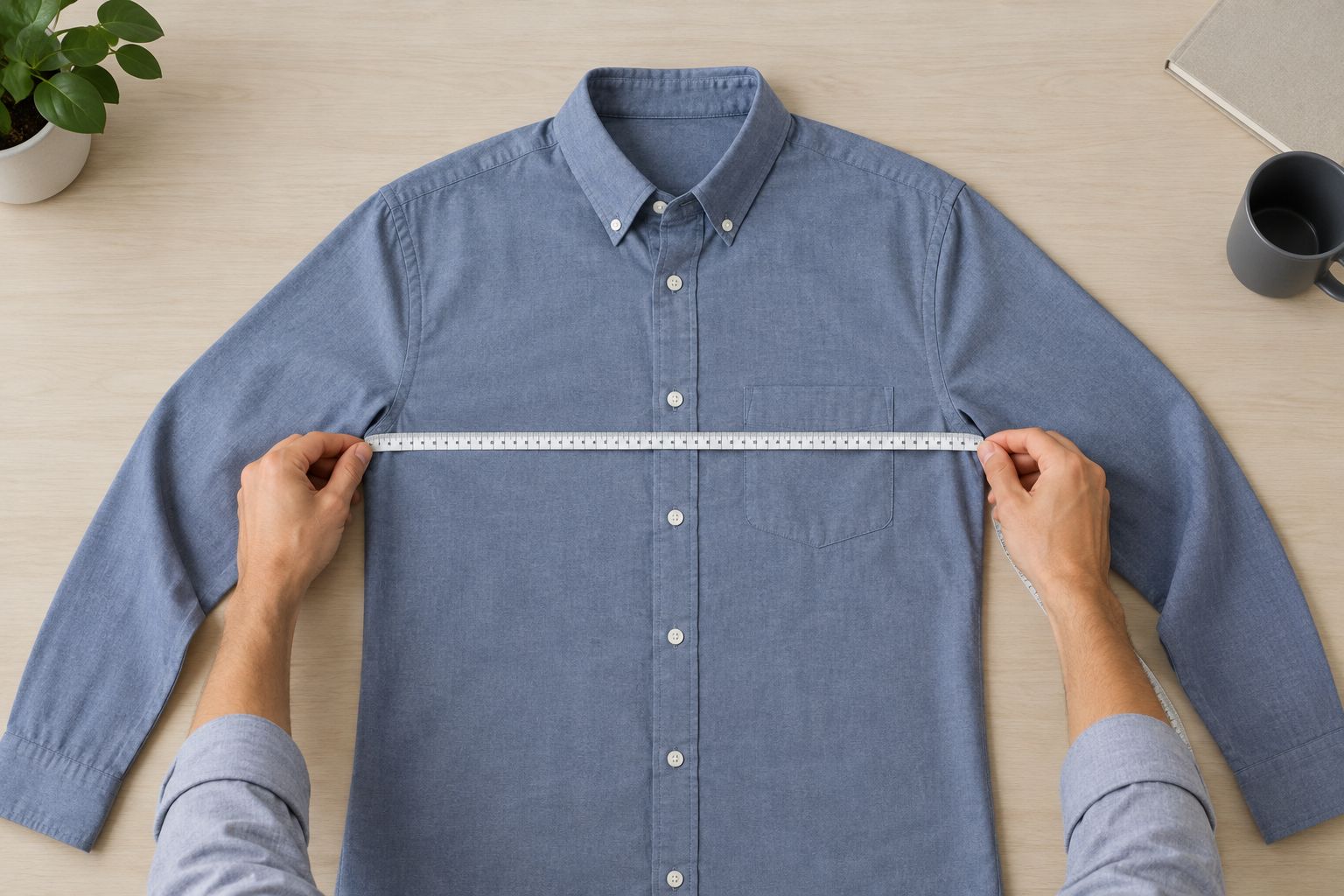
The benefit of measuring a favourite shirt is that you already know how it feels when worn. The limitation is equally important: the comparison only works when both shirts are measured using the same method.
How do you use your chest measurement on a size chart?
Start with the chart's instructions, not the size you normally buy. For a 2026 online shirt order, check the measurement type, units and stated fit before selecting a size.
- Body chart: compare your unadjusted body chest circumference with the stated body range.
- Garment chart: compare the finished dimensions with a well-fitting reference shirt measured the same way.
- Unclear chart: ask whether the numbers refer to the body or garment before treating them as equivalent.
- Several measurements: check the chest alongside the shoulders, waist, collar and sleeves wherever those measurements are provided.
A shirt can fit across your chest and still pull at the waist. It can also have enough chest room while sitting poorly across the shoulders, so the chest number is a starting point rather than a complete fit assessment.
Keep centimetres and inches separate
1 inch equals exactly 2.54 centimetres. Convert measurements before comparing them, rather than reading a centimetre value against an inch-based chart.
Also remember that 1 centimetre equals 10 millimetres, and 1 metre equals 100 centimetres. These are unit conversions, not shirt-sizing rules; none tells you which letter size to buy.
Keep the original reading in your notes if you convert it. Repeated rounding between units adds avoidable confusion when you return to the chart later.
Why the right shirt size varies
Your chest measurement stays a body measurement, but the shirt you choose depends on more than that single figure. These factors explain why the same size label is not enough.
- Measurement type: body circumference, garment circumference and flat width describe different things. Identify the type before comparing numbers.
- Cut: a close-fitting cut and a relaxed cut aim for different shapes. Choose the silhouette you want rather than expecting every shirt to fit alike.
- Fabric stretch: stretch affects how fabric responds when you move. It does not remove the need to check dimensions or justify choosing a visibly strained shirt.
- Body proportions: chest, waist and shoulders do not increase in identical proportions for everyone. Check the area that restricts movement rather than sizing from the chest alone.
- Intended use: a shirt worn over a tee needs to accommodate that layer. A shirt worn beneath a blazer also needs to sit comfortably through the shoulders and sleeves.
- Measurement technique: raised arms, bulky clothing and a sloping tape change what you record. Repeat the same method whenever you update your measurement.
Do not apply a universal extra-room formula to every shirt. Follow a body chart directly, or assess finished garment dimensions against a suitable reference shirt.
Should you size up if your chest is between sizes?
Sizing up is not an automatic answer when your chest falls between sizes. Check the stated fit, the other body measurements and any guidance accompanying the chart before deciding.
A larger shirt gives you different dimensions beyond the chest, including its length and shoulder placement. A smaller shirt can restrict movement or pull across the buttons, so judge the whole garment rather than solving one measurement in isolation.
If the sizing information leaves the choice unresolved, ask the retailer for clarification. For a 2026 purchase, use the information attached to the shirt you are considering rather than an old chart saved from another style.
Can you measure your chest without a tape measure?
You can measure your chest with non-stretch string and then measure the string against a ruler. Follow the same level path around the fullest chest, mark the meeting point and lay the string straight without pulling it longer.
A flexible measuring tape is easier to read while it is around your body. String is a fallback, not a reason to skip checking the tape path or recording the unit.
How do you check whether a shirt fits across the chest?
A shirt fits across the chest when it allows normal breathing and movement without persistent pulling at the fastening. Button it as you intend to wear it, then sit down, reach forward and move your arms naturally.
Look for gaps between buttons or diagonal tension lines across the front. Also check the shoulders and upper back: chest room alone does not guarantee that the shirt moves comfortably with you.
FAQ
Where exactly should I put the tape to measure my chest?
Place the tape around the fullest part of your chest, under your armpits and across your shoulder blades. Keep it level all the way around and read it with your arms relaxed.
Should I breathe in when measuring my chest for a shirt?
Breathe normally rather than taking and holding an exaggerated breath. Keep your posture relaxed and repeat the measurement after repositioning the tape.
Do I add extra centimetres to my chest measurement?
Do not add extra centimetres when recording your body chest circumference. Compare that unadjusted measurement with a body chart; assess fit allowance separately when using finished garment measurements.
Is pit-to-pit the same as chest circumference?
Pit-to-pit is a flat garment width, not your body chest circumference. Follow the retailer's measuring instructions before doubling a flat width or comparing it with another chart.
Can I use my T-shirt size to choose a button-up shirt?
Do not use your T-shirt size as the only basis for choosing a button-up shirt. Check the shirt's chart, fabric and cut because a familiar letter size does not establish its dimensions.
How should I choose a Blkwd shirt size online?
Choose a Blkwd shirt size by checking the sizing information relevant to the shirt and identifying whether it describes body or garment measurements. Compare like with like, and ask for clarification if the measurement method is unclear.
Should I measure over a shirt or against my skin?
Measure against bare skin or over a thin, close-fitting layer for a body chest measurement. Avoid bulky clothing because you would be measuring around that clothing as well as your body.
One last thing
The most useful measurement is the one you can reproduce. Before saving your 2026 sizing notes, remove the tape completely and measure again from the beginning. Matching the method matters more than recording an unusually precise result from a twisted tape.
Keep your body circumference and favourite shirt's flat width on separate lines. That simple distinction prevents you from comparing two numbers that describe different things.