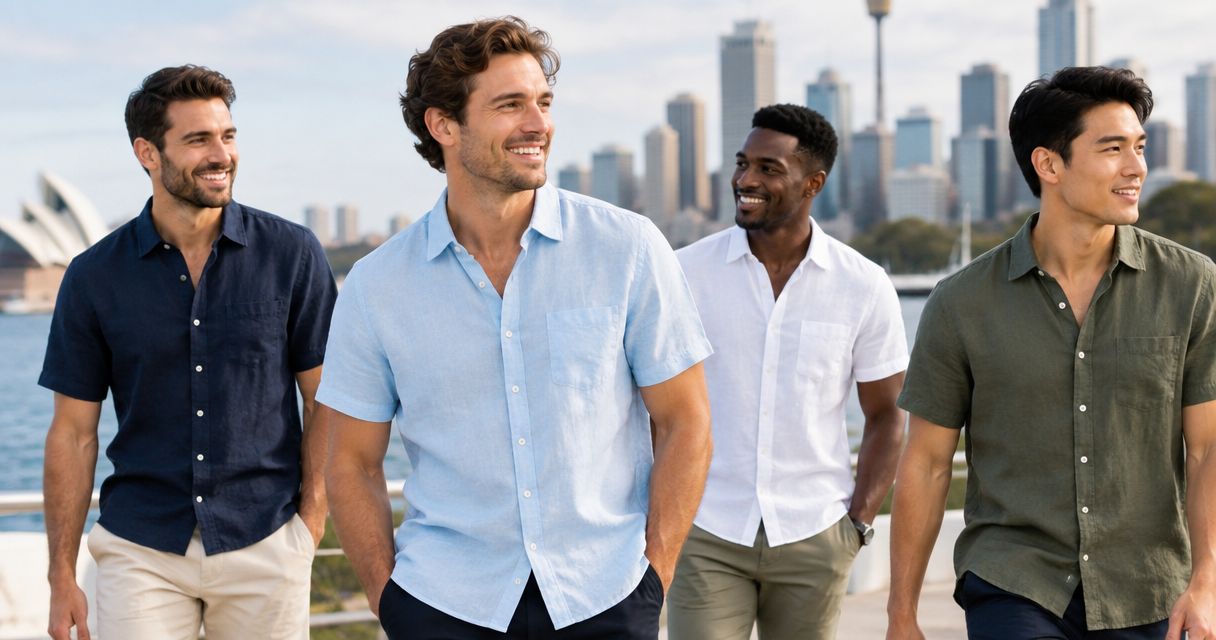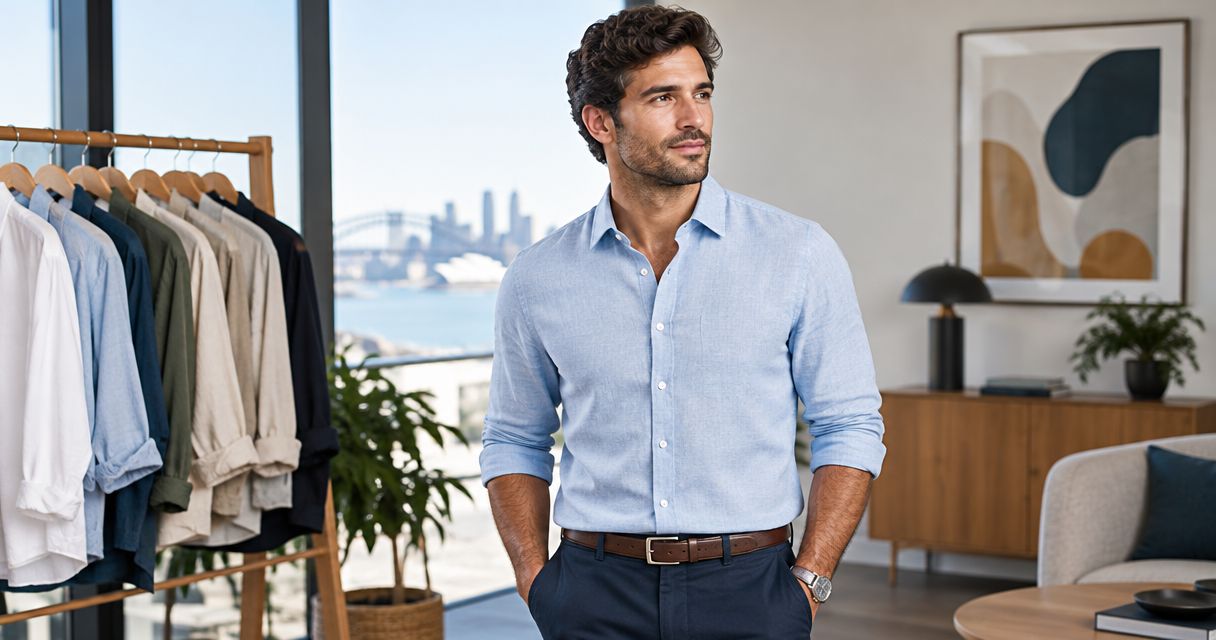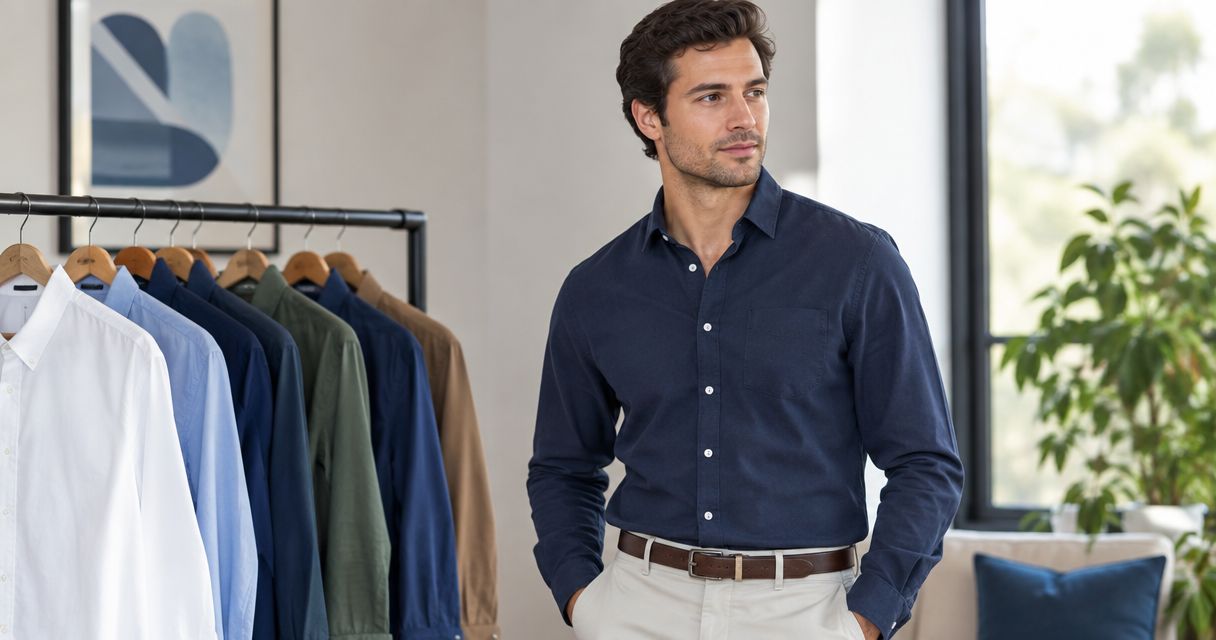
Best overall: a cotton Oxford. Best for office dressing: cotton poplin. Best for warm-weather outfits: linen. This 2026 guide to mens long sleeve shirts ranks six shirt types by occasion, fabric and fit, helping you choose a useful shirt rather than another near-duplicate.
- For Blkwd shoppers comparing mens long sleeve shirts, a cotton Oxford is the default for smart-casual dressing.
- Choose cotton poplin for office outfits and linen for relaxed warm-weather dressing.
- Choose flannel for cool-weather layering, chambray for denim-style outfits and twill for structured casual wear.
- Check shoulder placement, button tension and sleeve length before choosing a closer fit.
Why this matters
Long sleeves do not make every shirt suitable for the same occasion. A brushed flannel and a smooth poplin shirt cover your arms, but they create very different outfits. Choose the fabric and collar for the setting first; choose the colour second.
Blkwd is an Australian online retailer selling men's clothing, including shirts, pants, denim and blazers. This guide focuses on shirt types: the distinctions that help you assess a product description without confusing a styling recommendation with a claim about a particular garment.
For your 2026 wardrobe, start with the situation you actually need to dress for. An office shirt needs to sit neatly under a jacket; a weekend shirt needs to work with your usual trousers. Neither job is solved by a long sleeve alone.
What makes the best men's long sleeve shirts?
Judge each shirt against these criteria before choosing a style:
- Occasion: Match the fabric texture, collar and hem to your workplace, dinner plans or weekend routine.
- Fabric construction: Smooth poplin, textured Oxford and brushed flannel serve different purposes. Fibre content alone does not describe the finished fabric.
- Shoulder and chest fit: Look for shoulders that sit naturally and buttons that remain flat when you move.
- Sleeve and cuff fit: Check the cuff position with your arms relaxed, then bend your elbows to assess movement.
- Layering room: Leave space for the layer you intend to wear underneath, without choosing an unnecessarily loose shirt.
- Care requirements: Read the garment label. A shirt you dislike maintaining is a poor everyday choice, however good it looks initially.
Use the same criteria when shopping in 2026. A new collection name does not change the need for a suitable collar, comfortable sleeves and a hem that works with your outfit.
Men's long sleeve shirts at a glance
| Rank and shirt type | Best for | Standout feature | Key limitation |
|---|---|---|---|
| 1. Cotton Oxford shirts | Everyday smart casual | Textured basket-weave fabric | Less formal than smooth dress shirting |
| 2. Cotton poplin shirts | Office outfits | Smooth plain-weave surface | Creasing remains a consideration |
| 3. Linen shirts | Relaxed warm-weather dressing | Distinctive texture and relaxed appearance | Visible wrinkles are part of the look |
| 4. Flannel shirts | Cool-weather layering | Soft brushed surface | Too casual for formal dress codes |
| 5. Chambray shirts | Denim-style weekend outfits | Woven texture without denim's twill construction | Not a substitute for a formal dress shirt |
| 6. Cotton twill shirts | Structured casual dressing | Diagonal weave | Heavier versions are less suited to hot days |
The order reflects usefulness across different situations, not a claim that every Oxford beats every poplin shirt. Fit, fabric weight and garment construction still decide whether an individual shirt works for you.
1. Cotton Oxford: best long sleeve shirt for everyday smart casual
A cotton Oxford shirt uses a basket-weave structure that gives the fabric visible texture. It bridges casual trousers and smarter separates without looking like a formal dress shirt. Choose a restrained colour if you want the shirt to work across several outfits.
Cotton Oxford pros:
- The textured surface suits chinos and denim.
- A button-down collar, when present, suits relaxed dressing.
- Plain colours make outfit coordination straightforward.
Cotton Oxford cons:
- The texture is less formal than smooth dress shirting.
- Fabric weight varies; an Oxford label does not guarantee a light shirt.
Best for: You want one long sleeve shirt for casual office days, dinners and weekends.
Start with the hem. A longer, curved hem generally makes more sense tucked in, while a shorter hem is easier to wear untucked. Check the actual garment rather than assuming every Oxford has the same proportions.
Verdict: Buy a cotton Oxford as your default smart-casual shirt.
2. Cotton poplin: best long sleeve shirt for office outfits
Cotton poplin has a smooth plain-weave surface. It is a useful starting point when your outfit includes tailored trousers or a blazer and you want less visible texture. The collar shape and overall fit determine how formal the finished shirt looks.
Cotton poplin pros:
- The smooth surface works with tailored separates.
- Plain versions keep the shirt visually understated.
- A neat collar provides a clear foundation for office dressing.
Cotton poplin cons:
- Cotton poplin can crease during wear.
- Thin, light-coloured fabrics need a check for transparency.
Best for: Your priority is a tidy office outfit rather than an overshirt or weekend layer.
Look at the shirt both standing and seated. A close fit that appears neat in a mirror can pull across the front when you sit down. Flat buttons matter more than the fit label. If the placket opens under tension, try a different size or cut.
Verdict: Buy cotton poplin when office dressing is the main job.
3. Linen: best long sleeve shirt for relaxed warm-weather dressing
Linen shirts offer a visibly textured alternative to smooth cotton shirting. They suit relaxed outfits where natural creasing is acceptable. Fabric weight and weave openness matter, so assess the actual garment rather than treating all linen shirts as identical.
Linen shirt pros:
- The texture suits relaxed trousers and shorts.
- Natural creasing fits an informal outfit.
- Long sleeves give you styling options without requiring a formal look.
Linen shirt cons:
- Linen wrinkles readily.
- Open or light-coloured fabrics need a transparency check.
Best for: You want a relaxed shirt for warm days, holidays or informal outdoor occasions.
For Australian warm-weather dressing in 2026, decide whether you are comfortable with wrinkles before choosing linen. Pressing can tidy the shirt before wear, but it does not turn linen into crease-free fabric. Choose poplin instead if a consistently smooth appearance is your priority.
Verdict: Buy linen for relaxed dressing; skip it if wrinkles annoy you.
4. Flannel: best long sleeve shirt for cool-weather layering
Flannel is associated with a soft, brushed surface and casual styling. Wear it as a shirt or, where the cut allows, over a simple base layer. Check fibre content and fabric weight because flannel is not one fixed specification.
Flannel shirt pros:
- The brushed texture suits cool-weather outfits.
- Relaxed cuts accommodate a base layer.
- Plain and checked designs work with casual trousers.
Flannel shirt cons:
- The casual appearance does not suit formal dress codes.
- Heavier fabrics add bulk beneath close-fitting jackets.
Best for: You need a casual layer for cooler days rather than a shirt for tailored office dressing.
Try the shirt over 1 base layer if that is how you intend to wear it. Check your reach and elbow movement in that combination, not just over bare skin. A shirt that fits as a standalone garment does not automatically fit as an overshirt.
Verdict: Buy flannel for cool-weather layering, not formal occasions.
5. Chambray: best long sleeve shirt for denim-style weekend outfits
Chambray is a plain-weave fabric commonly made with coloured warp yarns and lighter weft yarns. It can give you a denim-like appearance, but it is not the same construction as denim. Choose it for a casual outfit where texture matters more than formality.
Chambray shirt pros:
- The woven appearance adds interest to simple outfits.
- It offers a denim-style option in a different fabric construction.
- It pairs naturally with casual trousers.
Chambray shirt cons:
- Similar-toned jeans can make the outfit look overly matched.
- Fabric weight varies, so chambray does not automatically mean lightweight.
Best for: You like denim styling but want a shirt rather than a denim jacket.
If you wear chambray with jeans, separate the tones clearly. Alternatively, pair it with chinos to avoid the matching-denim question altogether. Keep the rest of the outfit simple so the shirt's woven texture remains the main detail.
Verdict: Buy chambray for casual texture; skip it for formal dressing.
6. Cotton twill: best long sleeve shirt for structured casual dressing
Cotton twill has a diagonal weave that distinguishes it from poplin and Oxford cloth. In a more substantial fabric, it suits structured casual shirts and workwear-inspired outfits. Twill describes the weave, not a guaranteed thickness or finish.
Cotton twill pros:
- The diagonal texture adds visual detail.
- Substantial versions suit casual layering.
- Plain designs work with understated trousers.
Cotton twill cons:
- Heavier versions are less comfortable on hot days.
- Thick cuffs and seams can feel bulky under fitted outerwear.
Best for: You prefer a structured casual shirt to a smooth office shirt.
Check whether the garment is cut as a regular shirt or an overshirt. The distinction affects the space through the chest and sleeves. Do not size down simply to remove intended layering room; choose a different cut if you want a closer silhouette.
Verdict: Buy cotton twill for structured casual outfits; hold if you need light shirting.
Check the fit before choosing your shirt
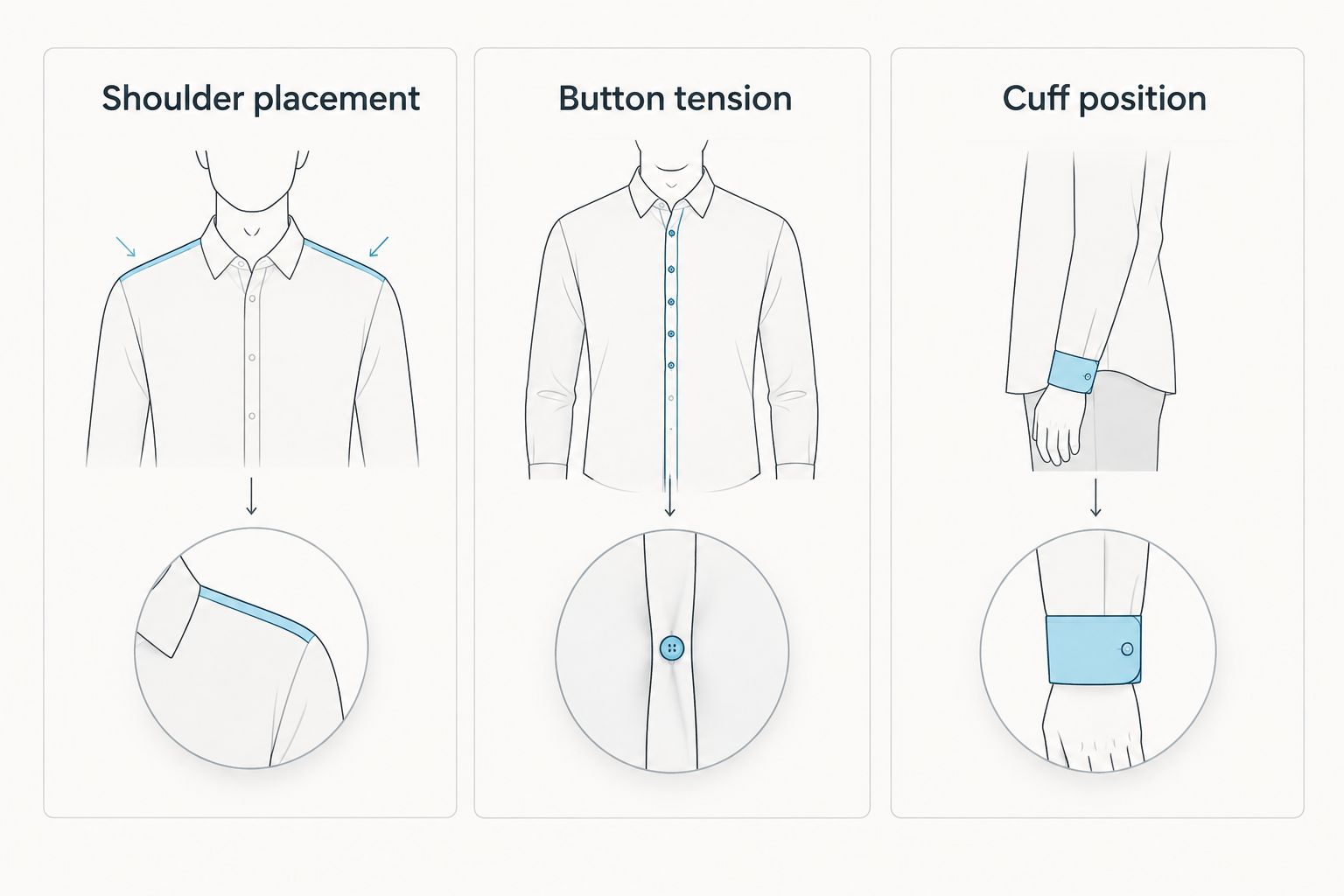
Use 3 fit checks before committing: shoulder placement, button tension and cuff position. These checks are more useful than choosing solely between labels such as slim, regular or relaxed. Different garment cuts can fit your body differently even when the label sounds familiar.
- Shoulder placement: Check that the shoulder line sits naturally rather than pulling inward or dropping unintentionally.
- Button tension: Sit down and reach forward. The front should remain closed without obvious pulling.
- Cuff position: Let your arms hang, then bend them. The sleeves should allow movement without covering your hands excessively.
Measure a shirt you already wear comfortably and compare it with the retailer's measurement guidance. Check whether the chart describes body measurements or garment measurements before comparing figures. Mixing those two systems creates an avoidable sizing error.
How the shirt types rank
This 2026 ranking puts everyday versatility first, followed by clear occasion-specific choices. Oxford takes the default position for smart casual; poplin, linen, flannel, chambray and twill each serve a different wardrobe need.
The criteria are occasion, fabric construction, fit, layering room and care. The ranking concerns shirt types, not laboratory-tested performance or named-product scores. A well-fitting second-choice fabric is a better purchase than a badly fitting first-choice fabric.
Which long sleeve shirt should you choose?
Choose a cotton Oxford if you are undecided. Choose poplin if your main requirement is office dressing, or linen if you prefer a relaxed warm-weather appearance. Flannel, chambray and twill make more sense when you already know the casual role you want them to fill.
For Blkwd shoppers choosing men's long sleeve shirts in 2026, start with the trousers and outerwear you already wear. Picture 2 complete outfits before adding a shirt: one for its main occasion and one for another realistic use. This keeps the decision tied to your wardrobe rather than a product photo.
FAQ
What's the best men's long sleeve shirt for everyday wear?
A cotton Oxford is the default choice for everyday smart-casual wear. Its textured fabric suits chinos and denim, but the individual shirt still needs the right fit and hem length.
Is an Oxford shirt better than a poplin shirt?
Oxford is better for textured smart-casual outfits; poplin is better for a smoother office look. Choose by occasion rather than treating one weave as universally better.
What's the best long sleeve shirt for warm Australian days?
A linen shirt is a useful choice for relaxed warm-weather dressing. Check fabric weight and transparency, and choose it only if you accept visible creasing.
Should a men's long sleeve shirt be tight or loose?
A long sleeve shirt should allow movement without pulling across the buttons. Choose extra room for layering, but do not assume that a looser fit solves incorrect shoulder or sleeve proportions.
Can I wear a long sleeve shirt untucked?
Yes, if its hem length and shape work untucked. Assess the shirt with your intended trousers; a long dress-shirt hem often looks more deliberate tucked in.
Is chambray the same as denim?
No, chambray uses a plain weave while denim uses a twill weave. They can look similar, but their construction is different and their weight depends on the particular fabric.
What should I check when buying a long sleeve shirt online in 2026?
Check the measurement guidance, fibre content, fabric description, collar and hem. Compare the measurements with a shirt you already wear comfortably, using the same measurement method.
One last thing
A longer sleeve is not proof of sun protection. If sun exposure is your main concern, look for a garment with a stated UPF rating rather than assuming an ordinary fashion shirt meets that need. Keep the styling decision separate from the protection requirement.
Before choosing a shirt from Blkwd or another retailer, read the fabric and fit details before studying the outfit photograph. The photograph shows one styling combination; the garment description helps you decide whether the shirt belongs in yours.