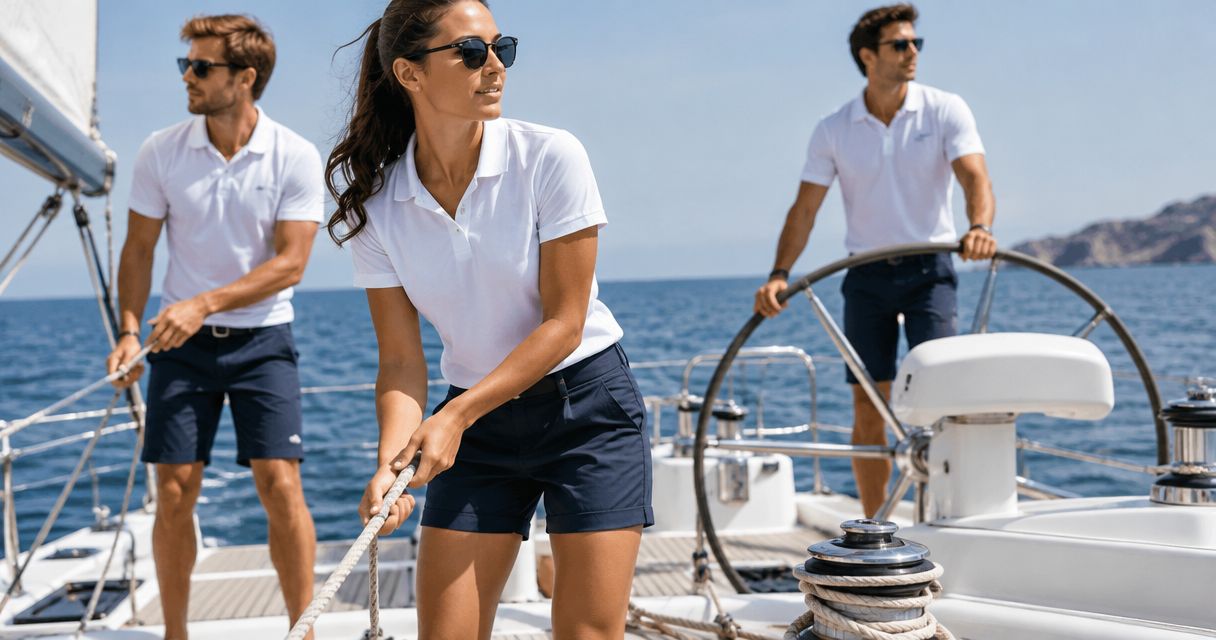
Boat crew chino shorts are smart-casual uniform shorts chosen to give guest-facing crew a consistent appearance without restricting everyday movement. For your 2026 boat or yacht uniform, match the shorts to the duties first: a tidy service outfit is not automatically suitable for wet deck work, machinery tasks or jobs requiring protective clothing.
- Choose chino shorts for boat crew by duty, movement and laundering needs, not appearance alone.
- Blkwd chino shorts suit guest-facing uniform shortlists; assess fit before committing to a team order.
- Cotton stretch describes fabric composition, not verified quick-drying performance or sun protection.
- Test yacht crew uniforms while sitting, stepping and crouching before approving the style.
Why chino shorts matter for boat and yacht crew
A crew uniform has to work while you move, not just while you stand beside the vessel. Guest service, dockside hosting and handling equipment create different clothing requirements, even when everyone wears the same colour.
Choose chino shorts for presentation-led duties only after checking the vessel's clothing requirements. If your role calls for protective trousers or specialist equipment, the dress code comes second. Shorts leave the lower legs exposed; a neat cut does not change that.
Length is part of the decision, but there is no single hem position that proves suitability for every crew member. Use the guide to how long men's chino shorts should be as a styling reference, then check the actual garment during movement.
For your 2026 uniform brief, separate appearance requirements from functional requirements. Colour and silhouette belong in the first group; coverage, movement and task suitability belong in the second. Approve both before choosing a supplier.
How to choose chino shorts for boat crew
1. Define the duties before choosing the shorts
Start with a written list of what each person does during a normal shift. A notes document or spreadsheet is enough. Distinguish guest-facing service from duties involving frequent wetting, abrasion, cleaning chemicals or machinery.
Do not turn that list into a safety assessment yourself if you are responsible only for purchasing. Ask the skipper or person responsible for onboard safety to confirm where shorts are appropriate and what other clothing requirements apply.
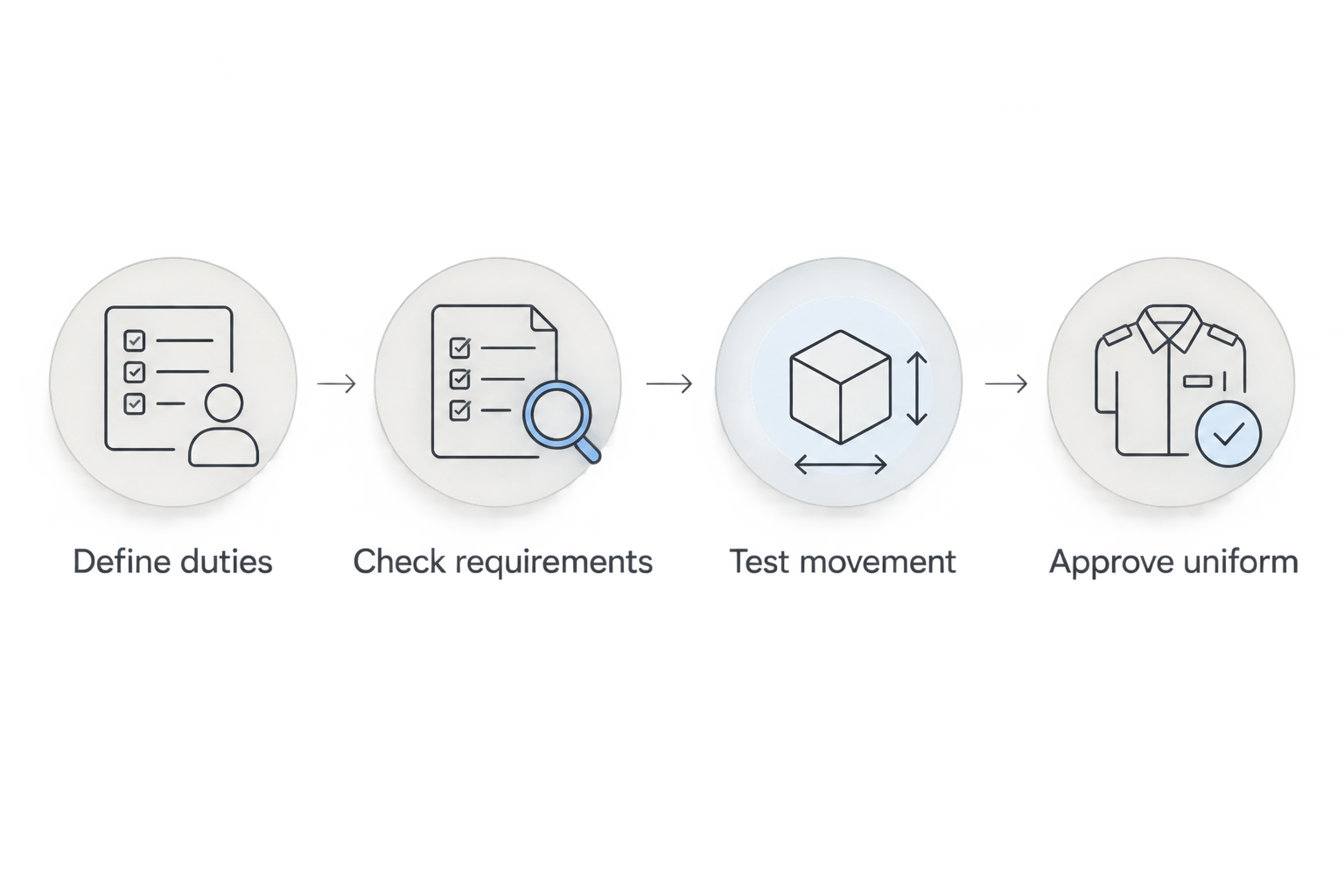
Keep the brief specific enough that someone else can check a garment against it. Replace vague instructions such as smart and practical with an agreed colour, permitted garment type and movement checks.
- Define duties: list guest service, dockside and operational tasks separately.
- Check requirements: confirm whether shorts are permitted for each duty.
- Test movement: identify the movements the garment must accommodate.
- Approve uniform: name the person who signs off the final outfit.
2. Measure a pair that already fits
Lay a comfortable pair of shorts flat and record the measurements in centimetres. Follow the retailer's measurement method when comparing those figures with a size guide; a body measurement and a flat garment measurement are not interchangeable.
Record the waist, seat, thigh opening and length rather than relying only on the size label. If your existing shorts feel tight when you sit, they are not a useful reference for a working uniform, however good they look standing up.
For the 2026 fitting session, use 3 movement checks: sit, step and crouch. These are practical screening checks, not a safety certification. Stop if the garment pulls sharply, limits your stride or needs constant adjustment.
- Measure the reference garment without stretching the waistband.
- Record all measurements using the same method and units.
- Compare the seat and thigh as well as the waist.
- Check the hem while seated and stepping upwards.
- Keep individual measurements private when coordinating a team.
3. Shortlist fabric and fit without assuming performance
Read the composition, fit description and care instructions yourself before shortlisting. Cotton stretch is a fabric description; it does not establish drying speed, abrasion resistance, saltwater suitability or a sun-protection rating.
Once you have a clear brief, Blkwd provides an online menswear option for comparing chino shorts with polos and shirts. Its Baker chino shorts are described as slim-cut styles made from soft, stretchy cotton. That makes them relevant to a guest-facing uniform shortlist, subject to a fitting.
Blkwd chino shorts are best suited to guest-facing crew shortlists where a smart-casual appearance is the priority. The limitation is equally important: assess them as fashion garments, not as a substitute for task-specific marine workwear.
Check product details against the job rather than interpreting words such as stretch or comfortable as proof of suitability. If frequent wetting is part of the role, establish drying performance separately before approving the uniform.
- Confirm the composition for the exact style you select.
- Read the care label before planning shared laundering.
- Test a slim cut across the seat and thighs.
- Verify any technical performance claim before relying on it.
- Reject a style that conflicts with onboard clothing requirements.
4. Match the colour to the complete uniform
Start by laying existing uniform pieces together in daylight. Compare the shorts with the actual polo or shirt, footwear and belt rather than assessing separate website photographs. A colour name alone is not a dependable matching reference.
Choose 1 approved shorts colour for each uniform combination unless different roles deliberately use different outfits. That is a purchasing rule, not a requirement to put every crew member into the same cut. Consistency should not come at the expense of fit.
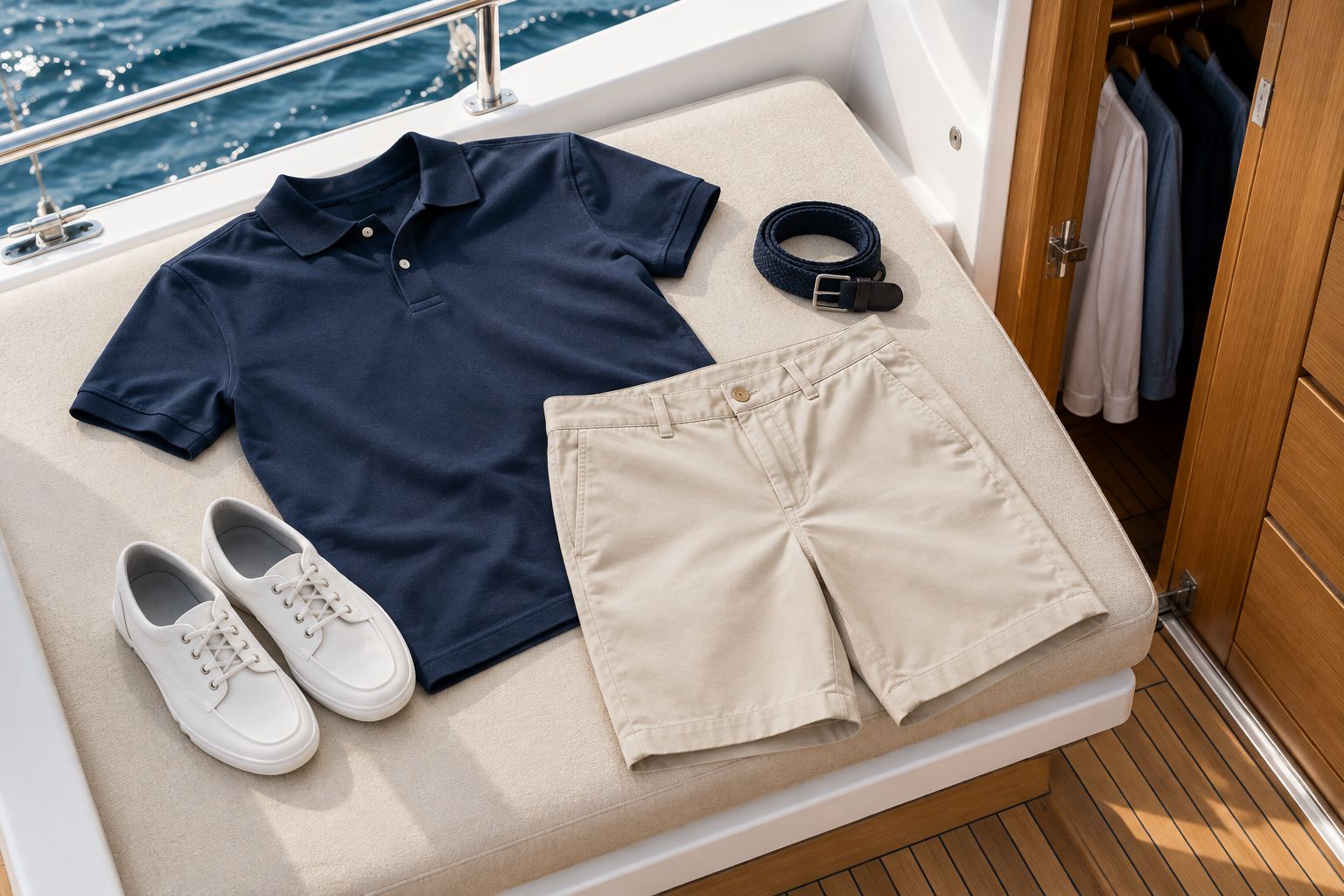
For your 2026 uniform reference, photograph the approved combination without filters and keep a written record of the exact style and colour. Use the photograph to guide presentation, not as a substitute for checking a replacement garment in person.
- Compare the shorts with the actual uniform top.
- Check the outfit under natural and indoor light.
- Confirm the waistband works with the intended belt.
- Inspect pocket outlines with normal pocket contents.
- Record the approved style and colour together.
5. Trial the outfit before ordering for everyone
Arrange 1 wearer trial before the team order, using a garment you can assess under appropriate conditions. An unworn fitting checks shape; an approved work trial checks whether the outfit remains comfortable during the duties you identified.
Keep a simple pass-or-fail sheet rather than relying on a general impression. Record waistband pressure when seated, pulling across the thighs and whether the hem interferes with movement. Check the fit again after laundering according to the care label.
Try 2 complete outfits if the shorts must work with both a tucked shirt and an untucked polo. The waistband, rise and visible hem need to work with each combination. A pair that succeeds with one top does not automatically suit the other.
- Check seated comfort without loosening the waistband.
- Step and crouch in a safe, controlled setting.
- Assess pockets with ordinary, permitted contents.
- Follow the care label for the laundering trial.
- Record any change in fit, colour or appearance.
- Approve each required top-and-shorts combination.
6. Set the laundering and replacement routine
Write the care routine from the garment label rather than applying one wash setting to every uniform item. If crew wash their own clothing, share the same instructions so the uniform standard does not depend on guesswork.
Set the number of garments per person around your actual washing and drying arrangements. Do not assume that a cotton-stretch pair will be ready for another shift on a fixed timetable. Check that timetable during the trial.
Keep a 2026 uniform register with the approved style, colour, assigned size and issue date. Replace garments based on their condition and role suitability, not an invented service life. Reassess fit when a replacement arrives rather than treating the label as a guarantee.
- Share the exact care-label instructions with each wearer.
- Keep clean uniform pieces separate from wet or soiled clothing.
- Inspect seams, fastening points and fabric condition.
- Recheck fit when issuing replacement garments.
- Record substitutions before mixing them into the uniform.
Compare chino shorts for guest-facing crew
The Baker options below differ by colour while retaining the slim chino-short format. Their product descriptions identify soft, stretchy cotton; choose between them by your approved uniform palette, then verify fit on the wearer.
| Option | Best for | Practical advantage | Key limitation |
|---|---|---|---|
| BAKER NAVY SLIM CHINO SHORTS | A navy-based guest-service uniform | Soft, stretchy cotton in a slim chino cut | A slim cut still needs a seated and crouching fit check |
| BAKER LIGHT GREY SLIM CHINO SHORTS | A light-grey uniform specification | The same chino-short category in a lighter colour | Match against the actual uniform top, not a colour name |
| BAKER STONE SLIM CHINO SHORTS | A stone-based smart-casual uniform | Soft, stretchy cotton for a coordinated service outfit | Establish task suitability and drying performance separately |
None of these colour choices resolves a functional mismatch. If a garment fails the movement trial or the role requires different clothing, change the style rather than approving it because the shade matches.


Common mistakes boat and yacht crew make
Treating stretch as a marine-performance claim
Stretch helps describe how fabric moves; it does not prove quick drying, protective performance or suitability around equipment. Assess each requirement separately and do not turn a fashion description into a technical specification.
Approving the uniform only while standing
A clean front view tells you little about seated pressure or thigh restriction. Check the shorts during the movements the wearer actually needs, with the intended shirt, belt and permitted pocket contents.
Using one size as a team-wide fitting reference
A successful trial on one person does not establish fit for the whole crew. Confirm individual measurements and allow each wearer to report restrictions privately rather than expecting everyone to accommodate the chosen silhouette.
Ordering around colour before confirming duties
An exact colour match cannot make unsuitable clothing appropriate for a job. Confirm the role requirements first, then select the shade and outfit details from garments that pass those requirements.
FAQ
What are the best chino shorts for boat crew?
The best chino shorts for boat crew are those that meet the vessel's clothing requirements and pass an individual movement trial. For guest-facing duties, assess colour consistency, seated comfort, thigh room and care requirements before approving a style.
Are Blkwd chino shorts suitable for yacht crew uniforms?
Blkwd Baker chino shorts belong on a guest-facing yacht crew uniform shortlist where a smart-casual appearance is required. Their descriptions specify soft, stretchy cotton and a slim cut; confirm individual fit and task suitability before a team order.
Can deck crew wear ordinary chino shorts?
Deck crew should wear ordinary chino shorts only where the vessel's clothing requirements permit them for the assigned duties. Do not substitute fashion shorts for protective clothing or specialist workwear required by the task.
Are cotton-stretch chino shorts quick drying?
Cotton-stretch composition alone does not establish quick-drying performance. Check an explicit product specification or conduct an appropriate wear-and-care trial before relying on drying speed for uniform planning.
What colour chino shorts should yacht crew wear?
Yacht crew should wear the colour approved for their complete uniform. Compare the actual shorts with the shirt or polo and keep a record of the selected style and colour rather than relying on matching colour names.
How should crew chino shorts fit?
Crew chino shorts should allow comfortable sitting, stepping and crouching without sharp pulling or repeated adjustment. Check the waist, seat, thighs and hem with the complete uniform, not just the shorts in isolation.
Should every crew member wear the same size and cut?
Crew members need individually checked sizes, and one cut will not necessarily suit everyone. Keep the uniform colour and presentation consistent while requiring each garment to pass the wearer's fit and movement checks.
One last thing
The most useful fitting position is not the pose you use for the uniform photograph. Before approving your 2026 order, ask each wearer to sit comfortably in the complete outfit and then stand without adjusting the waistband or hem. If the shorts need constant correction, return to the fit decision before committing to the team uniform.