To size men's shirts when ordering online, measure your body, check whether the retailer's chart uses body or garment measurements, and compare the shirt's cut with one you already wear comfortably. Your usual size label is only a starting point: chest room, shoulder position, sleeve length and hem length determine whether the shirt actually fits.
- For how to size shirts when ordering online, compare measurements before choosing a size label.
- Body measurements and garment measurements are different; check which type the size chart uses.
- Blkwd men's shirts suit shoppers choosing between cotton Oxford and stretch styles; compare each shirt's fit before ordering.
- Check shoulders, chest, sleeves and hem against a shirt you already wear comfortably.
Why this matters
A shirt that buttons up is not necessarily the right size. Tight shoulders restrict movement, while excess fabric around the waist creates a loose shape even when the chest feels comfortable.
Start with your measurements rather than guessing from a model photograph. The guide to measuring your chest for a men's shirt explains that first check; the steps below connect it to the rest of the garment.
For your 2026 shirt purchases, keep a measurement note you can reuse. Update it when your body or preferred fit changes, rather than copying the size from an old order.
How do you size men's shirts when ordering online?
Match the chart's measurement method before matching its size label. A body chest measurement describes you; a garment chest measurement describes the shirt, including its wearing room.
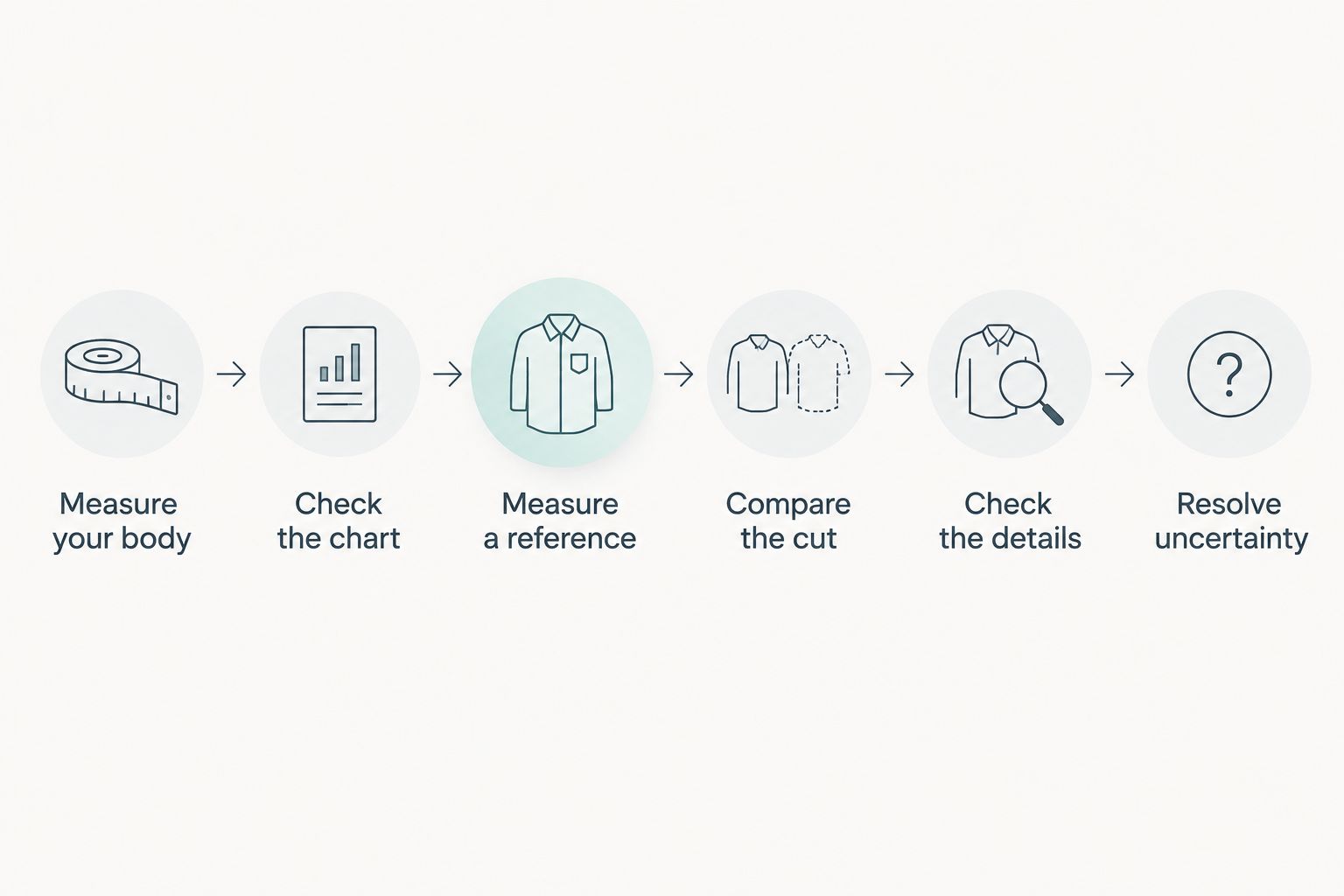
Follow this sequence before adding a shirt to your basket:
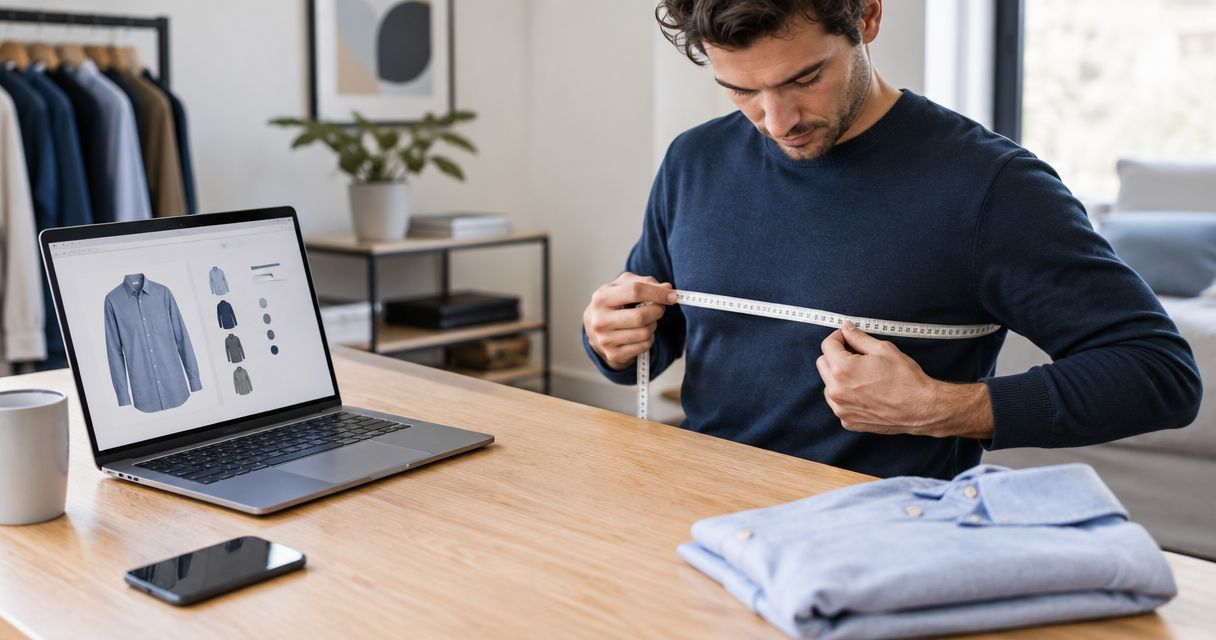
- Measure your body. Use a flexible tape around the fullest part of your chest, keeping it level across your back. Stand naturally, breathe normally and avoid pulling the tape tight. Measure your neck if you intend to fasten the collar.
- Check the chart. Read its headings and instructions. Establish whether it lists body circumference, finished garment circumference or a flat measurement such as chest width.
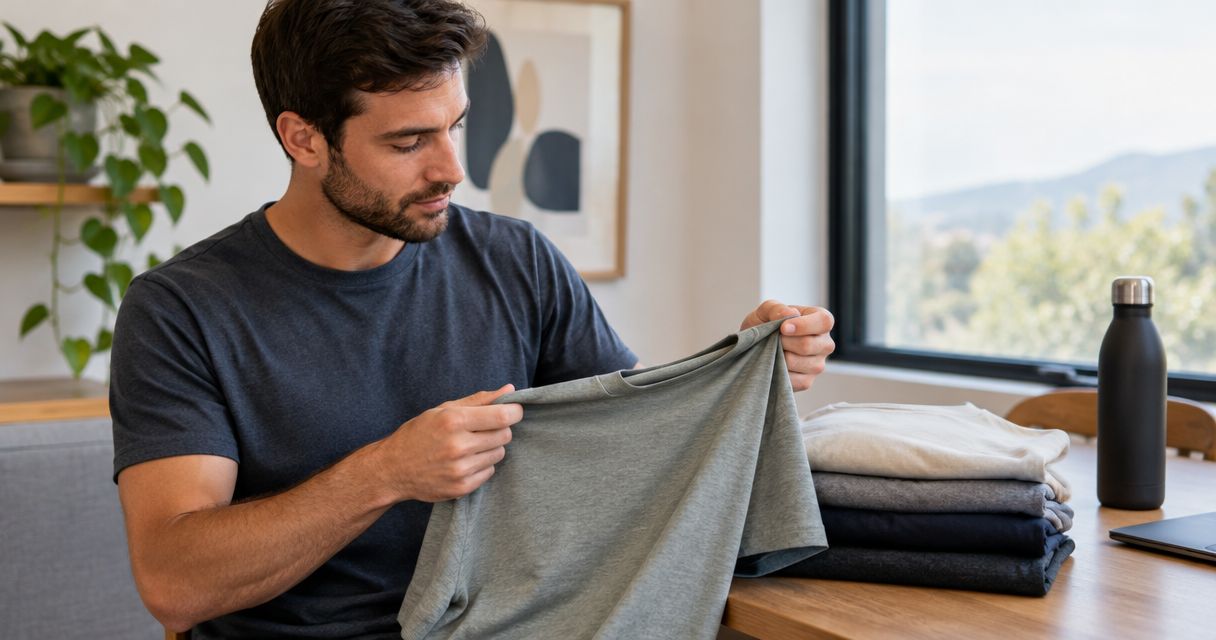
- Measure a reference shirt. Choose a shirt that fits the way you want the new shirt to fit. Fasten it, lay it flat without stretching it, and measure according to the retailer's method.
- Compare the cut. Read the product's fit description and fabric information. A slim shirt and a regular shirt are not interchangeable simply because their labels match.
- Check the details. Compare shoulders, sleeves and body length, not just chest size. Decide whether you will tuck the shirt in, wear it open or layer it over a tee.
- Resolve uncertainty. Ask the retailer about unclear measurements before ordering. Check the current returns and exchange terms rather than assuming an unsuitable shirt qualifies.
The sequence matters. Measuring accurately achieves little if you then compare a full chest circumference with a flat chest width.
Match the units as well as the measurement
Use centimetres when the chart uses centimetres. If you need to convert, 1 inch equals 2.54 centimetres; convert your measurement before comparing it with the chart.
Do not round early or read an inch measurement as a centimetre measurement. Keep the original measurement in your notes so you can check the conversion without measuring again.
A flat chest width is also different from chest circumference. Doubling a flat width gives an approximate garment circumference, but follow the retailer's instructions for where that width is measured.
Keep a useful measurement record
For a 2026 sizing note, record the measurement name, unit and method together. Write whether chest means your body circumference or the shirt's flat width; an unexplained figure becomes difficult to use later.
Keep separate notes for your body and your reference shirt. Add the reference shirt's fit and how you wear it, because a loose overshirt is a poor benchmark for a close-fitting office shirt.
Regular-fit shirts: best for a roomier shape
A regular fit is the starting point when you prefer more room through the body. Its advantage is a less close-fitting outline; its drawback is that extra fabric can gather around the waist or under a jacket.
Choose the size that fits your shoulders and chest without strain. Do not size down merely to remove waist fabric if doing so pulls the shoulder seams inward or makes the button placket gape.
The term regular fit does not replace a size chart. Check the actual product description and measurements, especially when changing brands or moving between different shirt styles.
Slim-fit shirts: best for a closer shape
A slim fit is the starting point when you want less excess fabric through the torso. Its advantage is a closer outline; its drawback is reduced room if the cut does not suit your chest, waist or upper arms.
Do not force a slim fit by choosing a smaller regular-fit shirt. Sizing down also changes the shoulders, collar, sleeves and length, not just the waist.
If a slim shirt fits your chest but pulls around your middle, compare another cut. A larger size only works if the shoulders and remaining proportions still fit.
Short sleeves and long sleeves need different checks
Short-sleeve shirts remove the cuff-length decision, but sleeve opening and upper-arm room still matter. Check that the sleeve hangs comfortably rather than gripping your arm or flaring farther out than you prefer.
Long-sleeve shirts add sleeve length, cuff room and wrist position to the decision. Follow the chart's sleeve-measuring instructions: a measurement beginning at the shoulder cannot be compared directly with one beginning at the centre back.
For either style, compare the hem with a shirt you wear the same way. A shirt intended for tucking needs enough length to stay tucked during normal movement; an untucked shirt needs a length that suits your proportions.
Why shirt sizing varies
Your 2026 size note should identify the garment as well as the label. These factors explain why the same labelled size does not settle every purchase:
- Measurement basis: Body charts and garment charts describe different things. Flat widths introduce another measurement format.
- Cut: Regular and slim fits distribute room differently through the torso. Compare the stated fit before changing sizes.
- Fabric: Cotton Oxford and stretch fabrics need different handling when you assess a shirt. Never stretch a garment to make its measurement match.
- Sleeve design: Short sleeves need an opening and upper-arm check; long sleeves also need a cuff and length check.
- How you wear it: Wearing a shirt over a tee requires room for the layer. Tucking it in makes body length especially relevant.
Photographs help you judge styling, but they cannot establish how the shirt will fit your body. Use them alongside measurements, not instead of them.
Compare shirt construction before choosing
Blkwd men's shirts are best for shoppers seeking casual and smart-casual styles across cotton Oxford and stretch fabrics. Choose the construction that suits your intended use, then check the individual shirt's sizing rather than assuming the fabric determines the size.
These examples show why product details belong in the decision. Neither construction guarantees a better fit.
| Shirt | Stated construction | Best for | Advantage | Limitation to check |
|---|---|---|---|---|
| NOOSA LIGHT BLUE OXFORD SHORT SLEEVE SHIRT | 100% cotton Oxford | Shoppers seeking a cotton Oxford short-sleeve shirt | A clearly specified fabric composition | Cotton content alone does not establish chest room, length or fit |
| STONLEIGH - SHORT SLEEVE SHIRT | Slim fit with stretch fabric | Shoppers seeking a closer silhouette | Stretch fabric paired with a stated slim cut | Stretch does not correct tight shoulders or insufficient length |
The NOOSA LIGHT BLUE OXFORD SHORT SLEEVE SHIRT's 100% cotton description tells you its fibre composition, not its garment dimensions. The STONLEIGH - SHORT SLEEVE SHIRT's slim-fit description tells you the intended shape, not whether your usual label will fit.
Use those details to narrow your choice. Then check the sizing information for the shirt you intend to order.


What should you do if you're between shirt sizes?
If you're between sizes, identify which measurement creates the conflict before choosing. Tightness at the shoulders or chest needs a different response from excess length or a loose waist.
When the smaller size restricts movement and the larger size hangs too loosely, compare another cut. Neither size is a good choice simply because it is the closer label.
Consider your intended use, too. A shirt worn open over a tee needs room for that layer, while a shirt worn buttoned under a blazer needs comfortable movement without unnecessary bulk.
Can you use a shirt you already own as a size guide?
A well-fitting shirt is a useful size guide when you compare like-for-like measurements and similar styles. It shows the room and proportions you already find comfortable.
Use a reference shirt in its normal, laundered condition. Smooth it flat without pulling the fabric, and follow the new retailer's measuring points rather than imposing your own method.
Avoid relying on a reference shirt you dislike wearing. If it pulls at the chest or rides up whenever you sit, copying its dimensions repeats the problem.
Check the fit when your shirt arrives
Try the shirt on in the way you intend to wear it, while following the retailer's return conditions. Keep it unwashed and retain packaging and tags until you have checked those conditions and decided whether to keep it.
Look at the shirt from the front, side and back. Then sit down, reach forward and bend your arms; a still photograph in the mirror does not test movement.
- Shoulders: Check that the seams sit appropriately for the shirt's intended cut, without obvious pulling.
- Chest: Fasten the buttons and check for gaping or horizontal strain.
- Waist: Look for pulling when seated and unwanted excess fabric when standing.
- Sleeves: Move your arms and check that the openings or cuffs do not restrict you.
- Hem: Check the length untucked or test whether it stays tucked during normal movement.
For a Blkwd order in 2026, use the current product information and current policies to make the final decision. A previous purchase is a useful reference, not proof that another style has identical dimensions.
FAQ
How do I know my shirt size when shopping online?
Measure your body and compare it with the retailer's chart, checking whether the chart describes body or garment measurements. Use a well-fitting shirt to check proportions when garment dimensions are provided.
Should I order my usual shirt size?
Use your usual shirt size as a starting point, not a final decision. Check the individual product's chart, fit description and measurement method before ordering.
Is shirt chest size the same as my chest measurement?
A shirt's chest measurement is not necessarily your body chest measurement. Finished garment measurements include wearing room, while body measurements describe the person the size is intended to fit.
Should I size up for a slim-fit shirt?
Do not automatically size up for a slim-fit shirt. Compare its measurements first; if a larger size makes the shoulders or length unsuitable, choose another cut.
How do I convert inches to centimetres for a shirt size chart?
Multiply inches by 2.54 to convert them to centimetres. Keep the measurement method consistent as well: converting units does not make a flat width equivalent to a circumference.
Does stretch fabric mean I can buy a smaller shirt?
Stretch fabric is not a reason to buy a smaller shirt. Choose a size that fits without relying on the fabric to remain stretched across your chest or shoulders.
What should I check before ordering a Blkwd shirt online?
Check the individual Blkwd shirt's fit description, fabric information and sizing guidance. Confirm unclear measurements and read the current returns and exchange terms before ordering.
One last thing
Measure the shirt you reach for most, not the shirt with your preferred size label. That garment records the combination of room, length and shape you actually enjoy wearing.
Save those measurements with your 2026 wardrobe notes. A useful reference makes the next decision simpler without assuming every brand or shirt shares the same sizing.