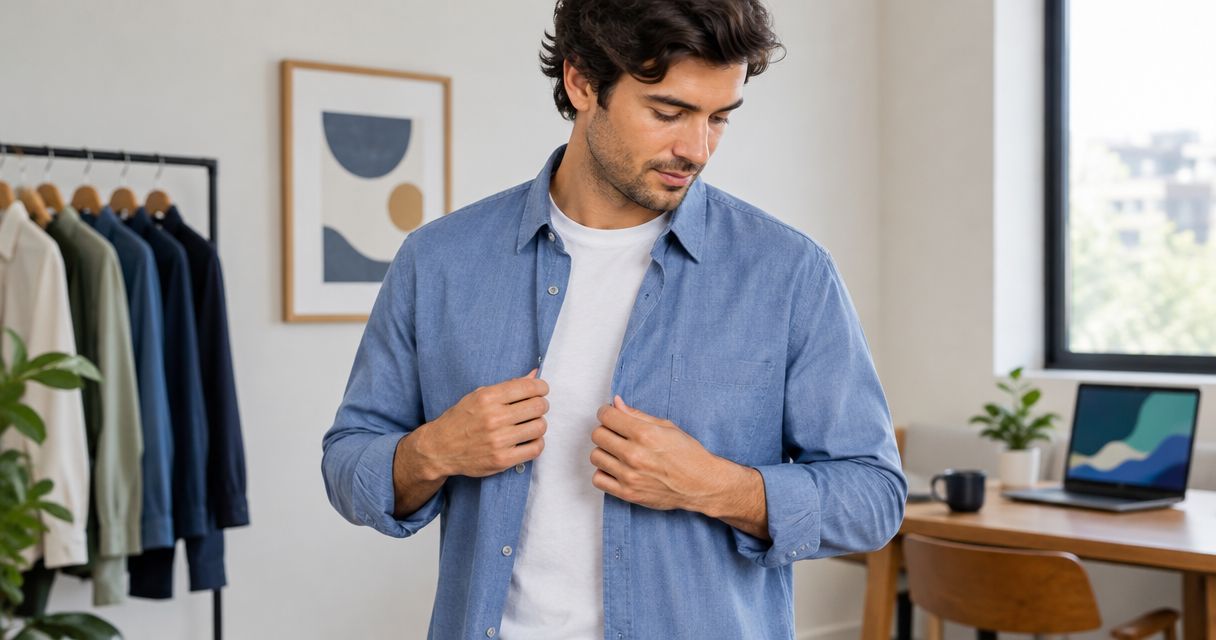
Layer a t-shirt under a button-up shirt by choosing a smooth-fitting tee, adding a shirt with room through the shoulders and chest, and keeping the colours simple. For an easy casual outfit in 2026, leave the shirt open and untucked; if you button it, check that the tee does not bunch beneath the placket or sleeves.
- How to layer a t-shirt under a shirt: start with a smooth tee and a roomier button-up.
- An open button-up works best for showing your t-shirt; a buttoned shirt creates a tidier outer line.
- Choose one patterned layer and keep the other plain so the outfit has a clear focus.
- Blkwd offers t-shirts and button-up shirts for men building casual layered outfits.
How do you layer a t-shirt under a shirt?
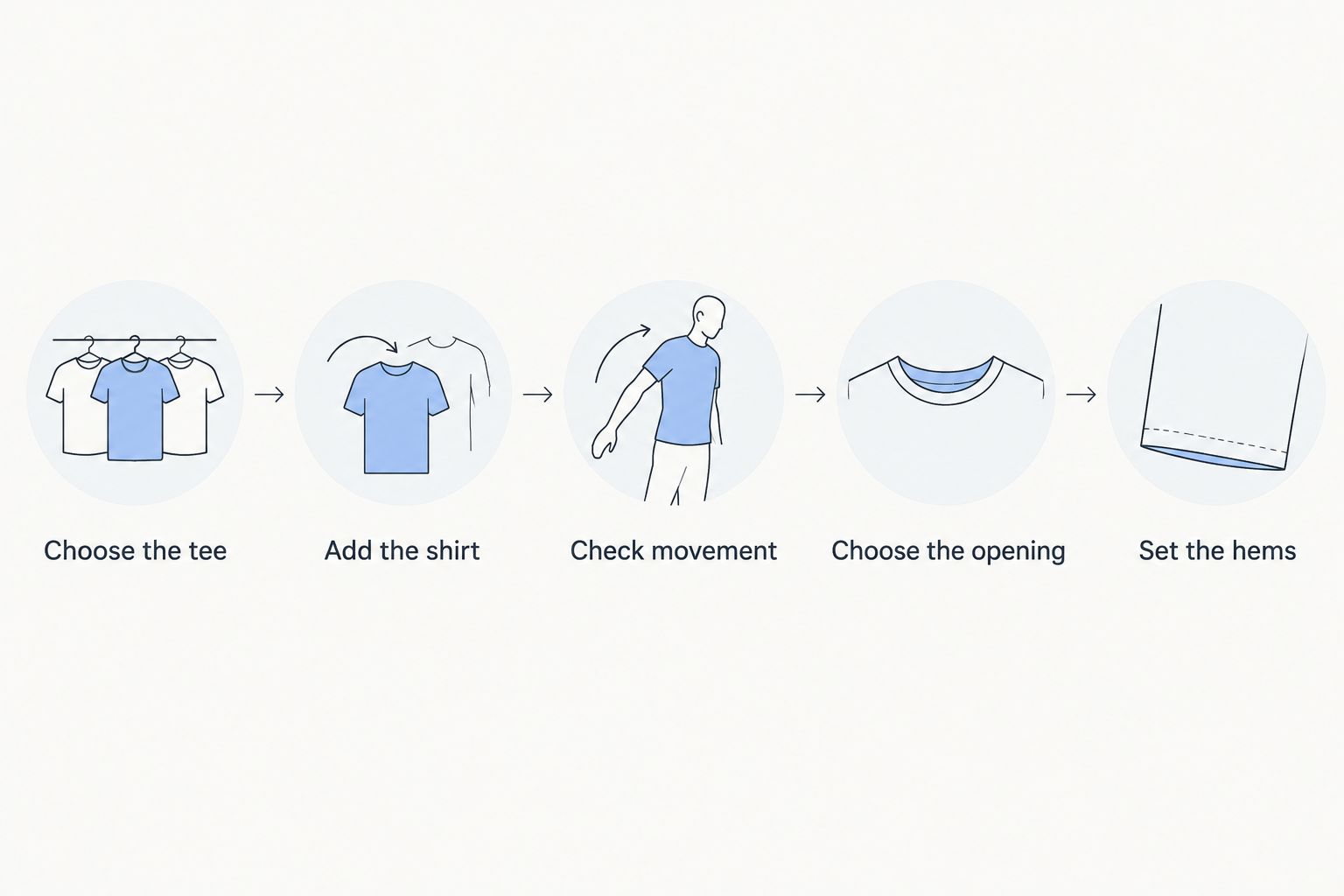
Fit the t-shirt first, then judge the button-up with the tee underneath. A shirt that fits comfortably on bare skin does not automatically have enough room for another garment. Use this sequence before choosing accessories or deciding whether to tuck.
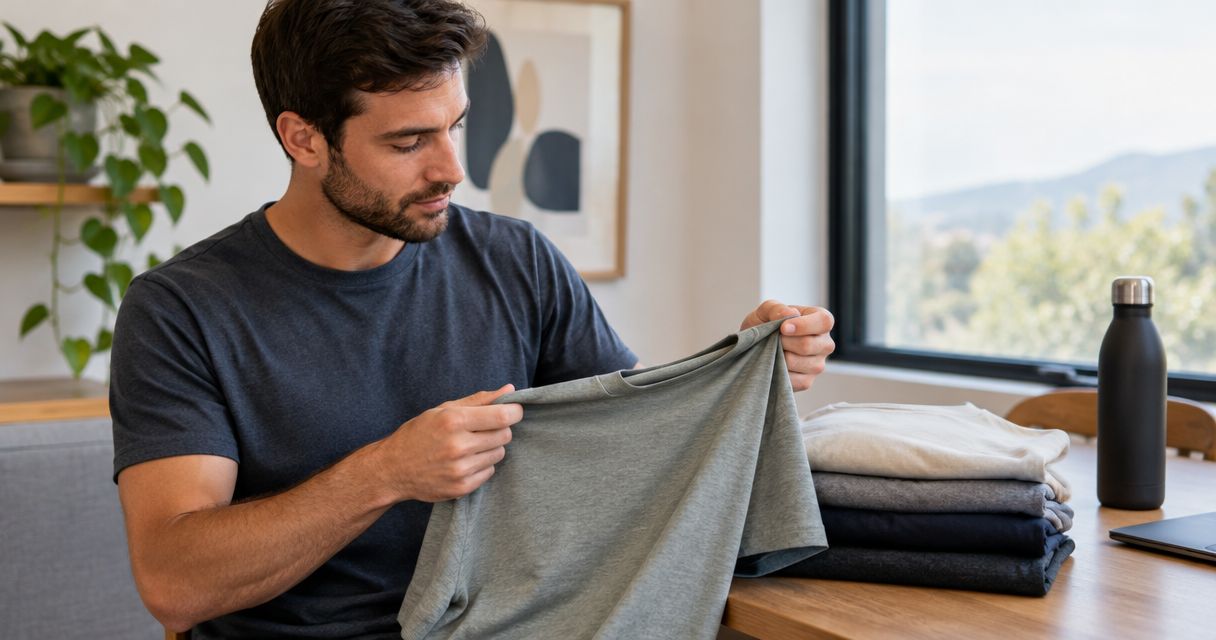
- Choose the tee. Start with a plain crew-neck t-shirt that lies smoothly across your chest without gripping your upper arms. Use the men’s shirt fit guide to check the outer layer too.
- Add the shirt. Put on the button-up and settle the shoulder seams. Smooth the tee at your waist and underarms before assessing the fit.
- Check movement. Reach forward, bend your elbows and sit down. Change the combination if the shirt pulls across your back or traps folds of tee fabric.
- Choose the opening. Leave the shirt open to show the tee, or button it for a more contained silhouette. Keep the collar sitting naturally rather than forcing it flat.
- Set the hems. For a straightforward casual outfit, leave the shirt untucked and keep the tee from hanging noticeably below it. Check the side and back views.
These steps work as a fitting sequence, not a sizing formula. Do not automatically size up: a larger shirt can solve chest tightness while creating unwanted length or loose shoulders.
Why this matters
Layering changes how both garments sit. A tee that looks good alone can gather beneath close-fitting sleeves, while a shirt that looks neat buttoned can hang awkwardly when worn open.
The useful test in 2026 is still the outfit on your body, not the size printed inside each garment. You want the tee to stay smooth and the shirt to move independently, without repeatedly pulling either layer back into place.
Open shirt or buttoned shirt: which works best?
An open shirt is the simplest starting point for a visible t-shirt layer. It lets the tee become part of the outfit rather than treating it as hidden underwear. Buttoning the shirt creates a different result, so choose the finish before judging the neckline.
| Styling option | Best for | Main advantage | Main drawback |
|---|---|---|---|
| Open shirt | Relaxed weekend outfits | Shows the tee and separates the layers clearly | Both garments remain visible, so colour and hem choices matter |
| Partly buttoned shirt | A smaller glimpse of the tee | Shows the neckline while containing the shirt front | The opening looks awkward if the placket pulls |
| Fully buttoned shirt | A quieter layered outfit | Keeps the outer shirt as the main visual layer | Tee seams, folds or a contrasting neckline can show through |
There is no need to force a visible tee into every outfit. If the shirt looks cleaner worn alone, remove the base layer rather than trying to disguise an uncomfortable combination.
Open shirt: keep the tee deliberate
Choose a tee you would be comfortable wearing without the shirt. An open button-up exposes the chest, neckline and hem, so a stretched collar or twisted body remains noticeable.
Let the shirt hang naturally. If you need to pull its fronts apart constantly to reveal the tee, the shirt’s shape or the way it falls is not working for that outfit.
Buttoned shirt: check what shows underneath
A buttoned shirt needs enough room for the base layer without strain across the buttons. Look for a smooth front rather than a tight outline of the tee’s sleeves and neckline.
Check the combination in daylight. A light-coloured outer shirt can reveal a strongly contrasting tee, even when the garments look fine separately.
Which t-shirt works best under a button-up?
Start with a plain crew neck that follows your body without clinging. It gives the open collar a simple centre point and leaves the shirt free to supply colour, texture or print.
Avoid judging suitability by thickness alone. Handle the fabric and try the garments together: a bulky tee can crowd the outer shirt, while a very close-fitting tee can show every fold when you move.
Get the sleeves right
The tee sleeves should sit comfortably beneath the shirt sleeves. With a short-sleeve button-up, check that the tee does not poke out unintentionally or gather into a ridge around your upper arm.
With a long-sleeve shirt, lift and lower your arms before checking the sleeve line. Smooth the tee once; if it immediately bunches again, choose a different cut rather than relying on constant adjustments.
Treat longline tees as a separate styling choice
A longer tee creates a visible hem beneath a shorter shirt. That is a deliberate casual look, not the neutral starting point for every layered outfit.
For your first combination, keep the tee hem covered by the outer shirt. Experiment with a visible lower hem only after the chest, shoulders and sleeves sit comfortably.
How do you match colours and prints?
Choose the layer you want people to notice first. A printed shirt with a plain tee is easier to coordinate than competing prints, because the tee gives the pattern a quieter background.
For a 2026 wardrobe refresh, begin with colours you already wear rather than buying a separate palette for layering. Repeat a colour from the shirt in the tee, or use a plain neutral to separate the shirt from your trousers.
- Printed outer shirt: pair it with a plain tee and let the print remain the focal point.
- Plain outer shirt: use either a similar-coloured tee for a quieter outfit or a contrasting tee for stronger separation.
- Textured outer shirt: keep the tee visually simple so the texture remains readable.
- Light outer shirt: check whether the tee shows through before deciding on a strong contrast.
Avoid treating dark colours as a fit correction. A dark tee does not remove bunching, and a dark shirt does not stop a tight placket from pulling.
Why does a layered shirt outfit sit differently?
The result varies because the garments interact. Check these factors before replacing either piece:
- Inner-layer cut: extra fabric around the tee’s waist or sleeves creates folds beneath the shirt.
- Outer-layer fit: a slim shirt leaves less space for another garment than its appearance alone suggests.
- Fabric structure: a softly draping shirt hangs differently from a more structured shirt over the same tee.
- Sleeve combination: short sleeves expose more of the relationship between the layers; long sleeves conceal it.
- Hem relationship: a long tee under a shorter shirt creates another visible horizontal line.
- Shirt opening: an open front displays the tee, while a closed front places more emphasis on surface smoothness.
Change the factor causing the problem. If only the waist bunches, try a different tee shape before replacing a shirt that otherwise fits well.
Which Blkwd pieces suit this combination?
Blkwd is best for men shopping for everyday t-shirts and button-up shirts to wear together. The PERCY - T-SHIRT description specifically suggests wearing it beneath an open shirt, while the DELAIR - SHORT SLEEVE SHIRT provides a printed outer-layer option.
These are starting points, not a guarantee that any selected sizes will fit together. The product descriptions establish their intended styling and construction; assess their combined room and length when you try them on.
| Product | Best for | Supported detail | Styling limitation |
|---|---|---|---|
| PERCY - T-SHIRT | An everyday base beneath an open shirt | Petrol short-sleeve tee described for wearing alone or under an open shirt | Its petrol colour needs to work with your chosen outer shirt |
| DELAIR - SHORT SLEEVE SHIRT | A printed outer layer | Blue printed cotton-stretch shirt with button-up fastening and classic collar | A simpler tee keeps the printed shirt as the focus |
For Blkwd t-shirt layering, judge the colour combination in person rather than assuming that petrol and blue will produce the contrast you want. These examples demonstrate the garment roles; they are not a requirement to wear this exact pair together.


How should you finish the outfit?
Keep the rest of the outfit quieter than the layered top. With a printed shirt, choose plain trousers or shorts so the print does not compete with another strong pattern.
For a relaxed 2026 weekend outfit, start with an open shirt, plain tee and denim. For a tidier casual result, try chinos and check that the shirt’s length works untucked rather than assuming every button-up has the same hem shape.
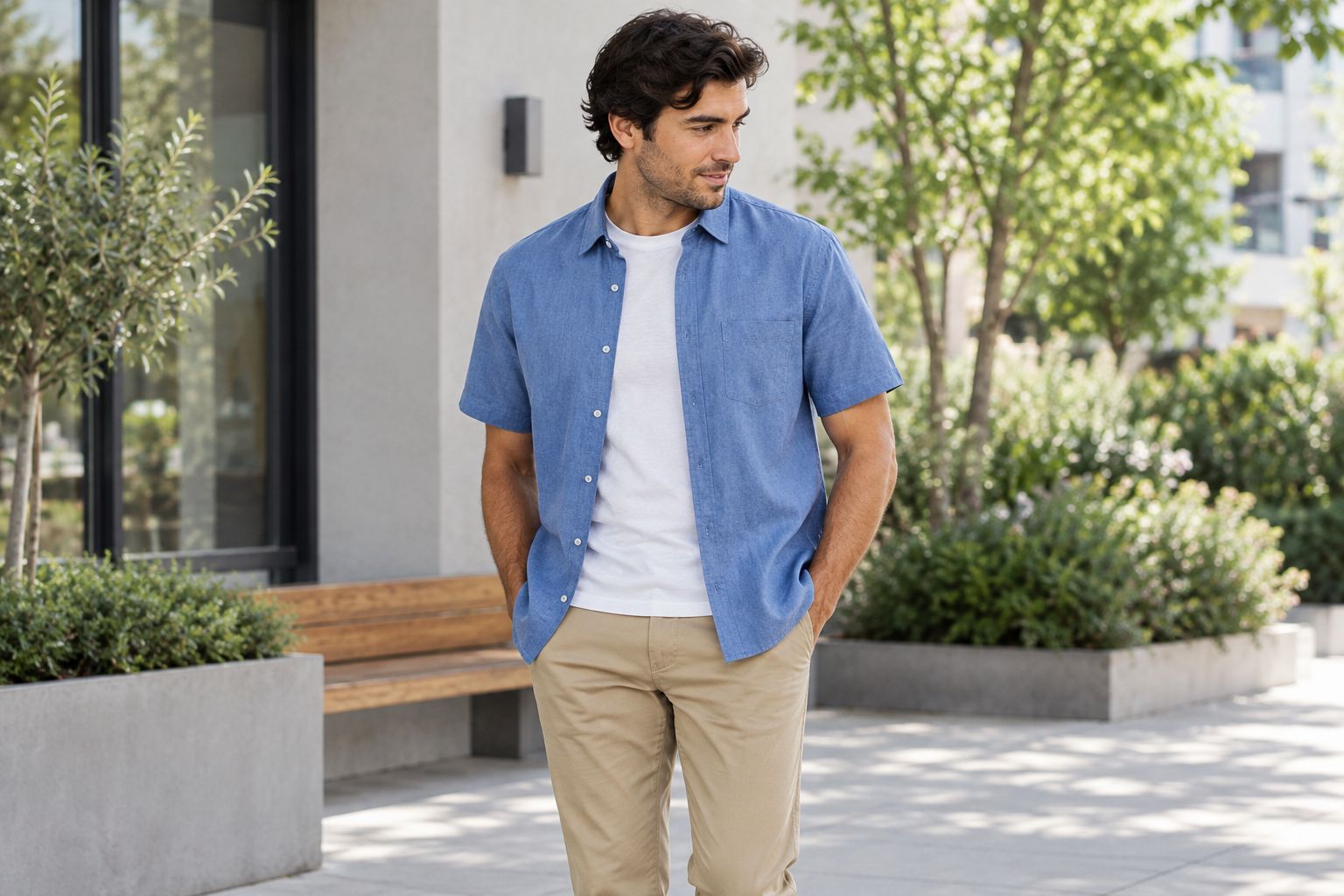
Shoes should suit the setting and the rest of your clothes. The layered top does not turn a casual outfit into formal dress, so follow the occasion’s dress code before adding accessories.
Can you tuck the t-shirt in and leave the shirt out?
Tuck the tee and leave the shirt out when you want to contain the inner hem. Smooth the tee around the waistband, then sit down and stand up to check that it does not pull tightly across your torso.
This works best when the outer shirt looks intentional untucked. If its tails dominate the outfit, change the shirt rather than using the tucked tee to compensate.
Can you wear a t-shirt under a short-sleeve shirt?
Wear a t-shirt under a short-sleeve shirt when the outer sleeves comfortably cover the tee sleeves. An open front makes the layered styling clear, but the upper arms still need checking.
If the inner sleeves extend beyond the shirt sleeves, decide whether that visible edge is intentional. For a simpler finish, choose a tee with sleeves that remain covered.
FAQ
What’s the easiest way to layer a t-shirt under a shirt?
Wear a plain crew-neck tee beneath an open button-up with enough room through the chest and shoulders. Smooth the tee first, then check movement and keep its hem covered for a simple starting outfit.
Should my t-shirt be tighter than my button-up shirt?
Your t-shirt should sit closer to your body than the outer shirt without feeling tight. The aim is a smooth inner layer, not compression or a bulky fold beneath the shirt.
Can I wear a graphic tee under a printed shirt?
You can wear a graphic tee under a printed shirt, but both layers compete for attention. Choose a plain tee if you want the shirt’s print to remain the focus.
Should I size up my button-up for layering?
Do not automatically size up your button-up for layering. Try it over the intended tee and check the shoulders, chest, sleeves and length before changing sizes.
Is a t-shirt under a shirt suitable for the office?
A t-shirt under a shirt suits an office only when the workplace dress code accepts that casual combination. Buttoning the shirt creates a quieter appearance but does not replace a formal dress requirement.
Can I layer a longline t-shirt under a shirt?
A longline t-shirt works beneath a shirt when you deliberately want a visible lower hem. Keep the tee covered if you prefer a simpler silhouette without another horizontal line.
Which Blkwd t-shirt is described for wearing under an open shirt?
PERCY - T-SHIRT is described for wearing on its own or under an open shirt. It is a petrol short-sleeve tee; check its colour, length and fit against the shirt you intend to wear.
One last thing
Before buying another layer in 2026, try your existing shirt with a different tee. A better-fitting inner layer can fix the outfit without changing the outer shirt. Start with the sleeves and waist: those hidden folds often explain why an otherwise good shirt feels wrong over a tee.