Gym instructors’ T-shirt selection is the process of matching teaching clothes to movement, perspiration and client-facing duties so you can coach without clothing getting in the way. This 2026 guide to t-shirts for gym instructors separates everyday coaching tops from technical training needs, then explains how to check fit, compare options and build a practical rotation.
- Choose t-shirts for gym instructors by teaching intensity, movement and care requirements, not appearance alone.
- Blkwd offers everyday T-shirts; PERCY and TINDAL are not described as technical training garments.
- Test overhead reach, squats and floor demonstrations before committing to a teaching top.
- Keep casual coaching clothing separate from garments selected for sustained, sweaty exercise.
Why T-shirt selection matters for gym instructors
An instructor’s top has to work while you demonstrate exercises, watch clients and move between sessions. A garment that looks right standing still can pull across the shoulders, expose your waist during a reach or bunch beneath a microphone belt.
Choose for the work you actually do, not the workout pictured in an advertisement. Your needs change between a consultation, a weights-floor shift and a class you actively complete alongside participants. For your 2026 wardrobe, assign clothing to those duties before choosing colours.
Blkwd sells men’s everyday clothing, including T-shirts and polos. That makes its range relevant to casual coaching wardrobes, but an everyday clothing description does not establish sweat-wicking, drying speed or suitability for sustained exercise.
How to choose t-shirts for gym instructors
Match your T-shirt to your teaching duties
Start with your timetable, not a shopping basket. Write down which sessions involve mostly explaining and observing, which require repeated demonstrations, and which keep you exercising throughout. Include outdoor work and any reception or consultation duties.
Use these three labels: Consultations, Demonstrations and Active classes. They describe the job rather than a garment technology. A shirt can suit more than one category, but only after you have checked it during those activities.
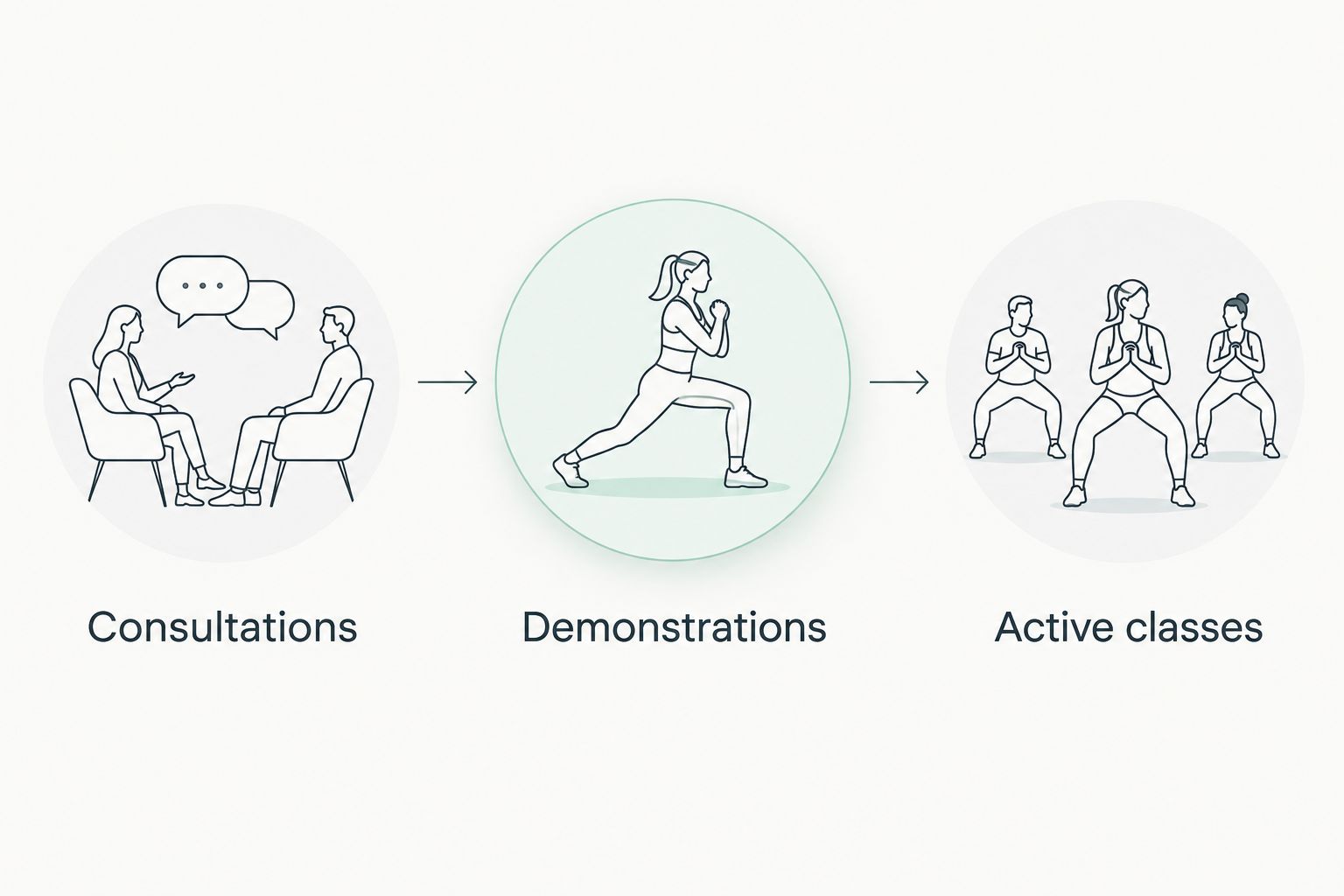
A consultation shirt needs to meet your workplace’s presentation requirements. A demonstration shirt also needs unrestricted movement and coverage. An active-class shirt needs assessment under the sustained activity you teach; a relaxed fitting-room check does not answer that question.
- List your regular duties under the three labels.
- Note whether each session is indoors or outdoors.
- Record any uniform or logo requirements from your gym.
- Identify sessions that require a change of clothing afterwards.
Test the fit through your actual movements
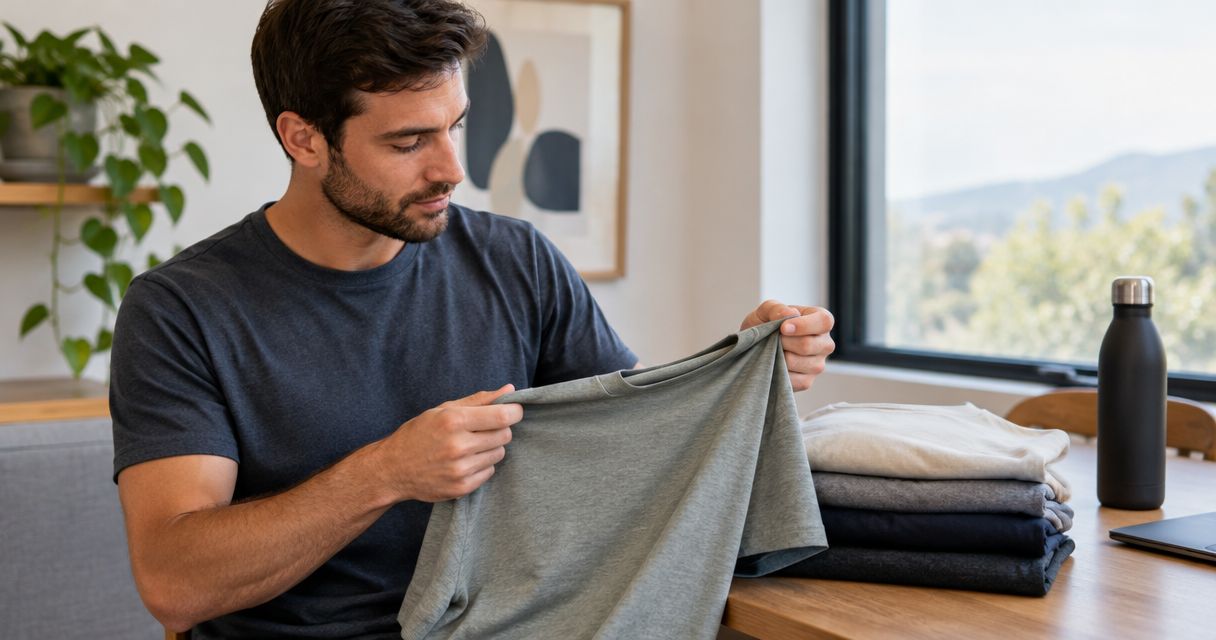
Use a T-shirt you already own as your starting point. Check its shoulder position, sleeve opening, torso room and hem coverage, then repeat the movements you demonstrate at work. Do not assume that a familiar size means the same fit across different garments.
Try 3 movement checks: an overhead reach, a squat and a forward hinge. Repeat each for 5 repetitions as a practical fitting exercise, not a performance standard. Watch whether the neckline shifts, the sleeves bind or the hem needs constant adjustment.
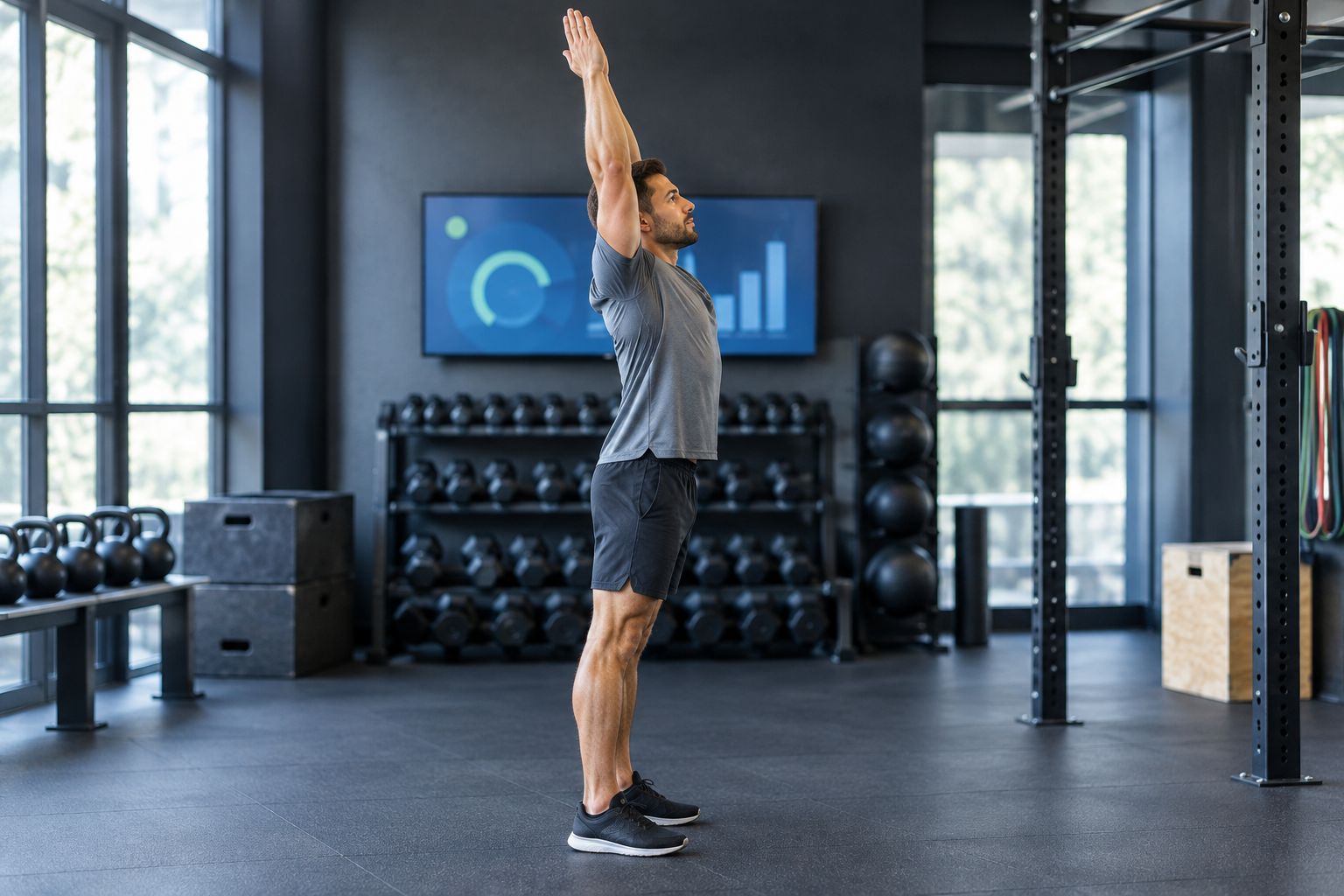
Reject a teaching fit that requires repeated adjustment. A closer cut is not automatically restrictive, and a looser cut is not automatically practical. Judge the garment on your body during the task.
- Reach overhead without pulling the hem down afterwards.
- Squat and hinge while checking waist coverage.
- Cross your arms to check upper-back restriction.
- Practise a floor demonstration to check neckline movement.
- Wear your usual microphone setup if your classes require one.
Separate everyday tees from technical training tops
Read the fibre composition, construction details and care label before treating any T-shirt as exercise clothing. For garments you already own, keep notes on comfort during a representative session and how they behave after washing. Product names alone do not establish performance.
Blkwd is best suited to instructors shopping for everyday T-shirts rather than relying on technical sportswear claims. In its T-shirt range, PERCY - T-SHIRT is described as a short-sleeve everyday tee in petrol. TINDAL - HENLEY TEE has textured fabric, a regular fit and a buttoned half-placket.
Neither supplied description identifies moisture-wicking technology, drying performance or exercise-specific testing. Treat both as casual wardrobe candidates, not proven high-intensity class tops. For your 2026 shortlist, confirm composition and care requirements before deciding whether either suits your duties.
- Read the composition rather than guessing from appearance.
- Look for explicit performance information when you need it.
- Check seams and textured areas against your skin.
- Assess buttons and plackets during floor demonstrations.
- Keep everyday and active-class requirements separate.
These two options belong in the everyday side of the comparison. Their stated features help you distinguish a simple short-sleeve tee from a textured Henley; neither description supports a claim of technical training performance.


Check presentation against your workplace rules
Look at your gym’s actual dress requirements before choosing a personal uniform. Ask about permitted colours, visible branding and whether instructors need a different top for consultations. Do not commission decoration until you know the rules and have tested the garment.
Presentation also includes how a T-shirt behaves during demonstrations. Check the neckline when leaning towards a client and the back hem when setting up equipment. If you teach with a microphone, check the complete outfit with its belt or transmitter rather than assessing the top alone.
Blkwd’s T-shirt descriptions establish everyday styling features, not suitability for uniform printing or microphone attachment. Ask the relevant decorator about the exact garment before adding a logo; fabric composition and the intended decoration method need to be assessed together.
- Confirm permitted colours and branding with your manager.
- Check front and back coverage in a mirror.
- Assess whether a textured finish suits the uniform brief.
- Trial the microphone arrangement during movement.
- Approve an undecorated sample before requesting customisation.
Build your rotation around laundry and session changes
Count the teaching blocks that need a clean top between laundry opportunities. Base the rotation on your schedule, not a fixed wardrobe number. An instructor who changes after an active class has different needs from someone conducting consultations throughout a shift.
For example, if your timetable requires 2 clean tops per day, use that requirement to plan your rotation. This is a planning example, not a recommendation that every instructor needs that quantity. Include drying time and keep a clean replacement accessible when your timetable calls for one.
For a 2026 refresh, test a small selection before buying duplicates. Check the care label first, then assess the washed garment for fit, seam comfort and appearance. Do not assume a tee that works before washing will feel identical afterwards.
- Count clean-top changes between laundry opportunities.
- Follow each garment’s stated washing instructions.
- Check whether drying arrangements fit your schedule.
- Separate used teaching clothing from clean replacements.
- Reassess fit after washing before expanding the rotation.
Review the shortlist during a representative shift
Use your existing clothing to establish a baseline before replacing anything. Record what distracts you: a lifting hem, restrictive sleeves, neckline movement or discomfort under equipment. Your notes turn a vague preference into useful selection criteria.
Assess candidates under comparable duties where practical. A comfortable consultation does not prove a top works for a class, and a successful exercise demonstration does not establish comfort across an entire shift. Evaluate each use separately rather than awarding one overall pass.
Keep only options that solve a defined wardrobe need. For your 2026 review, a simple checklist is more useful than an unsupported fabric claim. Record the result after wearing and caring for the garment according to its instructions.
- Note movement restrictions during demonstrations.
- Check coverage throughout the shift.
- Record comfort with your usual equipment.
- Assess fit and appearance after laundering.
- Assign each successful garment a specific teaching role.
Compare options for your teaching role
There is no single best T-shirt for every instructor. Compare an everyday garment’s stated features with the information available for a technical training top, then choose according to your duties. Technical wording is useful only when the garment’s description explains what it means.
The Blkwd T-shirt options below have everyday clothing descriptions. Their limitations are information boundaries, not evidence that they fail during exercise.
| Option | Best for | Main advantage | Key limitation |
|---|---|---|---|
| PERCY - T-SHIRT | Assessing a simple everyday tee for casual coaching duties | Short-sleeve everyday styling in petrol | No stated moisture-management or drying-performance information |
| TINDAL - HENLEY TEE | Assessing a textured everyday top for client-facing duties | Regular fit with a buttoned half-placket | Placket needs a movement check; no stated technical training performance |
| Technical training T-shirt with documented features | Active teaching where those features match your requirements | Lets you assess specific exercise-related claims | A performance description does not establish your personal fit |
| Existing T-shirt that passes your checks | Establishing a baseline before replacing clothing | You can assess a garment you already own | Previous casual comfort does not prove suitability for every teaching duty |
Best for active classes: prioritise documented exercise-related features and a successful movement check. Best for everyday coaching: assess simpler tees against your workplace rules, comfort requirements and care routine. Do not make either choice on appearance alone.
Common mistakes gym instructors make
Buying for standing posture only
A top can look tidy in a mirror and shift during an overhead demonstration. Check it through your teaching movements before assigning it to class use. Pay particular attention to coverage when bending and reaching.
Treating an everyday description as a sports specification
Words such as everyday, textured and regular fit describe aspects of a garment, not sweat management. Do not add performance claims that the product information does not make. Ask for the missing details when they affect your decision.
Choosing one top for every duty
Reception work, technique coaching and active group exercise create different clothing requirements. Build around those tasks rather than forcing one style into every role. A change of top can be more practical than a compromise you notice throughout the shift.
Decorating before testing
A logo does not fix a restrictive sleeve or an uncomfortable neckline. Assess the undecorated garment, its care instructions and the decoration requirements first. For a team uniform, gather individual fit feedback rather than approving one sample on everyone’s behalf.
FAQ
What's the best way to choose t-shirts for gym instructors?
Choose t-shirts for gym instructors by matching them to teaching duties, movement and care requirements. Check coverage during demonstrations and look for documented exercise-related features when sustained activity demands them.
Can I wear an everyday T-shirt while coaching?
An everyday T-shirt is a candidate for coaching if it meets your workplace rules and passes your movement and comfort checks. Do not assume that suitability for consultations also establishes suitability for an active class.
Are Blkwd T-shirts technical gym tops?
The supplied PERCY - T-SHIRT and TINDAL - HENLEY TEE descriptions do not identify technical gym performance. They describe everyday styling, so confirm any exercise-specific requirements separately.
Should a gym instructor's T-shirt be tight or loose?
Choose a fit that permits your teaching movements without repeated adjustment. Check shoulder movement, neckline position and hem coverage rather than choosing by a tight or loose label alone.
Is a Henley tee suitable for teaching exercise?
Assess a Henley tee against the movements and equipment your teaching involves. Check the buttoned placket during floor demonstrations and do not treat its styling as evidence of training performance.
How many T-shirts do I need for a teaching week?
Base your rotation on clean-top changes between laundry opportunities. Include the sessions that require a fresh top and the time your care routine needs for drying.
Can I add my gym logo to an everyday T-shirt?
Confirm the exact garment's suitability with your decorator before adding a gym logo. Check workplace permission, fabric composition and the proposed decoration method, then approve a sample.
One last thing
Your most useful fitting tool is your teaching sequence. Take a familiar demonstration through its full range while wearing a candidate top. If you keep interrupting the movement to adjust your clothing, the garment has already answered the question that a standing mirror cannot.