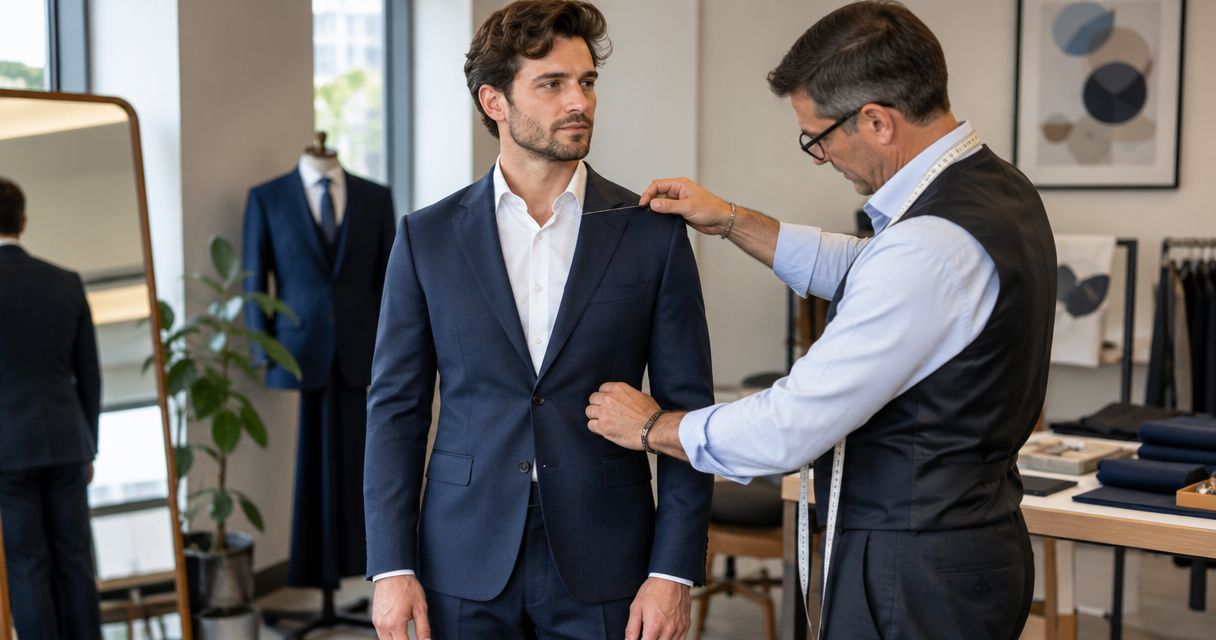
A linen shirt is not automatically too casual for a job interview: wear it when the employer confirms a smart-casual dress code, and choose a conventional dress shirt when business-formal clothing is expected. Linen's visible creasing and relaxed texture make the particular shirt—and how you wear it—more important than the fabric name. For a 2026 interview with no dress-code guidance, choose the more formal shirt rather than asking linen to pass as formalwear.
- Is a linen shirt too casual for an interview? Not with a confirmed smart-casual dress code and neat styling.
- Choose a conventional dress shirt for business-formal interviews or when the expected dress code remains unclear.
- Long sleeves, an opaque fabric and a tidy collar make linen easier to dress up.
- Blkwd sells men's shirts and blazers; choose interview clothing against the employer's instructions, not the retailer's styling.
Why this matters
Your interview outfit should let you concentrate on the conversation. If you keep adjusting an open collar, checking a transparent shirt or worrying about deep creases, the outfit needs another look before interview day.
The distinction is between intentional smart casual and visibly relaxed weekend clothing. Start with the employer's instructions; use the smart-casual shirts for corporate offices guide to think through the shirt's role within the whole outfit.
Is a linen shirt too casual for an interview?
A linen shirt works for a confirmed smart-casual interview, but it is not the safest default for a formal or unspecified dress code. Judge the invitation first, then the shirt's construction, condition and styling. A collar alone does not turn a relaxed shirt into business-formal clothing.
| Interview dress code | Recommended shirt choice | Best for | Advantage | Limitation |
|---|---|---|---|---|
| Business formal | Conventional long-sleeve dress shirt | An interview requiring a suit | Keeps the outfit consistently formal | Less relaxed than a casual workplace requires |
| Confirmed smart casual | Neatly pressed, opaque linen shirt | An interview where tailored separates are appropriate | Offers a textured alternative to a dress shirt | Creases remain visible during wear |
| Explicitly casual | Tidy linen shirt with restrained styling | An employer that specifically permits casual interview clothing | Fits a less formal brief | Beach-style details can still look out of place |
| Unspecified | Conventional long-sleeve dress shirt | An interview with no reliable clothing guidance | Avoids relying on a relaxed fabric to meet an unknown standard | Can feel dressier than the everyday workplace |
These are outfit recommendations, not claims about what every employer accepts. An interviewer can request formal clothing in a workplace where employees usually dress casually. Follow that request rather than treating staff photos as permission to dress down.
Ask the recruiter instead of guessing
Ask whether the interview dress code is business formal, business casual or smart casual. That gives you a usable answer without needing to explain the contents of your wardrobe.
If the response is simply to dress professionally, clarify whether a suit is expected. An office's social media photos are secondary evidence: an image from a staff celebration does not establish the interview dress code.
When a linen shirt is an appropriate choice
A linen shirt is a reasonable choice when the employer confirms that smart-casual clothing is appropriate and the shirt itself looks tidy. Choose a plain or restrained design, a collar that sits properly and a hem that works with the way you intend to wear it.
Long sleeves are the safer styling recommendation when you want linen to look more dressed up. Keep the sleeves down initially; rolling them before you arrive deliberately makes the outfit more casual. Neither sleeve length nor colour overrides an explicit instruction to wear business-formal clothing.
Build a coherent outfit
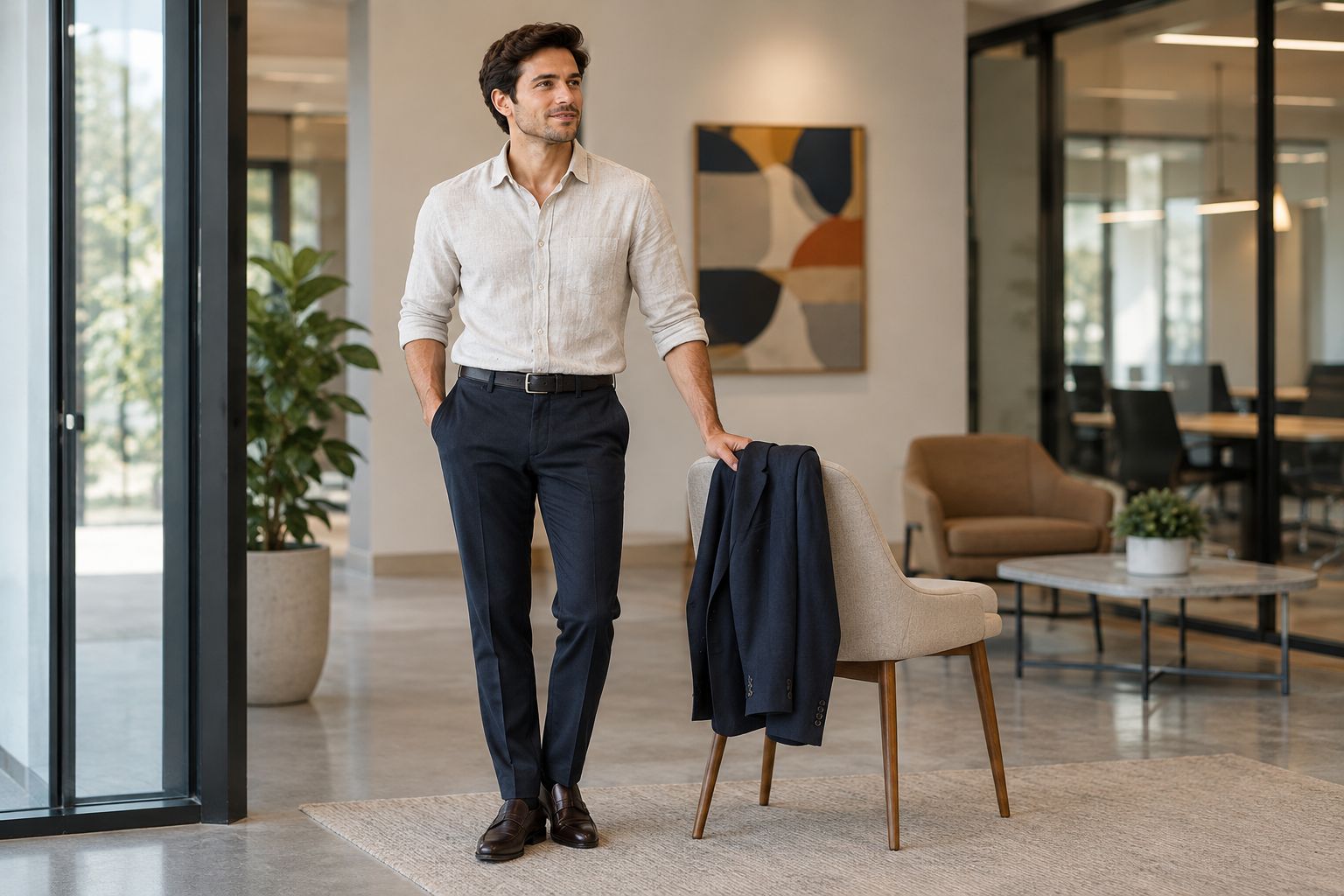
Pair the shirt with tailored trousers or neat chinos rather than distressed denim or shorts. Choose clean, understated footwear suited to the dress code. The point is consistency: a carefully pressed shirt cannot compensate for an otherwise visibly casual outfit.
A blazer can make the combination more structured, but it does not erase the shirt's features. A loose collar, open neckline or heavily crumpled front remains visible underneath. Check the outfit with the jacket both on and off.
Avoid confusing summer clothing with interview clothing
Warm weather does not establish the dress code. You still need to distinguish between an outfit that feels comfortable outside and one that meets the interview brief.
For a summer interview in 2026, plan your journey and clothing together. Carry your jacket if appropriate, avoid crushing the shirt beneath a tightly packed bag and check your appearance after travelling. Do not choose linen solely because the forecast is warm.
When you should choose a dress shirt instead
Choose a conventional dress shirt when the invitation requires business-formal clothing or a suit. A smooth, structured shirt is a clearer match for that instruction than one chosen for its relaxed linen texture.
Also choose the dress shirt if your available linen shirt has a camp collar, conspicuous holiday print, pronounced transparency or an oversized casual cut. Those details matter independently of fibre content. An opaque, well-fitting shirt is a better starting point than a fabric label you hope will sound appropriate.
Do not use a tie as a repair
A tie does not automatically make a casual linen shirt suitable. Check whether the collar holds its shape and closes comfortably before considering neckwear. If it collapses, pulls or looks awkward buttoned, select another shirt.
Likewise, avoid buying a jacket solely to rescue a shirt that does not fit the brief. Begin with the required formality, then choose compatible pieces. That is simpler than trying to correct a casual outfit through accessories.
Why a linen shirt's formality varies
Linen describes the fibre, not a complete dress code. For your 2026 interview, assess these visible features rather than assuming every linen shirt belongs in the same category:
- Collar structure: A tidy collar creates a more dressed appearance than a soft, spread-open neckline. Check how it sits without repeatedly adjusting it.
- Sleeve styling: Long sleeves worn down give you a more formal starting point. Short sleeves and rolled cuffs deliberately relax the look.
- Fabric opacity: Check the shirt in daylight. Visible underwear or strong transparency introduces a distraction that pressing cannot fix.
- Fit and hem: Pulling buttons, excess fabric and a hem that repeatedly escapes your trousers make the outfit look unsettled. Choose a shirt that supports your intended styling.
- Colour and pattern: Plain colours and restrained patterns are easier to combine into an understated interview outfit. Large novelty or holiday prints push the outfit towards leisurewear.
- Condition and creasing: Linen naturally wrinkles, but natural texture is different from an unpressed collar, stained cuffs or a shirt pulled straight from a laundry basket.
No feature works alone. A plain white linen shirt can still be transparent or poorly fitted; a darker shirt can still have an unsuitable casual collar. Assess the complete garment.
How do I check a linen interview outfit before leaving?
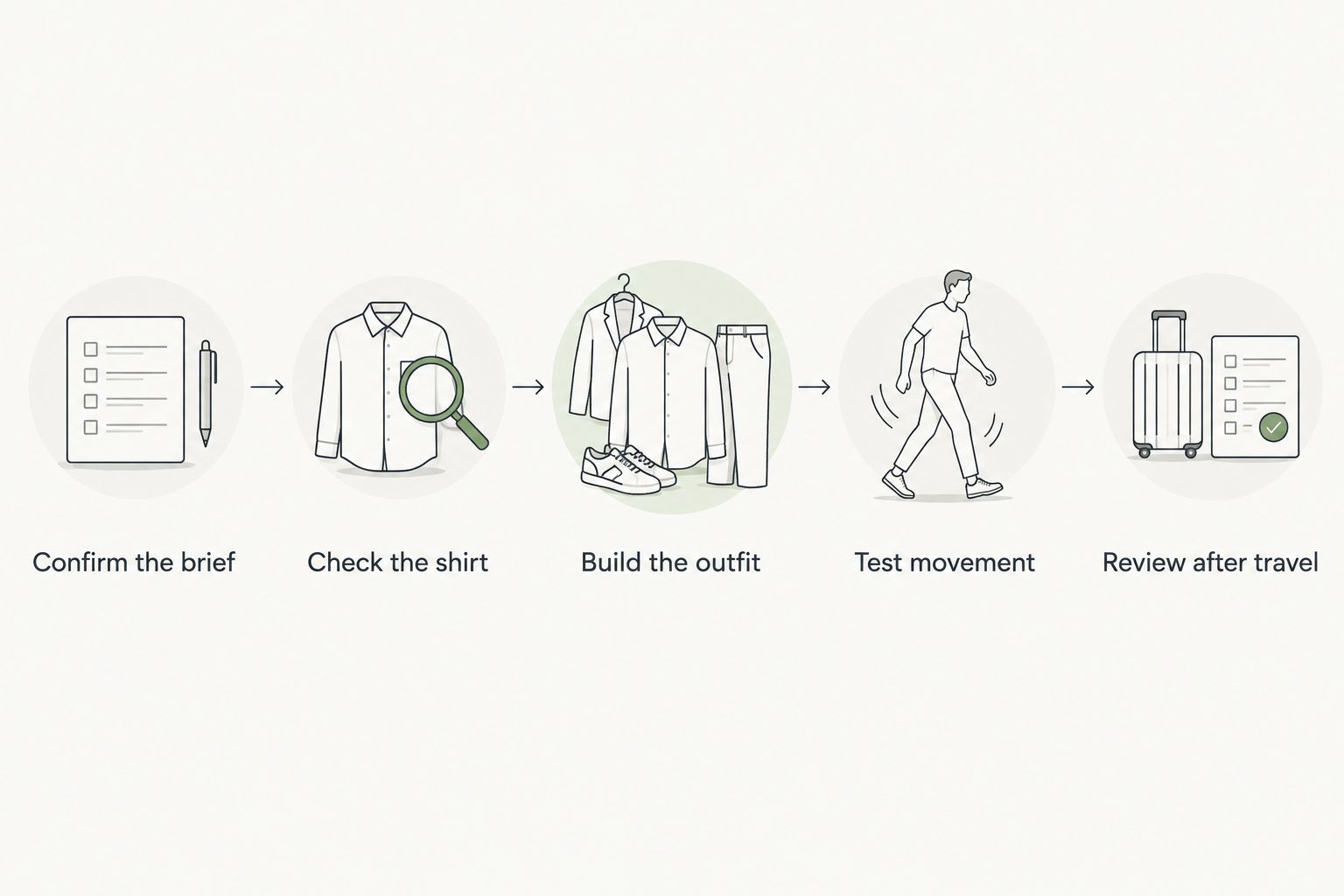
Use this sequence for your 2026 interview outfit. Check the dress code before spending time styling a shirt that does not meet it. The remaining checks help you decide whether your particular linen shirt is ready to wear.
- Confirm the brief. Read the invitation and any recruiter guidance. Resolve an unclear dress code before treating smart casual as the default.
- Check the shirt. Inspect the collar, cuffs, buttons and fabric in daylight. Reject stains, damage, distracting transparency and uncomfortable pulling.
- Build the outfit. Put on the trousers, footwear and any jacket you intend to wear. Assess whether every piece belongs at the same level of formality.
- Test movement. Sit, stand and reach forward naturally. Check whether the shirt gaps, restricts your shoulders or comes untucked.
- Review after travel. Check the collar, front and hem when you arrive. Smooth ordinary creasing rather than trying to make linen look like a different fabric.
A movement check is more useful than judging the shirt only while standing perfectly still. Interviews involve sitting and gesturing, so the outfit needs to work in those positions too.
Prepare the fabric according to its care label
Follow the garment's care instructions for washing, drying and ironing. Do not assume that every linen shirt tolerates the same treatment, particularly when the fabric includes other fibres or the shirt has decorative details.
Press or steam only as the care label permits, then hang the shirt rather than folding it into a crowded bag. Expect some creasing when you sit. The aim is a clean, prepared garment—not a promise that linen will stay perfectly smooth.
Can I wear a linen shirt with a blazer to an interview?
A linen shirt with a blazer suits an interview where smart-casual clothing is explicitly appropriate. Choose pieces that sit comfortably together and check that the shirt collar stays tidy beneath the jacket.
The limitation is straightforward: a blazer does not turn every linen shirt into formal interview clothing. If the employer requests a suit, build the outfit around that instruction instead of substituting unrelated separates.
Should I tuck in a linen shirt for an interview?
Tuck in a linen shirt when you are building a tailored, smart-casual interview outfit and the shirt's length supports it. A secure, comfortable tuck helps the outfit look deliberate, especially with tailored trousers.
Do not force a very short casual shirt into trousers if it escapes whenever you sit. Select a more suitable shirt rather than spending the interview correcting the hem. Check the fit while seated before making the final decision.
Is a linen shirt suitable for a video interview?
A linen shirt is suitable for a video interview when it meets the same dress code as an in-person meeting. Video does not make an explicitly formal interview casual; check the collar, fit and visible fabric condition on camera.
Preview the shirt under the lighting you will actually use. Look for transparency, distracting patterns and a neckline that opens awkwardly when seated. Wear the complete intended outfit so standing up does not create a last-minute problem.
Where Blkwd fits into your outfit choice
Blkwd is best for men shopping for clothing separates, not for establishing an employer's interview dress code. The Australian online retailer sells men's shirts, trousers, suits and blazers, giving you clothing categories to consider once the brief is clear.
The limitation is that a retail category does not establish interview suitability. Inspect the individual garment's description, fit and styling rather than assuming that every shirt or blazer meets the same standard. Buy to fill a specific outfit gap, not simply to add another layer.
FAQ
Is a linen shirt too casual for an interview in Australia?
A linen shirt is not too casual when the employer confirms a smart-casual dress code and the shirt looks tidy. Choose a conventional dress shirt for business-formal interviews or when the dress code remains unclear.
Can I wear a short-sleeve linen shirt to a job interview?
Wear a short-sleeve linen shirt only when the interview dress code clearly supports casual clothing. For a more dressed smart-casual outfit, choose long sleeves and keep them down.
Is a white linen shirt formal enough for an interview?
A white linen shirt is not automatically formal enough for an interview. Check the dress code, collar structure, opacity and fit rather than treating white as proof of formality.
Will wrinkles in a linen shirt look unprofessional?
Natural linen creasing is different from arriving in an unprepared shirt. Follow the care label, prepare the collar and cuffs carefully, and choose another fabric if you want a smoother appearance.
Should I wear a tie with a linen interview shirt?
Wear a tie only if the shirt's collar supports it and the combination meets the interview dress code. A tie does not correct a casual cut, poor fit or unsuitable collar.
What should I wear if the recruiter does not specify a dress code?
Choose a conventional long-sleeve dress shirt if you cannot clarify the dress code. Ask whether a suit is expected rather than assuming a casual workplace means a casual interview.
Does Blkwd sell clothing categories I can consider for an interview?
Blkwd sells men's shirts, pants, suits and blazers. Choose the individual garments against the employer's dress code; the category name alone does not establish suitability.
One last thing
Before your 2026 interview, judge the outfit while seated—not just in a full-length mirror. A shirt that looks tidy standing up can pull across the buttons, open at the neckline or come untucked once you sit.
If you are still debating whether your linen shirt is too casual, remove the uncertainty with a more formal shirt. Your clothing choice should be settled before the conversation begins.