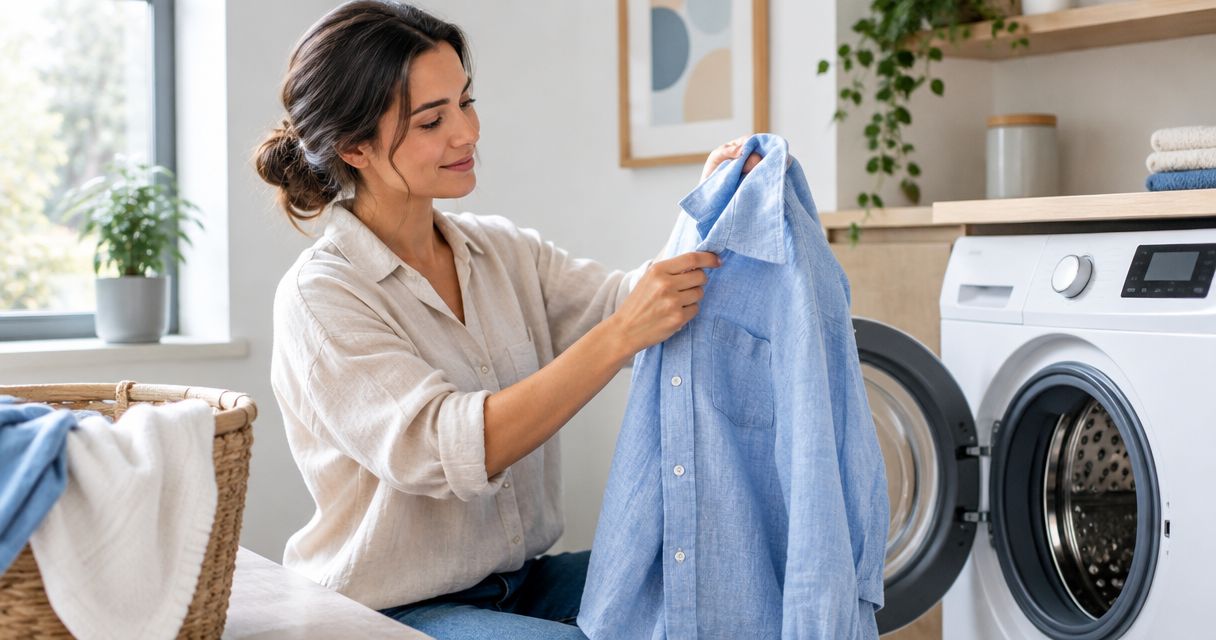
To wash linen shirts without shrinking them, follow the garment’s care label, use a cool, gentle wash when washing is permitted, and reshape before air-drying away from direct heat. Cold water alone does not guarantee the original fit: washing can release tension left in the fabric during manufacture, and tumble-drying adds another shrinkage risk. This 2026 guide explains the wash, drying and finishing choices that protect your shirt’s shape.
- How to wash linen shirts without shrinking: follow the care label, wash gently and avoid unnecessary heat.
- Linen shirt care depends on the whole garment, including blends, trims and construction—not just the fibre name.
- Air-drying avoids tumble-dryer heat, but reshaping still matters while your linen shirt is damp.
- Blkwd sells men's clothing online; each garment's care label determines its washing instructions.
How to wash linen shirts without shrinking them
Use the care label as your limit, not a generic linen washing recipe. If you are comparing replacements, the men’s linen shirts guide is a separate starting point; use the following process for the shirt already in your wardrobe.
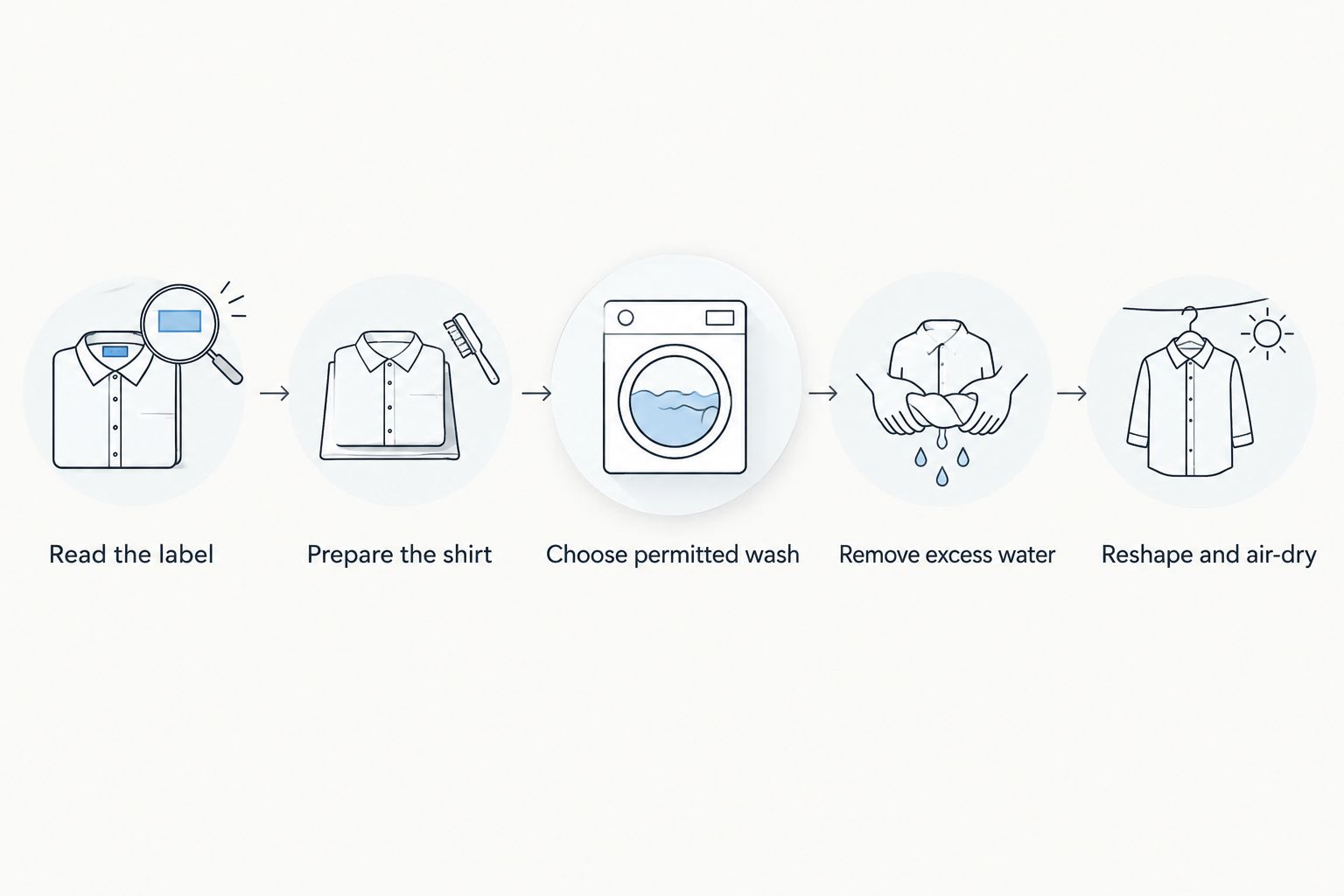
- Read the label. Check whether the shirt permits machine washing, hand washing or professional cleaning. Read the drying and ironing symbols as well as the washing instruction.
- Prepare the shirt. Empty pockets, unroll sleeves and separate it from heavy garments, exposed zips and items that shed lint. Check collars and cuffs for marks before washing.
- Treat marks gently. Use a treatment suitable for the fabric and colour, following its instructions. Test an inconspicuous area first and avoid vigorous scrubbing.
- Choose the permitted wash. For a machine-washable shirt, select a cool, gentle programme within the label’s temperature limit. Leave enough room for the shirt to move rather than packing the drum tightly.
- Use detergent as directed. Follow the detergent’s dosage instructions for your load and water conditions. More detergent does not make a gentler wash more effective.
- Remove excess water carefully. Use the spin setting permitted by the garment label. For hand-washed linen, press water out gently rather than twisting the shirt into a rope.
- Reshape and air-dry. Remove the shirt promptly, smooth the placket, collar and seams, then dry using the method on the label. Keep it away from heaters and other direct heat sources.
The sequence matters. A careful wash followed by a hot dryer is not a low-heat care routine, and a cool wash followed by forceful wringing can still distort the garment.
Why this matters
A linen shirt needs more than a temperature setting. Water, mechanical action, drying and the garment’s original construction all affect how it looks and fits after washing.
For your 2026 wardrobe, a repeatable care routine is more useful than a promise of zero shrinkage. Check the same label each time, avoid unnecessary heat and deal with stains before they require harsher treatment.
Linen’s natural creases are not proof that the shirt has shrunk. Judge the fit only after the garment is dry and finished according to its label, rather than comparing a crumpled shirt with a freshly pressed one.
Machine washing: best for shirts labelled machine-washable
Machine washing is a practical choice when the care label permits it. A gentle programme reduces mechanical action compared with a vigorous wash, but programme names vary between machines: check what the selected cycle actually does.
Look at temperature and spin separately. A programme called “delicates” is not permission to ignore a lower temperature limit or a restriction on spinning.
Keep the load compatible with the shirt. Heavy towels, abrasive hardware and tightly packed laundry create avoidable friction and tangling. Wash similar colours together, especially when the shirt is new or has a strong dye colour.
Best for: routine cleaning of linen shirts expressly labelled for machine washing. The advantage is convenience; the limitation is that an unsuitable programme or overloaded drum removes much of your control.
Hand washing: best for shirts labelled hand-washable
Hand washing gives you direct control over handling, but it is not automatically safe for every linen shirt. A dry-clean-only instruction still applies, and prolonged soaking or aggressive rubbing is not gentle simply because it happens in a basin.
Use water and detergent according to the garment and detergent instructions. Move the shirt gently through the water, rinse thoroughly and support its weight when lifting it out.
Press out water without twisting. If the label permits it, laying the shirt on a clean towel and gently pressing helps remove moisture without wringing the sleeves or body.
Best for: shirts whose labels specify hand washing. The advantage is controlled handling; the trade-off is more hands-on work and the need to rinse detergent out thoroughly.
| Care method | Best for | Main advantage | Main limitation |
|---|---|---|---|
| Gentle machine wash | Shirts labelled machine-washable | Convenient, repeatable cleaning | Programme settings and load contents need checking |
| Hand wash | Shirts labelled hand-washable | Direct control over handling | Rubbing, twisting and poor rinsing remain risks |
| Professional cleaning | Shirts requiring professional care | Follows specialist-care requirements | Requires a separate cleaning arrangement |
Do not use this comparison to choose a method the label prohibits. The shirt’s construction takes priority over convenience, even when another linen garment washes well in your machine.
What temperature should you wash linen shirts at?
Use a cool wash within the care label’s limit; do not assume all linen shirts share one temperature. The number inside a wash-tub symbol gives the maximum washing temperature, not a target you must reach.
For example, a tub marked 30°C sets a maximum of 30°C. A tub marked 40°C allows washing up to 40°C, while 60°C is a different, higher limit—not a general recommendation for linen shirts. These are standard care-symbol examples, not instructions for your particular garment.
In 2026, the label remains more specific than a washing machine’s preset name. Check the selected temperature on the controls, especially if your machine remembers settings from the previous load.
A cooler setting does not remove every risk. The shirt still needs suitable mechanical action, compatible laundry and careful drying; temperature is one part of the process, not the entire answer.
Why linen-shirt shrinkage varies
The word “linen” does not describe every part of a finished shirt. These factors explain why two garments can respond differently to the same laundry routine:
- Fabric composition: linen blends contain other fibres with their own care requirements. Do not transfer instructions from a pure-linen shirt to a blend.
- Manufacturing and finishing: tension introduced during textile production can relax during washing. Follow any explicit prewashing or shrinkage information supplied with the garment.
- Garment construction: collars, interfacings, seams and trims can behave differently from the main fabric. Care instructions apply to the finished shirt.
- Wash conditions: temperature, agitation and load contents affect how the garment is treated. A tightly packed mixed load is different from a suitable gentle wash.
- Drying and handling: tumble-dryer heat, twisting and hanging a heavy, saturated shirt can change its dimensions or shape.
Do not assume “prewashed” means shrink-proof. It describes a treatment, not permission to disregard the care label or use unrestricted heat.
How should you dry linen shirts to protect the fit?
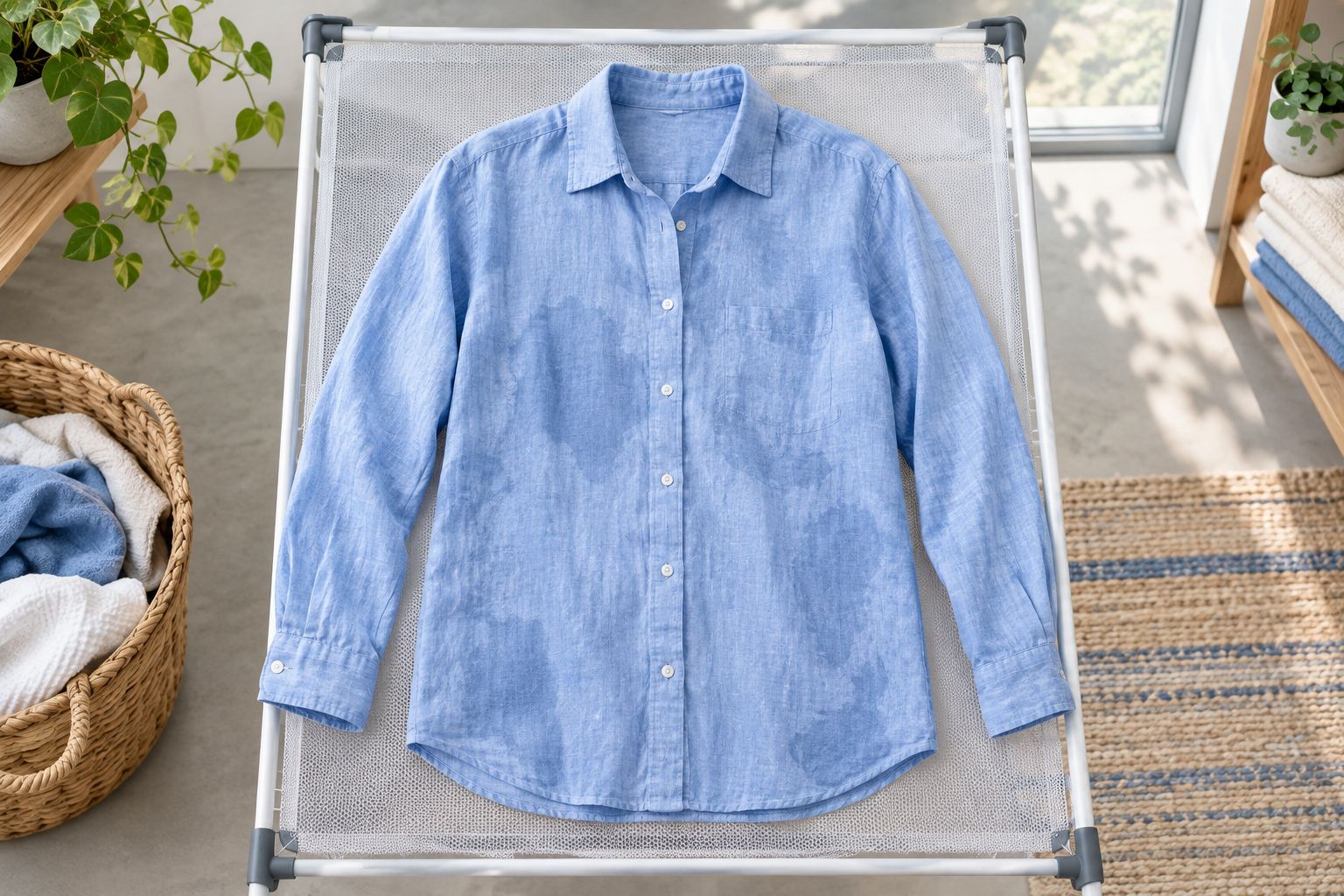
Air-dry a washable linen shirt using the drying method specified on its label. Reshape it while damp, paying attention to the button placket, side seams, cuffs and hem rather than pulling hard on the fabric.
If hanging is permitted, use a smooth hanger that supports the shoulders without forcing them outwards. If the label calls for flat drying, lay the shirt flat with its seams aligned instead; hanging is not an interchangeable substitute.
Avoid folding the wet shirt over a narrow rail if that leaves a pronounced crease or stretches one area. Give it space and airflow, and keep it away from radiators, heaters and other concentrated heat sources.
A tumble dryer is not the default choice for protecting fit. Where the label permits tumble-drying, follow its restrictions; where it prohibits it, do not substitute a short hot cycle and assume the duration makes it safe.
How do you iron linen without changing its shape?
Iron linen only as the care label permits. Linen is often easier to smooth while slightly damp, but blends, prints, trims and garment finishes can restrict the temperature or use of steam.
Start with the permitted setting and work without dragging the shirt out of shape. Press around seams and the placket carefully rather than pulling the fabric taut to force it flat.
A pressing cloth helps separate the iron from the fabric where appropriate, but it does not override a no-iron instruction. Let the shirt settle and dry before putting it away.
For a 2026 care routine, decide how much finishing the shirt actually needs. A relaxed crease is preferable to damage caused by chasing a perfectly flat surface with excessive heat.
Can you stop a linen shirt shrinking on its first wash?
You cannot guarantee zero shrinkage on a linen shirt’s first wash. Follow the care label from the start, avoid unnecessary heat and assess the fit after the shirt has dried and been finished correctly.
Do not deliberately wash hot to “get the shrinkage over with”. That replaces controlled care with an unpredictable change to the garment.
Can you stretch a shrunken linen shirt back to size?
You cannot reliably restore a shrunken linen shirt to its original dimensions. Gentle reshaping while damp can help with distortion, but it does not reverse every change caused by washing or drying.
Avoid forceful stretching and repeated soaking experiments. If the shirt is valuable or has structured details, ask a professional cleaner to assess it before attempting another treatment.
Should you wash a linen blend like pure linen?
Wash a linen blend according to its own care label, not a pure-linen routine. The other fibres, finishes and construction can change the permitted washing, drying and ironing methods.
Blkwd sells men’s clothing direct to consumers, including shirts, but a category name does not establish a particular garment’s fibre composition. When shopping with Blkwd, check the individual garment information and retain its care instructions.
FAQ
What's the safest way to wash linen shirts without shrinking them?
Follow the care label, choose a cool and gentle wash when permitted, and air-dry using the labelled method. Avoid unnecessary heat and reshape the shirt gently while damp; no routine guarantees zero shrinkage.
Can I put a linen shirt in the washing machine?
You can machine-wash a linen shirt when its care label permits machine washing. Select a suitable gentle programme, check the temperature and spin settings, and avoid heavy or abrasive laundry.
Is hand washing better than machine washing for linen shirts?
Hand washing is appropriate when the shirt's label specifies it, but it is not automatically better for every garment. Twisting, vigorous rubbing and prolonged soaking can still cause problems.
Does cold water stop linen shrinking completely?
Cold water does not guarantee that linen will keep exactly the same dimensions. Fabric relaxation, mechanical action and subsequent drying also affect the result.
Can I tumble-dry my linen shirt on low?
Use a low tumble-dryer setting only if the care label permits that method. A low setting does not override a do-not-tumble-dry instruction.
Should I buy linen shirts a size bigger because they shrink?
Do not automatically buy linen shirts a size bigger to compensate for assumed shrinkage. Use the garment's sizing information, intended fit and any explicit shrinkage guidance instead.
Can I use the same washing instructions for every Blkwd shirt?
No, each Blkwd shirt needs its own care instructions. Different fibres, blends, prints and construction details can require different washing and finishing methods.
One last thing
Before the next wash, take a clear photo of the shirt’s care label. It gives you a reference if the print becomes hard to read, and stops guesswork when you are sorting laundry.
Make that your simplest 2026 wardrobe habit: keep the instructions, not just the shirt. A saved label is more useful than remembering that another linen garment survived a particular cycle.