To stop shirts from creasing in storage, put them away clean and completely dry, smooth out existing wrinkles, and hang woven shirts without squeezing them between other clothes. For your 2026 wardrobe routine, fold stretchy tops loosely instead; tightly packed shelves and drawers create pressure marks even after careful ironing.
- How to stop shirts from creasing in storage: dry fully, smooth first, and remove pressure from neighbouring clothes.
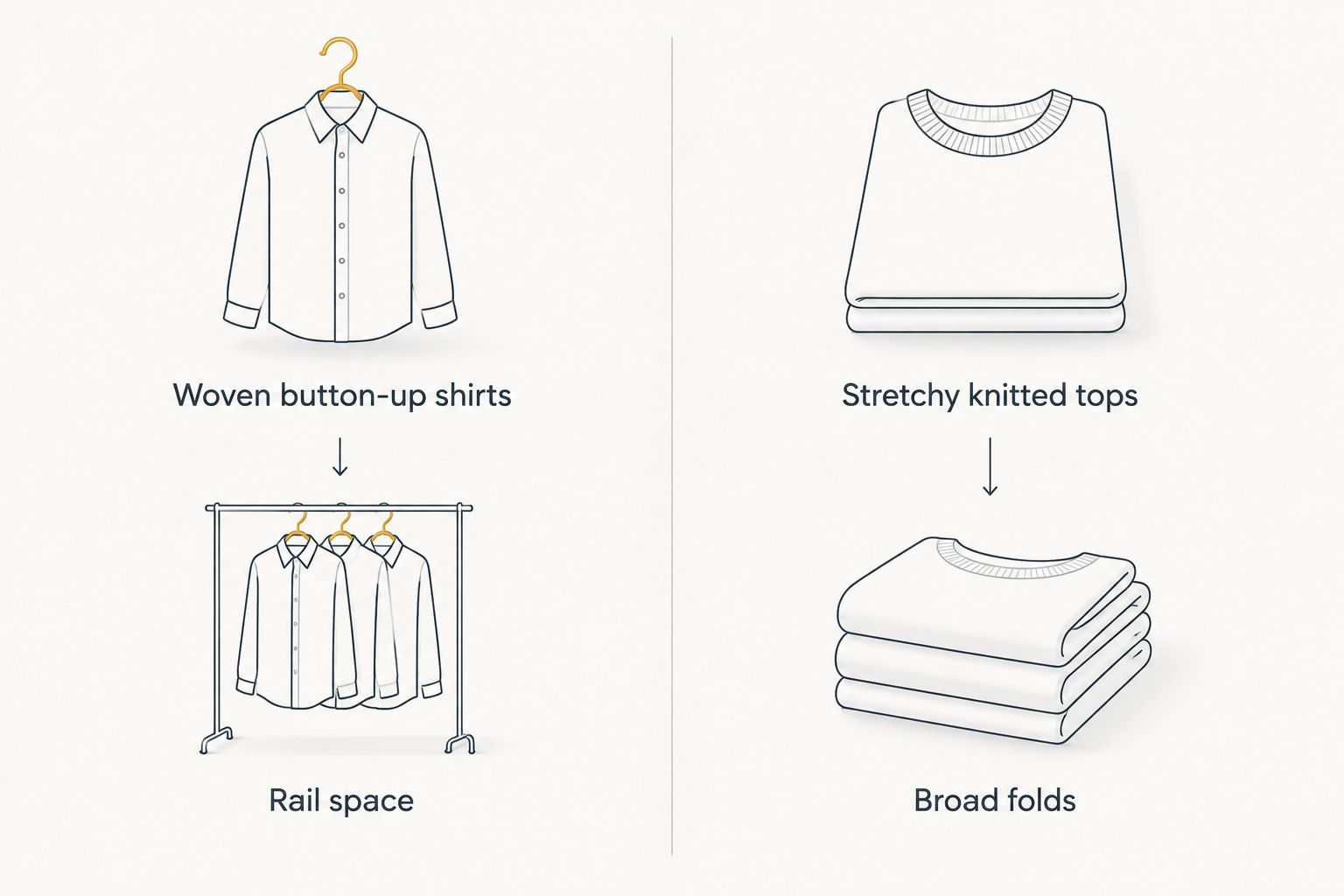
- Hang woven button-up shirts on supportive hangers; fold stretchy knitted tops without compressing them.
- Blkwd cotton and cotton-stretch shirts need care-label checks, not an assumption that stretch means crease-free.
- Fix the storage arrangement before ironing the same creases again.
How do you stop shirts from creasing in storage?
Store a smooth shirt in a position that does not force new folds into it. Dryness, support and space matter more than an elaborate folding technique.
Use this sequence whenever you put shirts away. If wrinkles need removing first, follow the garment label; the guide to ironing a linen shirt without burning it explains the separate issue of heat care for linen.
- Start clean. Check the collar, cuffs and underarms before putting a worn shirt back into longer-term storage. Follow its washing or dry-cleaning instructions rather than treating every fabric alike.
- Dry completely. Check thicker areas such as the collar, cuffs and overlapping placket. Do not shut a shirt in a wardrobe while those areas still feel damp.
- Remove existing wrinkles. Iron or steam only as the care label allows. Storage preserves the position of the fabric; it does not reliably remove creases already present.
- Let the shirt cool and dry again. After pressing or steaming, leave it exposed to the air before folding it or placing it among other garments.
- Choose support or folding. Hang structured woven shirts where possible. Fold knitted or easily stretched tops when hanging would pull them out of shape.
- Remove compression. Check that adjacent clothes, a shelf edge or the drawer above are not pressing against the shirt. You should be able to retrieve it without dragging it through a tightly packed bundle.
Why this matters
A neatly ironed shirt still creases if you push it into a crowded wardrobe. The problem is not necessarily your iron: the fabric is being bent and held under pressure after you finish pressing it.
For a 2026 wardrobe reset, start with the place where the shirt spends its time. A simpler storage arrangement is more useful than repeatedly correcting the same sleeve folds each morning.
You also need to separate wrinkles from stretching. A hanger can reduce fold lines in a woven shirt while creating shoulder bumps in a soft knitted top. Choose the method for the garment, not just the space you have left.
Hanging or folding: which method should you use?
Hanging avoids deliberate folds through the body of a shirt, but only when the hanger supports it and surrounding garments leave it room. Folding saves rail space, with the trade-off that each fold creates a potential crease line.
| Storage method | Best for | Main advantage | Main drawback | What to check |
|---|---|---|---|---|
| Hanging | Woven button-up shirts | Avoids fold lines through the body | Poor support creates shoulder marks; crowding crushes sleeves | Hanger shape, shoulder support and rail space |
| Shelf folding | Knitted tops and shirts kept off the rail | Supports the garment without hanging weight | Heavy stacks press folds into lower garments | Stack weight and shelf edges |
| Drawer folding | Casual shirts and knitted tops | Keeps garments organised without hangers | Overfilling compresses folds and catches fabric | Drawer clearance and ease of removal |
| Breathable garment cover | Infrequently worn hanging shirts | Provides a barrier against dust | A tight cover presses against the shirt | Cover size and whether the shirt is dry |
There is no storage method that guarantees a completely crease-free shirt. Aim to prevent sharp pressure lines and distorted shoulders, rather than expecting fabric to look freshly pressed indefinitely.
Hanging: best for woven button-up shirts
Use a smooth, shaped hanger that supports the shoulder area without extending into the sleeves. Avoid rough surfaces that snag and narrow supports that leave visible ridges.
Settle the shoulder seams onto the hanger and straighten the collar. Fasten enough buttons to keep the shirt balanced, then let the sleeves hang naturally instead of leaving them caught behind the body.
Look down the rail after hanging the shirt. If its sleeves are trapped between neighbouring garments, rearrange the clothes rather than pushing harder. Hanging only prevents fold marks when the shirt has room to hang.
Folding: best for stretchy knitted tops
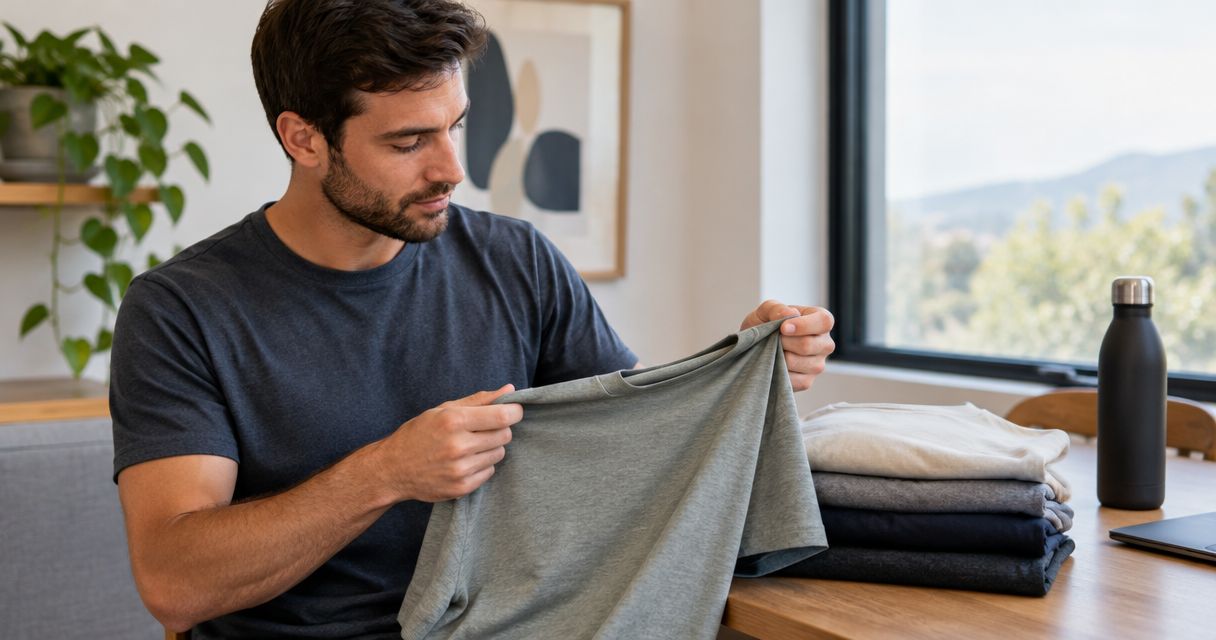
Lay the garment on a clean, flat surface and smooth it gently. Bring the sleeves inward without twisting them, then make broad folds that fit the storage space.
Avoid pressing each fold into a sharp line with your hand. You want a tidy shape, not a deliberately set crease across the middle.
Keep folded stacks light enough to lift without pulling the bottom garment free. In a drawer, arrange tops so you can identify and remove them without disturbing everything around them; do not force a tightly packed row into the available space.
Why shirts crease in storage
Shirts crease when their fabric is bent, compressed or put away before drying is complete. Find the source of the pressure before changing your laundry routine.
- Crowded rails: neighbouring garments push sleeves and shirt fronts into folds. Move bulky jackets away from the shirts you want to keep smooth.
- Heavy stacks: the weight above holds fold lines in the garments underneath. Separate heavy items from lighter shirts.
- Residual moisture: damp fabric stored in a folded or compressed position dries in that arrangement. Check thick seams before putting a shirt away.
- Unsuitable hangers: a poorly matched hanger leaves shoulders unsupported or pushes into sleeves. Choose the shape to suit the shirt.
- Fabric and construction: woven cotton, linen, viscose and knitted fabrics do not behave identically. Use the garment label and its actual structure to choose storage and pressing methods.
- Daily handling: pulling a shirt from the middle of a stack crumples it and its neighbours. Make frequently worn shirts easy to reach.
For your 2026 storage check, inspect the actual contact points: shoulders, cuffs, folded hems and the sides of drawers. A recurring crease in the same place is a reason to check what touches that part of the shirt.
How do you hang a shirt without creating new wrinkles?
Hang the shirt straight, then check that nothing forces it to bend. Do not assume a shirt is safely stored just because it is on a hanger.
Start at the shoulders and work down. Check that the collar is not folded under, the placket lies straight and the sleeves are not twisted around the hanger or trapped by another garment.
Next, check the hem. A long shirt that rests on a shelf or storage box can bunch up at the bottom, even with plenty of space above it. Move the obstruction or use another part of the rail.
Finally, pull the hanger out and return it. If that action scrapes or compresses the shirt, the rail needs rearranging. This practical check is more useful than trying to maintain an arbitrary gap between hangers.
How do you fold shirts without leaving hard crease lines?
Use broad folds, avoid crushing the collar, and remove weight from above. Folding always bends the fabric, so the goal is to prevent those bends becoming firmly pressed lines.
For a woven shirt, lay it face down with the collar supported rather than flattened underneath. Fold the sides and sleeves inward along natural lines, then fold the body to suit the shelf or drawer without adding unnecessary folds.
For a knitted top, smooth the body without stretching it. Keep sleeves flat within the fold rather than rolling them into a bulky lump that presses against the front.
Check the finished shape before storing it. If buttons, cuffs or a doubled sleeve create a hard ridge, reposition them instead of putting another garment directly on top. You are managing pressure, not trying to make the smallest possible parcel.
What changes for cotton, cotton-stretch and viscose shirts?
Read the fabric description, but let the care label control the treatment. A fibre name alone does not tell you the permitted ironing temperature, whether steaming is suitable, or how a particular finish will respond.
Blkwd men's shirts suit shoppers looking for cotton oxford and cotton-stretch options. Those descriptions help you distinguish fabrics, but neither is a promise of wrinkle-free storage.
The NOOSA LIGHT BLUE OXFORD SHORT SLEEVE SHIRT is described as 100% cotton oxford, while the DELAIR - SHORT SLEEVE SHIRT uses cotton-stretch fabric. Treat both as shirts that need careful storage rather than assuming stretch eliminates creasing.
| Blkwd shirt example | Stated fabric | Best for | Useful distinction | Storage limitation |
|---|---|---|---|---|
| NOOSA LIGHT BLUE OXFORD SHORT SLEEVE SHIRT | 100% cotton oxford | Shoppers seeking cotton oxford | Its description identifies the fibre and weave | Cotton content does not establish a crease-free finish |
| DELAIR - SHORT SLEEVE SHIRT | Cotton stretch | Shoppers seeking a printed stretch-fabric shirt | Its description identifies a stretch fabric | Stretch does not remove the need for space and support |
For viscose shirts, handle the garment according to its label rather than copying the treatment used for cotton. Do not add heat, moisture or force simply because a crease looks stubborn.
When reviewing shirt care in 2026, separate a fabric preference from a care claim. Choose a shirt because you want that fabric and style; choose its storage method according to its construction and instructions.
How should you store shirts you will not wear for a while?
Put shirts into longer-term storage clean, dry and free from avoidable pressure. Inspect the storage space before filling it, especially if clothes have previously felt damp there.
Use a breathable garment cover for hanging shirts when you need dust protection. Make sure the cover is roomy enough that it does not flatten the collar or force sleeves against the body.
For folded storage, use a clean, dry container and avoid packing it under tension. Keep heavy objects off the lid if their weight transfers to the shirts inside, and do not flatten collars to make another garment fit.
When you take a shirt out, inspect and air it before dressing. Treat any remaining wrinkles according to the label rather than immediately increasing the iron temperature. Longer storage is not a reason to use harsher treatment.
FAQ
Is it better to hang or fold shirts to stop creasing?
Hang woven button-up shirts when you can support the shoulders and leave room around them. Fold stretchy knitted tops when hanging would distort their shape, and avoid compressing the folds.
Why do my shirts crease after I have ironed them?
Shirts crease after ironing when they are folded, crowded or compressed during storage. Let the fabric cool and dry after pressing, then check what touches the areas where wrinkles keep returning.
Can I put a slightly damp shirt in the wardrobe?
Do not put a damp shirt into closed storage. Let it dry completely, including the collar, cuffs and placket, before placing it among other clothes.
Does rolling shirts stop them from creasing?
Rolling does not guarantee crease-free shirts. A tight roll still bends and compresses fabric, so hanging is the better starting point for structured woven shirts when space allows.
Should I button shirts before hanging them?
Fasten enough buttons to keep a shirt balanced on its hanger. Straighten the collar and placket, then check that the sleeves hang freely rather than twisting behind the body.
Do Blkwd cotton-stretch shirts need ironing before storage?
Blkwd cotton-stretch shirts need ironing only when wrinkles need removing and the garment label permits it. Stretch fabric is not, by itself, evidence of a non-iron finish.
What is the simplest shirt-storage change to make in 2026?
Remove pressure from the shirts you wear most often in 2026. Free trapped sleeves on the rail, reduce the weight on folded shirts, and check that hems do not bunch against shelves.
One last thing
Inspect where the crease appears before ironing it again. A shoulder ridge points you towards the hanger; a crushed hem tells you to check the space below; a hard line across the body tells you to inspect the fold and weight above it.
Change that contact point, then store the shirt again. Preventing the same crease is a better routine than repeatedly pressing it out.