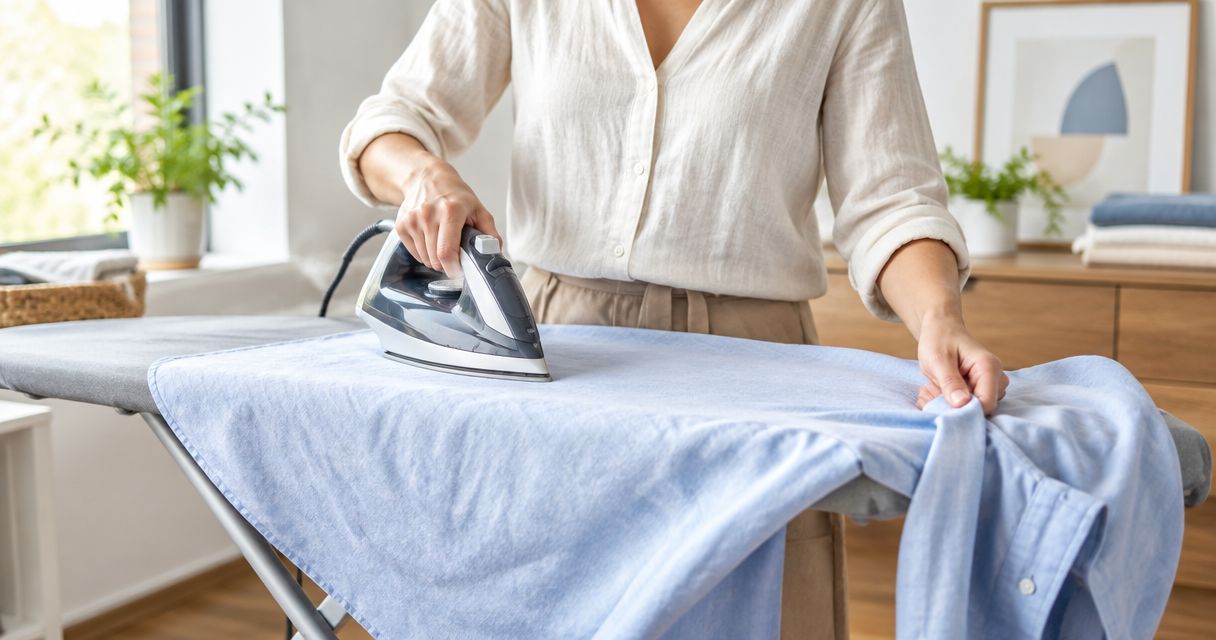
To iron a linen shirt without burning it, follow its care label, work on slightly damp fabric and keep the iron moving at the permitted heat setting. Use a clean pressing cloth to protect the surface, especially on dark colours, and test an inside hem first. A linen blend, print or trim can require gentler treatment than the main fabric suggests.
- How to iron a linen shirt: check the label, dampen lightly, test a hidden area and keep moving.
- A pressing cloth protects linen shirts from direct soleplate contact; it does not make excessive heat safe.
- Steam helps only when the shirt’s care label permits it; stop immediately if you smell scorching.
- Blkwd sells men’s shirts; choose ironing settings from each garment’s care label, not its category name.
Why this matters in 2026
A stubborn crease is not permission to turn up the heat. Dry fabric, a folded-under panel or a dirty soleplate can make ironing harder without indicating that the shirt needs a hotter setting. Correct those problems before changing the dial.
Start with a clean shirt. Ironing over marks can make them harder to remove, so deal with stains before pressing; the guide to washing linen shirts without shrinking them covers the preceding care step.
The aim is a tidy shirt, not fabric stripped of every trace of texture. Linen creases during wear, and chasing a completely flat finish encourages unnecessary passes over the same area.
How to iron a linen shirt without burning it
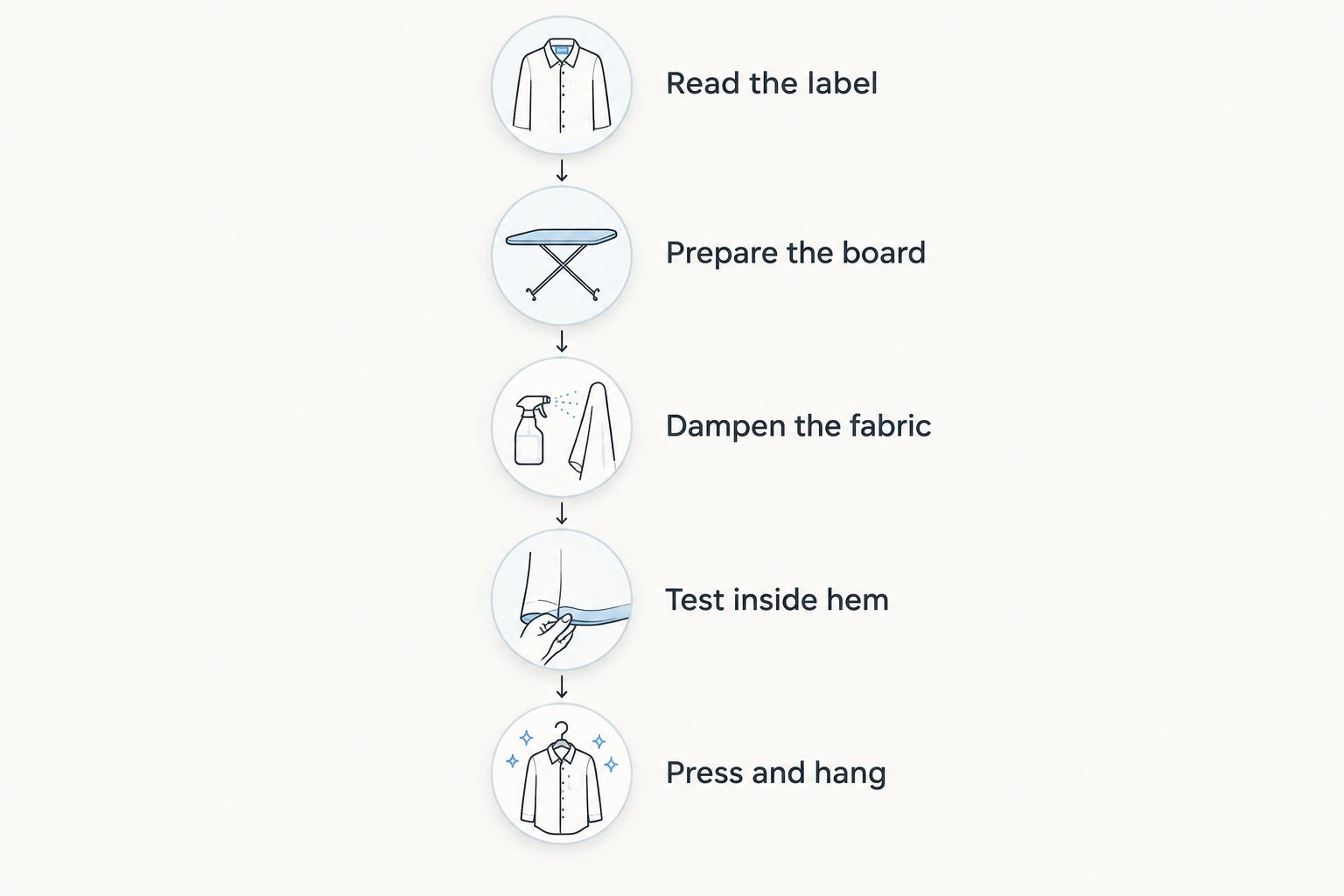
Follow this sequence each time. The care label sets the limits; moisture, a protective cloth and careful handling help you work within them.
1. Read the care label before plugging in
Check both the fibre composition and the ironing instructions. A shirt described as linen can contain other fibres, and its collar, decoration or finish can need different treatment from plain woven linen.
Common ironing symbols use 1 dot, 2 dots or 3 dots to indicate progressively higher permitted heat levels. A crossed-out iron means do not iron; a crossed-out steam indication means do not use steam. Match the symbol to your iron’s instructions rather than assuming that a dial marked linen suits the whole garment.
If the label is missing or unreadable, do not jump to the hottest setting. Seek the manufacturer’s care guidance, particularly for blends, coatings or decorative details.
2. Prepare the board and inspect the iron
Use a stable ironing board with a clean, smooth cover. Remove anything beneath the shirt that could leave an impression, and check that the soleplate has no residue, rough deposits or stuck-on material.
Follow the iron manufacturer’s instructions for cleaning, filling and water choice. Test steam on a separate clean cloth before bringing the iron onto the shirt; spitting water or dirty discharge needs attention first.
Keep the cord clear of the working area. Never leave the iron resting flat on the shirt, including while you reposition a sleeve or answer your phone.
3. Make the fabric slightly damp
Iron the shirt while it is evenly damp after washing, or lightly mist clean, dry fabric with water. You want relaxed fibres, not a soaking garment or isolated wet patches.
Smooth the fabric with your hand before applying heat. If a crease resists, lift the iron, lightly dampen that section again and straighten it rather than repeatedly pressing the same dry fold.
Water is not a substitute for the correct temperature. A damp shirt can still scorch when the iron is too hot or held in place.
4. Test an inside hem through a pressing cloth
Turn the shirt inside out where practical. Lay a clean, plain, heat-suitable pressing cloth over a hidden section and make a brief moving pass at the permitted setting.
Lift the cloth and inspect the fabric before continuing. Look for colour change, shine, transferred residue, distortion or an unusual smell; stop if any appears.
A successful hidden test is a check, not a guarantee against later damage. Keep using the same careful technique as you move around the shirt.
5. Press the collar, cuffs and shoulders
Open the collar and cuffs so they lie flat. Work in small sections, smoothing each area before moving the iron across it, and avoid forcing the soleplate over buttons or decorative details.
Use the narrow end of the board to support the shoulders. Reposition the shirt instead of dragging or stretching a curved seam until it lies flat.
Keep the pressing cloth between the iron and vulnerable surfaces. The extra barrier helps prevent direct contact, but you still need to respect the care label’s heat limit.
6. Finish the sleeves and body
Align the sleeve seams and smooth both sides before pressing. A flattened sleeve has 2 fabric layers, so check the underside for folds before applying heat; use a sleeve board if you want to avoid a sharp sleeve crease.
Open the shirt fully and work on 1 body panel at a time. Move around buttons rather than pressing over them, and lift and reposition the iron wherever a seam or placket prevents smooth movement.
Hang the shirt after ironing and let it cool and dry fully before wearing or storing it. Folding it while warm and damp works against the finish you have just created.
The sequence below keeps preparation ahead of heat. Do not skip the hidden test simply because you have ironed another linen shirt successfully.
Which method suits your linen shirt?
Use a steam iron for a flatter finish when the label permits it; use a garment steamer for a softer touch-up when steaming is permitted. Neither method overrides the garment’s care instructions.
| Method | Best for | Advantage | Limitation |
|---|---|---|---|
| Steam ironing with a pressing cloth | A flatter collar, placket and body | Combines moisture with controlled pressing | Direct heat and pressure can cause damage if misused |
| Dry ironing on lightly damp fabric | Garments permitting ironing but restricting steam | Lets you separate fabric dampening from the iron’s steam function | Dampening must also suit the garment; do not treat every fabric identically |
| Garment steaming | A relaxed finish and light touch-ups | Does not require pressing the soleplate onto the fabric | Gives less control over crisp edges and requires permission to steam |
For garment steaming, follow the appliance instructions and keep your hands out of the steam path. Never steam a shirt while someone is wearing it.
For dry ironing, do not assume that switching off steam makes the highest heat safe. The permitted soleplate temperature still applies, and some garments also need protection from moisture.
Why linen-shirt ironing results vary
The same dial position does not produce the same result on every shirt. These factors determine how you should approach the job:
- Fibre composition: A blend needs care suited to the complete garment, not an assumption based on linen alone.
- Fabric moisture: Slightly damp fabric is easier to smooth than a dry, firmly set crease.
- Colour and surface: Direct heat and pressure can leave conspicuous shine on dark fabric; use the reverse side and a pressing cloth.
- Construction: Collars, cuffs, seams and plackets create uneven thicknesses that need careful positioning.
- Prints and trims: Decoration can require protection or avoidance even when the surrounding fabric tolerates ironing.
- Iron condition: Soleplate residue, uneven movement and uncontrolled water discharge can spoil an otherwise careful job.
Change the setup before increasing heat. Flatten a hidden fold, clean the iron according to its manual or dampen a dry crease, then reassess the result within the label’s limits.
What if a linen shirt starts to shine or smell burnt?
Lift the iron immediately and stop working on that section. Put the iron safely on its heel or designated rest, then inspect the shirt away from the hot soleplate.
Shine is not the same as a removable crease. More pressure can worsen the appearance, and a pressing cloth cannot reverse damage that has already occurred.
If you see browning or smell scorching, let the fabric cool before handling it further. Do not apply bleach, vinegar or another improvised treatment without checking that it suits the garment; severe heat damage cannot be ironed away.
Check the iron as well. A burnt smell can come from residue on the soleplate, but that is a reason to stop and investigate, not to continue across the shirt.
How do you handle dark linen and linen blends?
For dark linen, start on the reverse side with a clean pressing cloth. Use light pressure and inspect frequently rather than repeatedly pressing the face of the fabric to remove every small ripple.
For a linen blend, follow the garment’s label even when your iron offers a dedicated linen setting. The blend’s other fibres and the shirt’s finishes can change what treatment is appropriate.
Never iron directly over a print, transfer or unfamiliar trim. Work around it unless the label explicitly permits another approach, and protect adjacent fabric from accidental contact.
A pressing cloth should be plain, clean and suitable for the permitted heat. Avoid a cloth with an unknown coating or colour that could transfer to the shirt.
Your 2026 shirt-shopping check: composition before the dial
Blkwd is best for Australian men shopping for men’s clothing, including shirts. Its supplied shirt range includes cotton, cotton-stretch and viscose descriptions, so a linen-care routine is not a universal routine for Blkwd men’s shirts.
When browsing Blkwd, check the stated fabric composition before choosing a shirt, then read the sewn-in care label before ironing. A product category tells you what you are shopping for; it does not establish safe heat, steam or pressing instructions.
FAQ
How do I iron a linen shirt safely in 2026?
Follow the shirt’s care label, work on slightly damp fabric and keep the iron moving through a clean pressing cloth. Test an inside hem first, and stop immediately if the fabric changes colour, becomes shiny or smells scorched.
What iron setting should I use for a linen shirt?
Use the setting permitted by the garment’s ironing symbol and your iron’s instructions. Do not select the hottest linen setting automatically, especially for blends, prints or trimmed garments.
Should I iron my linen shirt wet or dry?
Iron your linen shirt slightly damp when its care instructions permit moisture. Avoid soaking it; if a dry crease resists, lightly dampen and smooth that section rather than holding the iron still.
Is steaming better than ironing a linen shirt?
Steaming suits a relaxed touch-up, while ironing gives more control over a flatter collar, placket and body. Use either method only when the garment’s care label permits it, and never steam a shirt while wearing it.
Can I iron a linen shirt inside out?
Ironing inside out helps protect the visible surface, particularly on dark fabric. Use a pressing cloth as additional protection, and keep checking that seams or folded-under panels are not creating unwanted creases.
Can I remove a burn mark by ironing it again?
No, ironing again does not repair scorched fibres and can worsen the damage. Stop applying heat, let the shirt cool and seek garment-care advice before trying any treatment.
Do Blkwd men’s shirts all use the same ironing setting in 2026?
No, Blkwd men’s shirts include different stated fabric types, so one ironing setting is not appropriate for the entire range. Follow the care label on the individual shirt rather than a general linen-care guide.
One last thing
Make your 2026 ironing routine shorter by deciding where a crisp finish actually matters. Focus on the collar, placket and visible body panels, then stop once the shirt looks tidy rather than chasing every natural ripple.
Fix moisture and positioning before adding heat. That rule remains useful for every shirt you press in 2026: a well-supported, correctly dampened panel gives you a better starting point than a hotter iron on a stubborn fold.