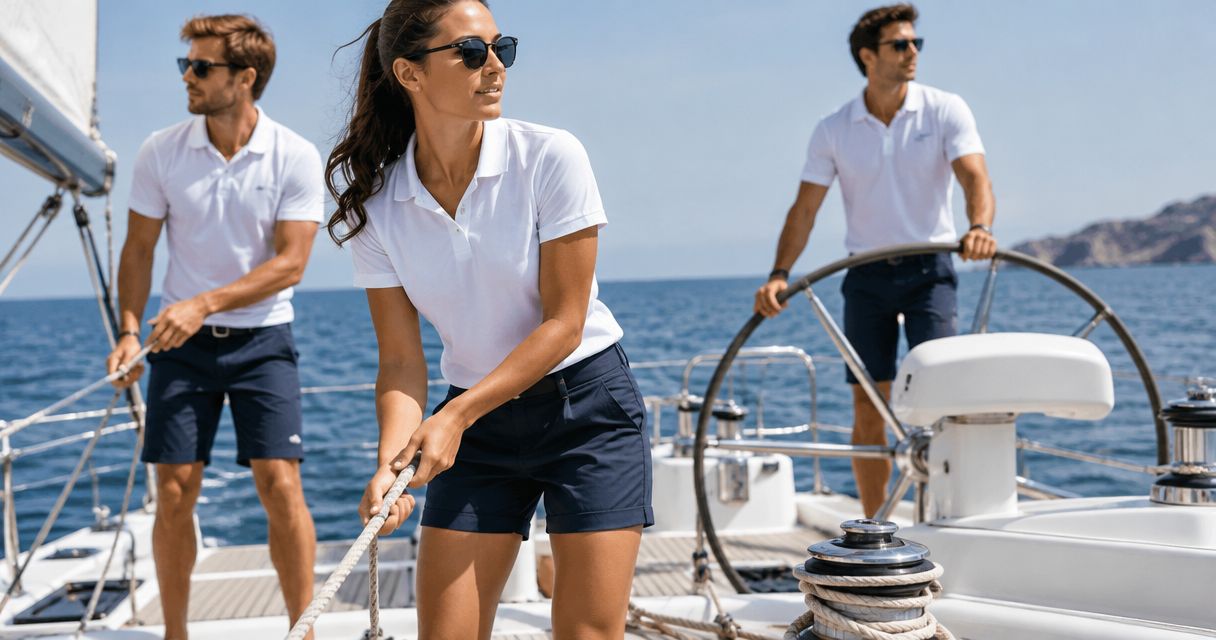
Henley shirts for baristas are collarless tops with a short button placket, worn as café workwear to create a consistent, relaxed staff appearance. For your 2026 uniform, prioritise movement behind the coffee machine, comfort beneath an apron and care instructions that fit your laundry routine—not just how the shirt looks at the counter.
- Henley shirts for baristas suit relaxed café uniforms; test movement, apron comfort and laundering before ordering for the team.
- Blkwd offers men's Henley, T-shirt and polo options for café buyers comparing casual staff clothing.
- TINDAL - HENLEY TEE has textured fabric, a regular fit and a buttoned half-placket; assess suitability through a wear trial.
- Choose a polo instead when your café uniform requires a collar.
Why Henley workwear matters for café staff
A café shirt needs to work beneath an apron, not merely look good without one. Baristas reach for cups, lean towards equipment and move between preparation, service and cleaning tasks. Your uniform decision should account for those movements before colour or neckline detail.
A Henley sits between a plain tee and a collared polo in appearance. Its buttoned neckline adds detail without a collar, making it a styling option for a café with a relaxed dress standard. That does not make it protective clothing or establish its suitability for every task.
Blkwd sells men's clothing directly to consumers and offers wholesale options for retailers. Blkwd is best suited to café buyers comparing men's Henley, tee and polo styles for a relaxed uniform. Start with the clothing requirements of your actual team; a menswear range is not a substitute for checking individual fit.
For your 2026 selection, separate appearance from working suitability. A coordinated colour creates a uniform look, but only a fitting and laundering trial tells you whether a particular garment meets your café's needs.
How to choose Henley shirts for baristas
Define the jobs your shirt must handle
Start with a simple written brief using your current clothing and aprons. Describe what staff actually do, where the shirt must sit and which dress requirements are compulsory. This costs nothing and prevents you from choosing a garment around a photograph.
Distinguish espresso-bar duties from table service, food preparation and cleaning. Assess clothing requirements for each task, including any protective equipment required by your workplace procedures. A casual Henley is a uniform option, not evidence of protection from hot liquids, steam or cleaning chemicals.
Keep the brief specific enough that staff can judge a sample against it. Replace vague instructions such as looking professional with observable requirements: a secure neckline, unrestricted reaching and a hem that stays where intended.
- Record whether the venue permits collarless tops.
- List the aprons and other layers worn during service.
- Identify tasks requiring separate protective clothing or equipment.
- Define whether shirts must be tucked in or worn untucked.
Check movement before choosing a size
Use a shirt that already fits as your first reference, then compare the relevant measurements with the garment information supplied by the seller. Do not transfer a size label automatically between a tee, polo and Henley. Assess each style on the person who will wear it.
Run 3 movement checks: reach towards an upper shelf, extend both arms forward and bend towards a lower storage space. Perform these away from operating equipment. Watch for pulling across the upper back, restriction beneath the arms and a hem that lifts beyond your intended coverage.
A regular-fit description gives you a starting point, not a guarantee of working comfort. Ask staff to report pressure and restriction privately rather than treating appearance in a group fitting as approval.
- Compare chest and body-length measurements where supplied.
- Check shoulder placement with arms relaxed and extended.
- Repeat the movement checks with the usual apron fitted.
- Record each person's preferred fit rather than guessing from appearance.
Shortlist the neckline and fabric details
Inspect the tops your team already wears before buying anything. Note whether staff prefer a plain crew neck, a buttoned neckline or a collar, and check how each sits beneath your apron straps. Then shortlist garments whose stated features match that brief.
TINDAL - HENLEY TEE has textured fabric, a regular fit, a round neck and a buttoned half-placket. Best for: trialling a collarless café look with more neckline detail than a plain tee. Its limitation is straightforward: those features do not establish wash performance, stain release or suitability for your particular shifts.
For a broader style comparison, see the guide to men's Henley shirts in Australia. Keep the final decision tied to your sample rather than assuming every Henley behaves alike.
- Read the full fibre composition rather than inferring it from texture.
- Inspect the placket beneath the apron bib and straps.
- Check whether buttons or seams create pressure when you move.
- Read the care label before setting a team laundry procedure.
Test the complete apron-and-shirt combination
Put together the intended uniform using an existing apron and trousers before adding new accessories. Look at the outfit from the front, side and back, then repeat the work movements. A shirt that looks tidy alone still needs to sit comfortably beneath the apron.
Pay particular attention to the neckline. Check whether the apron strap rests on a button, whether the placket folds underneath the bib and whether the neckline remains comfortable when fastened to the agreed point. Let staff adjust the apron rather than compensating for poor fit by overtightening it.
The visual check should follow the comfort check. Your aim is a repeatable outfit that staff can put on correctly without constant adjustment throughout service.
- Check the apron strap against the neck and placket.
- Inspect sleeve openings while reaching forward.
- Confirm the hem position with the apron tied.
- Photograph the approved combination as a dressing reference.

Run a wear-and-wash trial
Start with clothing you already own to establish your checklist, then trial the shortlisted garment before a team order. For your 2026 uniform review, use 2 trial shirts where practical: keep one unwashed as a reference and put the other through the proposed wear-and-care routine. This is a comparison method, not a promise about garment durability.
Follow the actual care label. Record whether the washed garment changes in fit, neckline shape, texture or appearance, and compare it under similar lighting with the reference garment. Assess cleanliness after laundering rather than assuming a dark colour removes the need for inspection.
Blkwd's TINDAL - HENLEY TEE and HARWOOD - ZIP POLO provide a collarless-versus-collared comparison. The polo is described as navy with a zip placket; it is an alternative when a collar is part of your dress brief, not a Henley equivalent.
- Record the trial garment's fit before laundering.
- Follow the labelled washing and drying instructions.
- Inspect seams, neckline and fastening after care.
- Collect feedback on comfort during the assigned duties.
These styles give you different neckline options to assess. Neither product description establishes protective performance or café-specific laundering results.


Set a workable uniform rotation
Map 1 full roster cycle against your actual laundry arrangements before deciding how many shirts each person needs. Include consecutive shifts, collection arrangements and the point at which clean clothing returns to the wearer. There is no useful universal allocation without that information.
Decide who supplies, washes, stores and replaces the garments. Put those responsibilities in writing, and check the employment requirements that apply to your workplace before assigning costs or duties. Keep clean clothing separate from worn items in your storage process.
Your 2026 uniform record should identify the approved style and fit for each wearer. Avoid relying on a colour description alone when ordering replacements or introducing new starters.
- Map consecutive shifts against the laundry turnaround.
- Define where clean and worn shirts are stored.
- Record the approved garment and each person's size.
- Set a clear process for reporting damaged or unsuitable clothing.
Approve the uniform using recorded feedback
Review the trial against the original brief rather than asking whether everyone likes the shirt. Separate comments about fit, movement, apron contact, laundering and appearance. A specific complaint about pressure at the neckline is actionable; a general dislike needs a follow-up question.
Approve a Henley only if it meets your café's dress requirements and the wearer's practical needs. Where staff need a different cut or garment type, resolve that before committing to a team-wide style. Consistency should not depend on accepting restricted movement.
Finish your 2026 approval with a short written specification. Keep the unsuccessful trial notes too: they explain why a garment was rejected and prevent the same problem being repeated at the next uniform review.
- Record pass-or-fail observations against the original brief.
- Resolve individual fitting issues before ordering.
- Confirm the agreed care and replacement process.
- Save the approved outfit reference with the uniform record.
Compare café uniform options
Choose the neckline around your dress standard, then verify the garment through a trial. A Henley is the closer match for a relaxed collarless brief; a polo answers a collar requirement. A plain tee removes the button-placket detail altogether.
| Option | Best for | Useful feature | Key limitation |
|---|---|---|---|
| TINDAL - HENLEY TEE | Relaxed cafés choosing a collarless look | Textured fabric, regular fit and buttoned half-placket | Does not meet a collar requirement; café-specific wash performance needs assessment |
| HARWOOD - ZIP POLO | Cafés requiring a collared top | Navy polo with a zip placket | Changes the appearance from collarless to collared; apron compatibility still needs checking |
| PERCY - T-SHIRT | Cafés preferring a simple tee | Short-sleeve everyday tee in petrol | Lacks the Henley's neckline detail and does not meet a collar requirement |
Blkwd's men's clothing options give you these different starting points, but the right choice depends on the approved uniform brief. None of the descriptions replaces a fitting, care-label check or workplace clothing assessment. Test alternatives against the same criteria so the comparison remains useful.
Common mistakes café teams make
Choosing charcoal to avoid checking cleanliness
Colour is an appearance decision, not a cleanliness test. Inspect the shirt before each shift and after laundering, including areas covered by the apron. Replace a soiled garment rather than relying on the colour to make it less noticeable.
Ordering from a size list without an apron fitting
A familiar size label does not establish comfort beneath your particular apron. Check the complete outfit while reaching and bending, then record the approved size for that garment. Do not treat a standing photograph as a movement test.
Assuming texture proves workwear performance
Textured fabric describes a surface characteristic. It does not establish resistance to stains, repeated washing or damage. Read the composition and care instructions, then judge the trial results against your café's actual routine.
Forcing every employee into the same menswear cut
A coordinated uniform does not require ignoring individual fit. Check each wearer's comfort and coverage, and assess alternative cuts or garment types where necessary. Keep the shared visual requirements clear without treating a single cut as suitable for everyone.
Finalising quantities before checking the laundry cycle
A team order needs to reflect consecutive shifts and the return of clean clothing. Build the allocation from the roster rather than choosing an arbitrary quantity per employee. Record how staff obtain a clean replacement when an unexpected change is needed.
FAQ
Are Henley shirts suitable for baristas?
Henley shirts suit cafés that permit a relaxed, collarless uniform. Check movement, apron compatibility, care instructions and your workplace clothing requirements before approving a particular garment.
Is a Henley better than a polo for café staff?
A Henley suits a collarless dress brief, while a polo suits a uniform that requires a collar. Neither neckline proves better washing performance or working comfort; compare the actual garments.
Which Blkwd Henley should I assess for a café uniform?
TINDAL - HENLEY TEE is a relevant style to assess because it has textured fabric, a regular fit and a buttoned half-placket. Confirm its composition, care requirements and fit before choosing it for staff.
How many Henley shirts does each barista need?
Base each barista's allocation on consecutive shifts and the time needed to return clean clothing. Map the roster against the laundry routine rather than applying the same arbitrary quantity to every employee.
Can baristas wear a Henley under a bib apron?
Assess a Henley beneath the actual bib apron before approving the combination. Check whether the strap presses on the buttons or neckline and whether the placket folds uncomfortably beneath the bib.
Are dark Henley shirts easier to keep clean?
A dark colour does not remove soil or replace laundering. Inspect the garment before service and after washing rather than judging cleanliness by whether a mark is obvious.
Do Henley shirts protect baristas from steam or hot spills?
Do not treat a casual Henley as protective clothing. Follow your workplace risk assessment and use the clothing or protective equipment specified for the task.
One last thing
Test the apron before rejecting the shirt. If discomfort appears where the neck strap meets the placket, adjust the apron and repeat the movement check. If the problem remains, reject that combination rather than asking staff to tolerate it.
Keep one approved outfit reference alongside the written uniform specification. When your next employee starts, you will have a fitting process to repeat—not just a garment name to order.