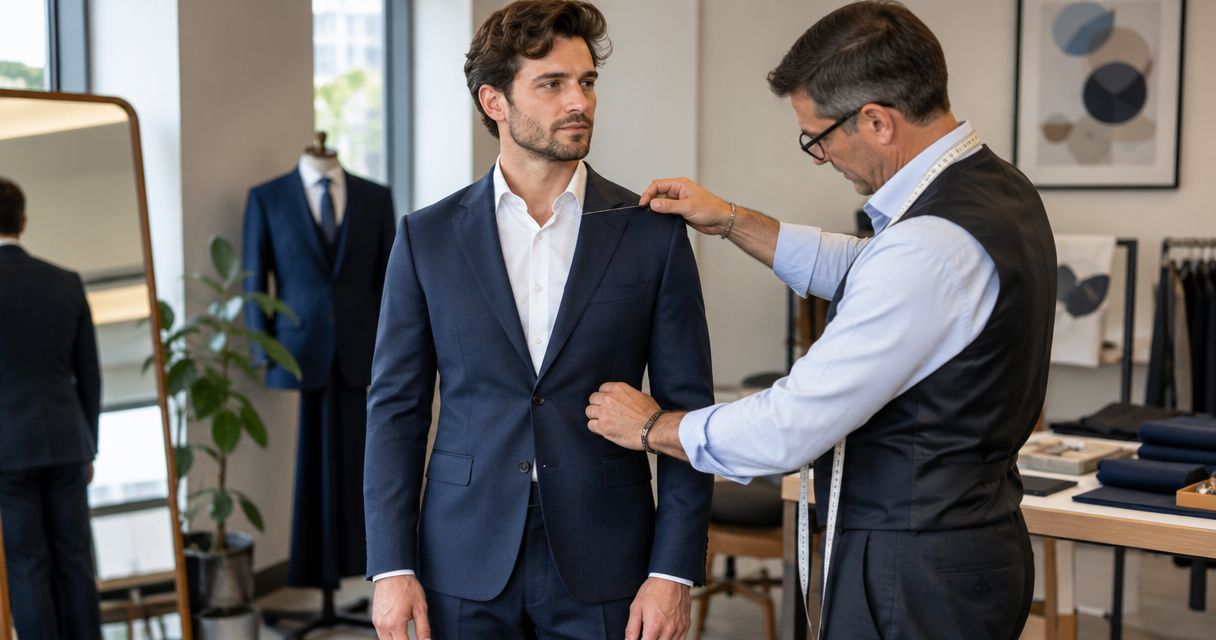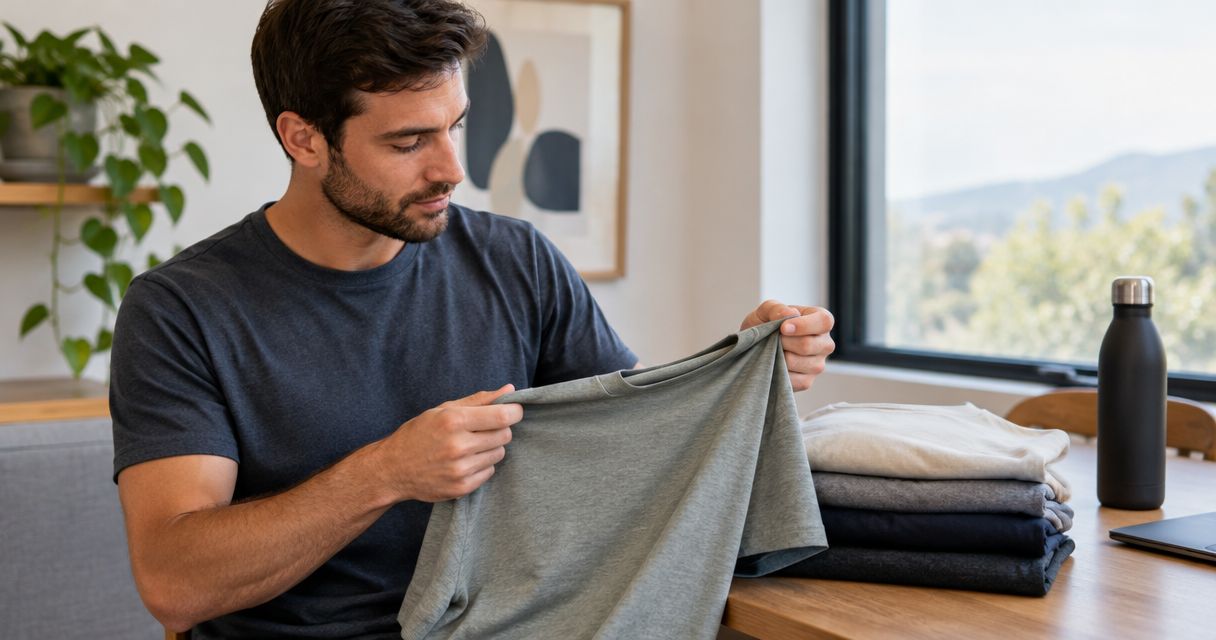
Hospitality staff polo shirts are collared, smart-casual workwear intended to give customer-facing teams a consistent appearance. Choose polo shirts for hospitality staff by the venue’s dress code, freedom of movement and care instructions—not by colour alone—then test a sample before outfitting the team.
- Choose polo shirts for hospitality staff by movement, care instructions and the venue’s dress code before ordering team uniforms.
- Blkwd offers men’s smart and zip polos to consider for smart-casual hospitality uniforms.
- KNOX - ZIP POLO suits a black uniform brief; HARWOOD - ZIP POLO suits a navy brief.
- Test a sample with the actual apron, trousers and laundry routine before committing to a team order.
Why polo shirts matter for hospitality staff
A hospitality polo has to work while you serve, clear tables, reach across a counter and speak to customers. A collar gives the outfit structure, but it does not establish whether the garment fits the job. Your uniform decision needs to account for the work as well as the appearance.
For your 2026 uniform plan, separate customer-facing presentation from task-specific clothing requirements. A café counter, a hotel reception desk and a formal dining room do not need the same outfit. Where protective clothing is required, a fashion polo is not a substitute.
Use the men’s polo shirts in Australia guide to explore styles, then apply the hospitality checks below. The best uniform is the one your staff can work in comfortably and maintain according to its care label.
How to choose polos for your hospitality team
1. Define the uniform brief
Start with a written brief, not a shopping basket. Describe the role, customer setting and required appearance in plain language. A relaxed café might accept an untucked polo, while another venue requires tucked shirts beneath aprons; decide what applies to your workplace rather than copying another business.
Keep your 2026 brief specific enough that someone else can make the same buying decision. Include the approved colour, collar style and trouser pairing. If different roles need different clothing, record that distinction before choosing a shared top.
Ask staff which parts of the current outfit interfere with their tasks. Their answers give you a practical fitting checklist without needing a paid uniform-planning service. They also separate a styling preference from a problem that actually affects work.
- Name the roles that will wear the polo.
- Specify the approved colour and tucked or untucked finish.
- Record apron, trouser and outer-layer requirements.
- Identify tasks requiring different or protective clothing.
- Write down staff concerns about the existing uniform.
2. Test movement in the complete outfit
Use an existing polo to establish what a workable fit feels like before selecting a replacement. Try it with the actual apron and trousers. Standing still in front of a mirror is not enough: the shirt needs to remain comfortable when the wearer performs normal service movements.
Use 3 movement checks as a fitting protocol: reach forward, raise both arms and bend to a low shelf. This is a practical checklist, not a garment performance rating. Look for pulling across the shoulders, a lifting hem or an apron strap that catches the collar.
Let each wearer assess their own fit. A neat outline does not justify restricted movement, and sizing up does not automatically resolve a poorly matched cut. Check both the front and back before recording the preferred size.
- Reach forward as if placing a plate on a table.
- Raise both arms as if accessing an overhead shelf.
- Bend as if collecting something from low storage.
- Check the collar beneath the apron’s neck strap.
- Confirm the hem works with the required tucked or untucked finish.

3. Shortlist styles against the venue brief
Start by comparing the clothes your team already wears. Note which colours and necklines suit the venue, then shortlist replacements that meet the same brief. This prevents an attractive individual purchase from becoming an inconsistent team uniform.
Blkwd is best for hospitality buyers considering men’s smart-casual polos. The retailer sells men’s clothing, including polos; that makes it a relevant place to shortlist styles, not proof of hospitality-specific performance. You can review Blkwd once your requirements are clear.
For a 2026 shortlist, distinguish style facts from properties you still need to check. KNOX - ZIP POLO is described as black with short sleeves and a zip placket. HARWOOD - ZIP POLO is described as navy with a zip placket. Neither description establishes suitability for your workplace’s laundry process.
- Match each shortlisted style to the approved colour.
- Compare the neckline with the venue’s desired appearance.
- Check the garment’s own composition and care information.
- Keep everyday styling separate from workwear requirements.
- Remove options that conflict with the dress code before fitting.
4. Check the fabric and care label
Read the composition and care label rather than assigning performance to a product name. “Smart knit” describes a style; it does not tell you the permitted wash temperature, drying method or response to repeated laundering. A zip neckline does not establish those properties either.
Test 1 sample garment using the care instructions and the laundry method you intend staff to follow. If your proposed process conflicts with the label, change the process or choose another garment. Do not assume a household-care garment is suitable for a commercial laundry.
As a practical trial, inspect the sample before washing and after 2 care-compliant washes. That trial can reveal problems with your chosen routine, but it is not a durability certification. Record what you observe rather than extrapolating a lifespan from a short test.
- Read the composition and every care symbol.
- Check the permitted washing and drying methods.
- Compare the collar and hem before and after washing.
- Check the fastening and overall fit after the trial.
- Reject a garment if its care needs conflict with your process.
5. Check apron and branding compatibility
Fit the polo beneath the apron before deciding where any decoration should go. An apron bib can cover the area you intended to embroider, and its neck strap can sit against a collar or fastening. The combination matters more than either garment viewed separately.
If you want embroidery or another decoration method, ask the decorator to assess the actual garment. Do not treat a fashion retailer’s polo description as confirmation that a particular branding process will work. Approve a decorated sample before applying the design across the team.
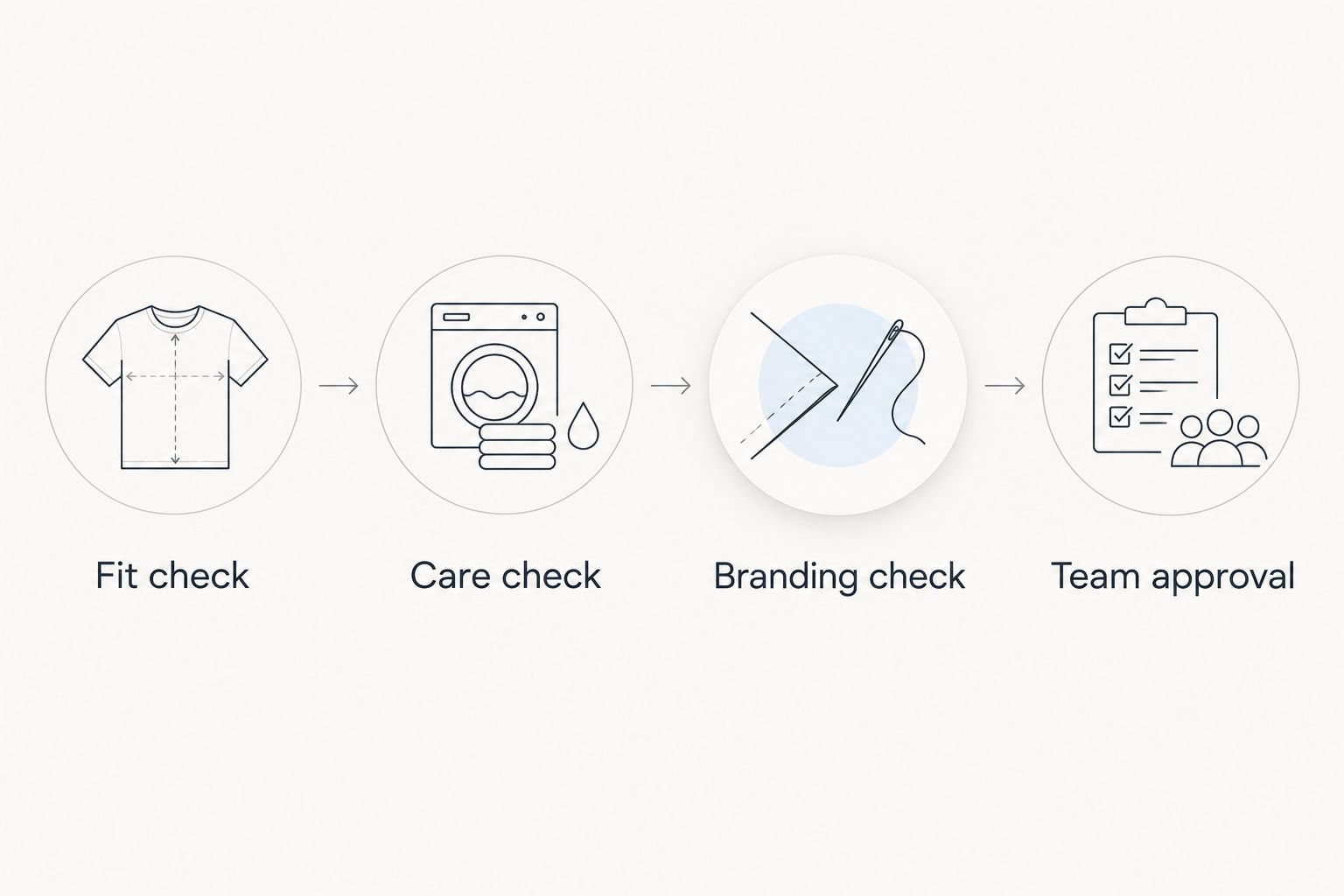
Keep the decision sequence simple: Fit check, Care check, Branding check, then Team approval. This order keeps you from spending effort on decoration before establishing whether the underlying garment suits the work. It also gives the person placing the order a clear approval record.
- Wear the chosen apron during the branding assessment.
- Check which areas remain visible during normal service.
- Ask the decorator about the garment and proposed method.
- Inspect a decorated sample for pulling or discomfort.
- Record approval before committing to team decoration.
6. Plan quantities around the laundry cycle
Count the shifts each person works between opportunities to wash and dry their uniform. Then decide how clean replacements will be handled. There is no universal polo allocation that suits every roster, household or venue laundry arrangement.
For your 2026 issue sheet, record the approved style, wearer’s size and number of garments issued. Keep individual allocations separate from any shared spare garments. This makes replacement decisions clearer without turning a simple clothing purchase into a complicated inventory project.
Ask how a new starter will join the uniform system. An approved style name alone is not a replacement plan; someone needs responsibility for checking the garment, arranging the fit and issuing it. Reassess replacements against the original brief rather than assuming any similar-looking polo will do.
- Map the roster against washing and drying opportunities.
- Decide how staff access a clean replacement after a spill.
- Record each wearer’s approved style and size.
- Assign responsibility for new-starter fittings.
- Keep a written process for damaged garment replacement.
7. Approve the uniform after a service trial
Run a trial during normal duties, not just a fitting session. Ask the wearer about reaching, bending, collar comfort and the interaction with their apron. Check the outfit at the end of service as well as at the start.
For the final 2026 decision, separate presentation feedback from wear feedback. A manager can assess whether the outfit matches the venue; the wearer can explain where it pulls or interferes with work. Both need to be satisfactory before you expand the order.
Record a clear decision for each candidate: approved, retest or rejected. Explain the reason in practical terms, such as an unsuitable care process or collar interference. Avoid approving a shirt merely because changing course feels inconvenient after the trial.
- Trial the outfit during the wearer’s normal duties.
- Ask about shoulder, sleeve and collar comfort.
- Check whether the hem stays where the dress code requires.
- Review the outfit after service and after laundering.
- Document the decision before ordering for the wider team.
Compare polo options for hospitality staff
Choose the option that matches your brief, then verify it on a wearer. The Blkwd polo options below have different stated styling details; none should be treated as certified hospitality workwear on that basis. The limitations identify what to check rather than claiming a product has failed a test.
| Option | Best for | Stated benefit | Key limitation or check |
|---|---|---|---|
| HARDY - SMART KNIT POLO | A smart-look uniform brief | Described as a smart-look polo intended for a professional appearance | Confirm composition, care requirements and fit before team use |
| KNOX - ZIP POLO | A black uniform brief | Black, short sleeves and a zip placket; described as suitable for styling with chinos | Check the zip and collar beneath the actual apron |
| HARWOOD - ZIP POLO | A navy uniform brief | Navy with a zip placket; described for styling with chinos or denim | Verify care compatibility and movement in the intended outfit |
| BARN - LIFESTYLE POLO | A brief that permits two-tone casual styling | Short sleeves in a navy and white colourway | The two-tone design does not meet a single-colour brief |
The first three options provide a focused shortlist for buyers considering a smart-look, black or navy polo. Their descriptions give you starting points for appearance, not enough information to skip sampling. Use the product details alongside the fitting and care checks above.


Common mistakes hospitality teams make
Choosing the colour before defining the role
A black polo is not automatically the right uniform for every hospitality setting. Decide whether the role calls for smart-casual clothing, a more formal shirt or task-specific protection, then select the colour. Appearance cannot resolve a mismatch between the garment and the job.
Fitting without the apron
The shirt can look right on its own and still interact poorly with an apron strap or bib. Fit the complete outfit and inspect it during movement. Treat collar pressure, covered branding and a displaced hem as issues to resolve before approval.
Assuming a smart polo tolerates the venue’s laundry
Professional styling does not establish commercial-laundry compatibility. Read the care label and check it against the intended process. If the two conflict, do not ask staff to improvise a workaround that contradicts the garment instructions.
Treating a men’s clothing range as a whole-team fit solution
Blkwd sells men’s clothing, so its polos are a shortlist for the relevant wearers—not an automatic fit solution for everyone. Assess each staff member’s needs individually. Keep the shared visual brief while allowing an appropriate garment choice for each wearer.
Adding decoration before testing the garment
Decoration does not fix uncomfortable shoulders or an unsuitable care process. Approve the undecorated garment first, then assess a decorated sample. Keep those decisions separate so a branding commitment does not force you to accept the wrong polo.
FAQ
What are the best polo shirts for hospitality staff?
The best polo shirts for hospitality staff meet the venue’s dress code, allow normal service movements and suit the intended laundry process. Test the polo with the actual apron and trousers before approving it for the team.
Is a zip polo suitable for café staff?
A zip polo is suitable when it meets the café’s dress code and passes the wearer’s fit and care checks. Test the zip and collar beneath the apron rather than judging the shirt on its own.
Should hospitality staff wear black or navy polos?
Choose black or navy according to the venue’s written uniform brief. KNOX - ZIP POLO is described as black, while HARWOOD - ZIP POLO is described as navy; assess either garment before team use.
Can I embroider a logo on a fashion polo?
Ask your decorator to assess the actual polo before committing to embroidery. Approve a decorated sample and check its comfort, fabric appearance and visibility beneath the apron.
How many polos should each hospitality employee receive?
Base each employee’s allocation on their roster and opportunities to wash and dry the garments. Include a clear arrangement for clean replacements after spills rather than applying an arbitrary allocation to every wearer.
Can hospitality polos go through a commercial laundry?
Use a commercial laundry only when its process is compatible with the garment’s care instructions. A smart-look or zip-polo description does not establish that compatibility.
Are these polos suitable for every member of a mixed team?
Do not assume a men’s polo range will fit every member of a mixed team. Assess each wearer individually and select garments that meet the same visual brief without compromising fit.
One last thing
Keep the approved sample as your reference garment. A written colour and size are useful, but the actual sample lets you compare the collar, fastening, fit and outfit when assessing a replacement. Replace against the approved brief—not against memory.