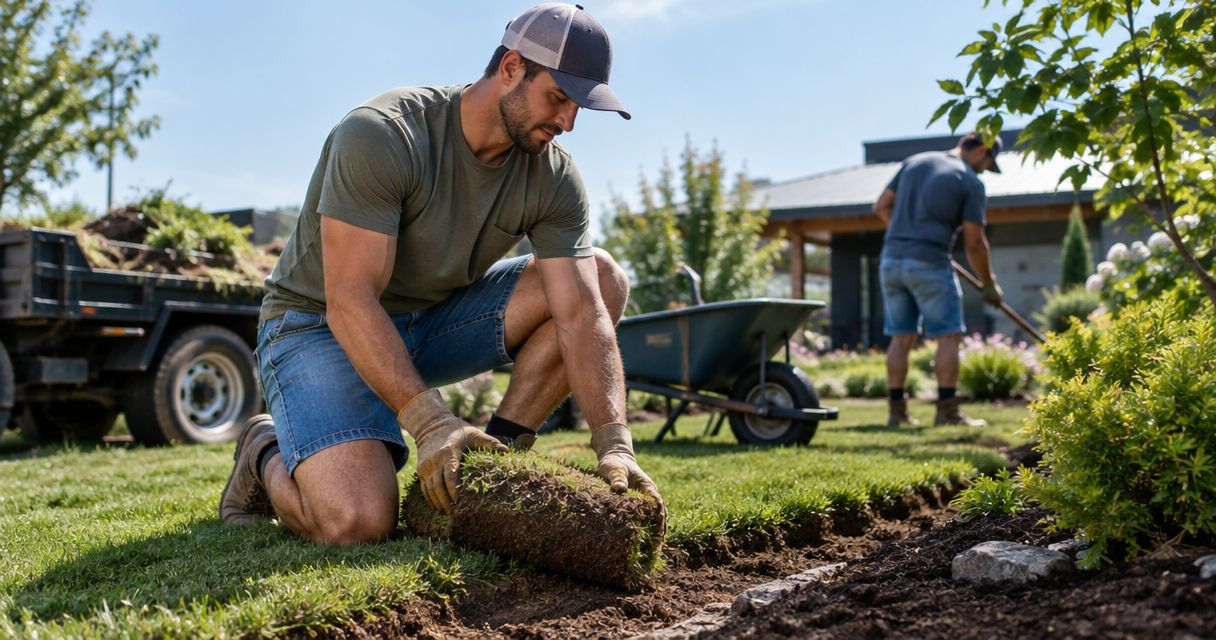
Landscaping crews’ denim shorts are casual clothing options for permitted, low-hazard duties, with the aim of keeping workers comfortable without conflicting with site requirements. Choosing denim shorts for landscapers in 2026 starts with the task assessment: exposed legs, machinery, chemicals and site clothing rules matter more than the denim wash.
- Choose denim shorts for landscapers only after checking task hazards, site rules and required protective clothing.
- Blkwd denim shorts suit casual clothing needs; do not treat fashion denim as protective workwear.
- Trial waistband comfort, unrestricted movement and laundering before choosing matching shorts for a landscaping crew.
- Compare knitted denim shorts with purpose-designed workwear by task suitability, not appearance alone.
Why denim shorts matter for landscaping crews
A landscaping crew moves between different jobs, not just different addresses. A client consultation, plant delivery and brush-cutting task require separate clothing decisions; matching shorts do not make those activities equally suitable for bare legs.
Blkwd is best for landscapers shopping for casual denim shorts, not specialist protective workwear. The Australian retailer sells men’s clothing, including denim and shorts, through its Blkwd online store.
Denim appearance alone does not establish abrasion resistance, sun protection or suitability around equipment. Treat each of those as a separate requirement, supported by the garment information and the relevant task instructions.
For your 2026 crew clothing plan, separate presentation from protection. You can choose a consistent colour for permitted casual duties while maintaining different clothing requirements for tasks that expose workers to hazards.
How to choose denim shorts for your landscaping crew
Check the task before choosing the shorts
Start with a written task list using your existing job sheets. Separate client-facing visits and other low-hazard duties from work involving cutting equipment, flying debris, thorny vegetation, chemicals or prolonged sun exposure.
Then check your site requirements, equipment instructions and applicable chemical labels or safety data sheets. Shorts are not an acceptable substitute when those documents require leg coverage or specific protective clothing.
Make the decision before anyone orders a uniform. A shorts-only clothing policy leaves your crew without an appropriate option when the job changes, even if the shorts are comfortable and look consistent.
- Record which duties permit shorts and which require covered legs.
- Check clothing requirements for every machine the crew operates.
- Check chemical handling instructions before assigning spray work.
- Keep required protective clothing separate from casual uniform choices.
Test the fit through actual working movements
Use a pair of shorts you already own to identify fit problems before shopping. Try 3 movements: squat, kneel and step up onto a stable, suitable surface; stop if the movement feels restricted or unsafe.
Check the waistband while bending, not just while standing in front of a mirror. Look for pulling through the seat, hems catching on the thighs and pockets pressing into your legs when you crouch.
An elasticated waist changes how a garment feels, but it does not establish the fit of the whole short. Compare the waist, rise, seat and leg opening rather than assuming that a familiar size label guarantees comfortable movement.
- Compare garment measurements with shorts that already fit well.
- Check the waistband while sitting and bending.
- Repeat the movement check with empty and normally loaded pockets.
- Reject a fit that restricts movement or needs constant adjustment.
Compare fabric construction without assuming protection
Read the garment description and care label first. Knitted denim, woven denim and stretch fabrics describe construction or composition; none of those terms alone establishes a protective performance rating.
Blkwd denim shorts include knitted denim options. BRIGGS BLACK ELASTIC DENIM SHORT is described with an elasticated waistband and biker panel details, while PERTH BLACK DENIM SHORT is described as knitted denim with an authentic denim wash.
Those details help you narrow a casual shortlist faster than choosing by photographs alone. They do not establish reinforced construction, resistance to thorns, chemical protection or suitability for operating machinery.
For 2026 purchasing, keep a simple distinction: comfort features help you assess wearability; documented protective properties help you assess protection. Do not use the former as evidence of the latter.
- Read the composition rather than judging fabric weight from images.
- Check the care instructions before planning crew laundering.
- Look for explicit evidence of any required protective property.
- Treat decorative panels as styling unless reinforcement is documented.
Match pockets and waistbands to what you carry
List what workers actually carry before deciding whether the pockets are useful. A phone, keys and a notebook create different fit demands from sharp tools, pruning equipment or loose hardware.
Try the pocket layout with safe everyday items while standing and sitting. If the contents dig into your thigh, pull the waistband down or interfere with bending, the shorts are not a good match for that carrying arrangement.
Use task-appropriate tool storage rather than asking casual clothing to perform as a tool belt. Do not put sharp implements loose in pockets, and keep clothing and accessories clear of moving machinery according to the equipment instructions.
- Identify the everyday items that genuinely need pocket space.
- Check whether pocket contents interfere with sitting or kneeling.
- Use suitable holders for sharp or task-specific tools.
- Check waist comfort with the carrying equipment you actually use.
Trial the shortlist before choosing a crew uniform
Start with an individual fit check rather than selecting one cut for everyone. For a small practical trial, ask 2 wearers with different fit preferences to assess permitted, low-hazard duties and record the same observations.
Check each trial garment again after 1 wash cycle, following its own care label. This is an initial screening step, not proof of long-term durability: record any change in fit, seam condition or ease of movement without turning a short trial into a lifespan claim.
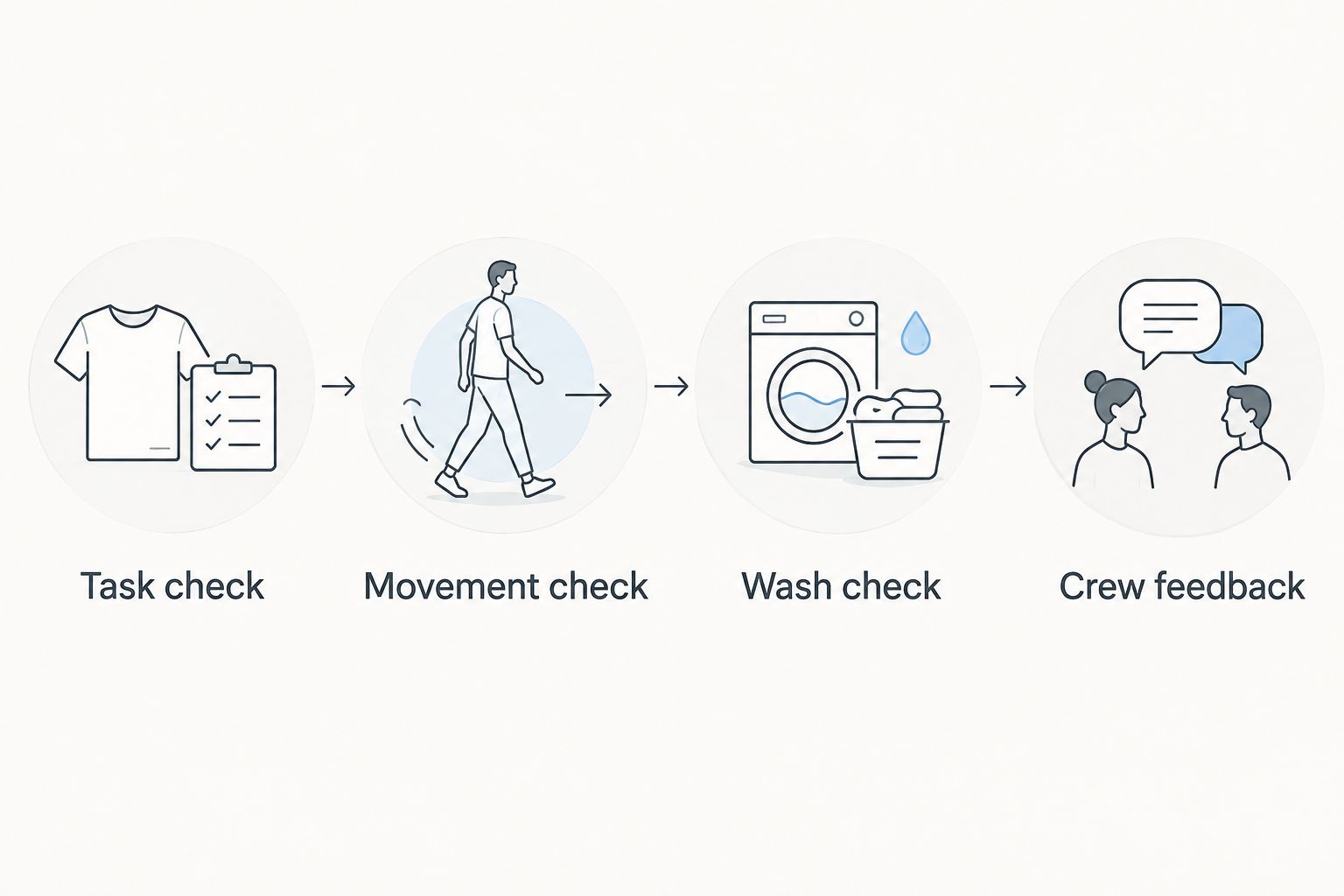
For your 2026 uniform review, use the same sequence for every candidate: task check, movement check, wash check and crew feedback. A consistent process makes the final choice easier to explain.
Keep the trial notes with your clothing order information. The team uniform sizing and ordering guide provides a related planning reference without replacing your workplace clothing assessment.
- Record each wearer’s size and specific fit concerns.
- Compare movement before and after laundering.
- Inspect seams, pocket openings and the waistband after the trial.
- Approve the garment only for the duties you assessed.
Set a clear wear, care and replacement routine
Write a short crew clothing instruction that people can use without interpretation. State where shorts are permitted, when workers must change clothing and who checks requirements when a new task or site is introduced.
Keep care instructions garment-specific. Do not assign one washing temperature or drying method to every pair of denim shorts, especially when fabrics and trims differ.
Inspect condition rather than promising a fixed replacement interval. A torn pocket, damaged fastening or split seam needs attention when it appears, not at the next calendar review; a good appearance does not prove that a garment remains suitable for its assigned task.
- Share permitted-use rules with workers before issuing clothing.
- Keep each garment’s care instructions accessible.
- Inspect seams, fastenings and pocket openings regularly.
- Reassess clothing whenever duties, equipment or site requirements change.
Compare denim shorts and other clothing options
Choose by duty first, then compare fit and appearance. The table separates casual product features from task-specific clothing needs; it does not rank fashion shorts as safety equipment.
| Option | Best for | Useful feature | Key limitation |
|---|---|---|---|
| BRIGGS BLACK ELASTIC DENIM SHORT | Casual shorts buyers who prefer an elasticated waist | Knitted denim, elasticated waistband and biker panel details | Product details do not establish protective performance; exposed legs remain a task constraint |
| PERTH BLACK DENIM SHORT | Casual shorts buyers who prefer a denim-wash appearance | Knitted denim with an authentic denim wash | Product details do not establish protective performance or specialist tool storage |
| Purpose-designed work shorts | Duties that permit shorts but need work-specific features | Lets you select documented features against a task checklist | Shorts still leave the lower legs exposed; features vary by garment |
| Task-appropriate long work trousers | Duties requiring covered legs | Provides leg coverage and a basis for selecting required task-specific properties | Coverage alone does not establish chemical, cut or other protective performance |
The Blkwd products below are casual candidates for fit assessment, not recommendations for hazardous landscaping work. Choose BRIGGS BLACK ELASTIC DENIM SHORT for its stated waistband feature; choose PERTH BLACK DENIM SHORT when its simpler denim-wash description matches your preference.


Common mistakes landscaping crews make
Treating denim as a protective specification
A denim appearance does not tell you whether shorts meet a task’s protective requirements. Ask for evidence of the exact property you need, rather than translating a substantial-looking fabric into an unsupported safety claim.
Choosing one outfit for every landscaping duty
A client-facing visit and machinery work are different clothing decisions. Keep a change-of-task rule so workers do not continue in casual shorts simply because that is what they wore at the start of the day.
Ordering matching sizes without individual fit checks
The same labelled size does not guarantee the same fit across different cuts. Record each worker’s measurements and movement feedback before choosing the uniform, and do not force everyone into one silhouette for visual consistency.
Using pockets as an improvised tool system
Casual pockets are not evidence of suitable storage for sharp tools. Separate everyday personal items from task equipment, then check that your chosen carrying arrangement does not interfere with movement or equipment use.
Assuming a darker wash solves maintenance problems
A dark colour is a styling choice, not a cleaning method. Inspect garments for damage and contamination, follow the relevant handling instructions, and do not judge readiness for another shift by whether stains are easy to see.
FAQ
Are denim shorts suitable for landscapers?
Denim shorts are suitable only for duties where the task assessment and site rules permit shorts. Do not use casual denim as a substitute for required leg coverage or task-specific protective clothing.
What's the best way to choose denim shorts for a landscaping crew?
Check task suitability before comparing fit, fabric and appearance. Trial movement and laundering with individual wearers before selecting matching crew clothing.
Are stretch denim shorts better than regular denim for landscaping?
Stretch alone does not make denim shorts better for landscaping. Assess unrestricted movement separately from the protective clothing requirements of the job.
Can I wear denim shorts while using a brush cutter?
Do not choose denim shorts for brush-cutting work unless the equipment instructions and task assessment expressly permit them. Follow the required clothing and protective equipment instructions rather than relying on denim thickness.
Does Blkwd sell protective landscaping shorts?
Blkwd is a fashion retailer, and the denim shorts described here are casual clothing products. Their supplied product descriptions do not establish protective performance for landscaping tasks.
How should a landscaping crew wash denim shorts?
Follow each garment's care label and assess any work-related contamination before laundering. Do not assume ordinary household washing is appropriate for clothing exposed to chemicals; follow the relevant handling instructions.
Should a landscaping uniform include shorts or long trousers?
A landscaping uniform should include clothing appropriate to each assigned task rather than impose one garment for every duty. Use long trousers or specialist protective clothing whenever the task requirements call for them.
One last thing
The most useful uniform rule is when to change, not which colour to buy. Add a task-change check to your 2026 crew briefing: before workers move from a consultation or other permitted casual duty to machinery, spraying or vegetation work, confirm the clothing requirements again.
A well-fitting pair of denim shorts answers a comfort question. It does not answer the next job’s safety question.