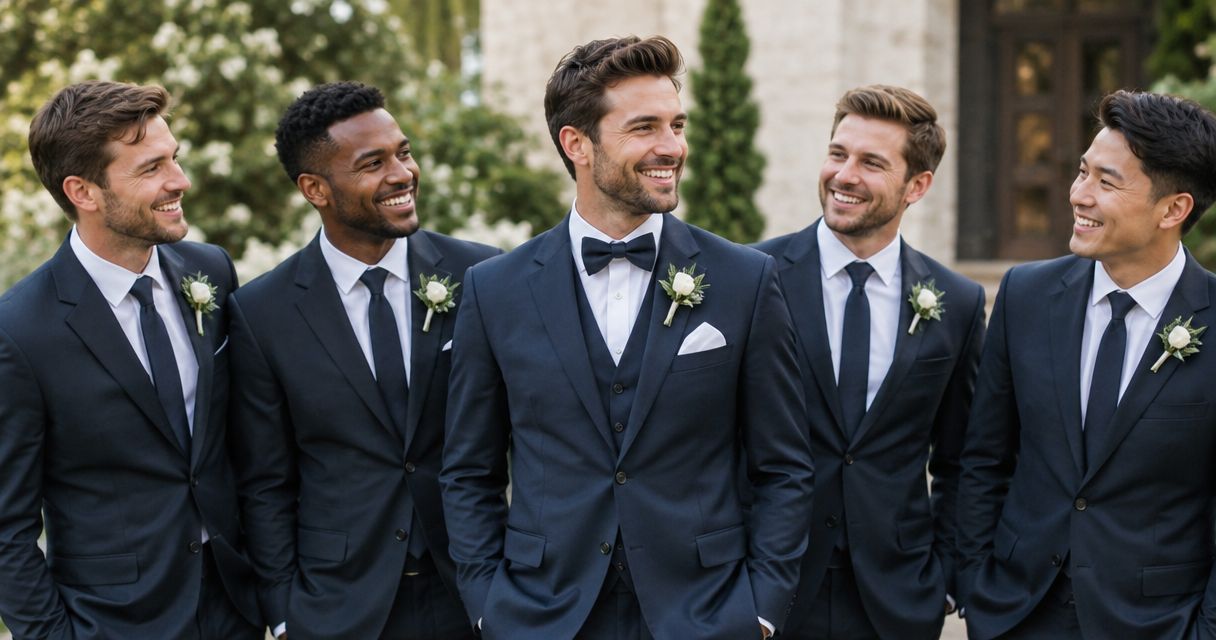
Groomsmen's wedding suiting is the coordination of suits, shirts and accessories with the aim of creating a consistent wedding party without forcing every man into the same fit. Choosing wedding suits for groomsmen in 2026 means balancing the couple's dress code, different body shapes and an outfit everyone can wear comfortably through the ceremony and reception.
- Choose wedding suits for groomsmen by dress code first, then coordinate colour, fabric and accessories.
- Blkwd blazers suit relaxed wedding outfits; a standalone blazer does not establish a matching suit.
- Keep the wedding party consistent through shared styling, not identical garment sizes.
- Confirm fit with the actual wedding shirt and shoes before approving alterations.
Why wedding suiting matters for groomsmen
A coordinated wedding party needs a shared brief, not a shared size. Your groomsmen have different proportions, and an identical cut will not sit identically on every person. Decide which details must match before anyone starts shopping independently.
Australian weddings also involve different settings: an outdoor ceremony and an indoor reception place different demands on the same outfit. Check the location, expected conditions and stated dress code rather than treating every wedding as a summer beach event.
Blkwd sells men's suits, blazers, shirts and pants online. For your 2026 wedding, separate the decision about the overall outfit from the decision about individual garments: a suitable blazer alone does not settle the trousers, shirt or level of formality.
How to choose wedding suits for groomsmen
Set the dress code before choosing colours
Start with the invitation and the couple's instructions. Black tie traditionally calls for evening formalwear, not an ordinary business suit or a textured blazer with chinos; a relaxed garden wedding gives you more room to use separates.
Create 1 shared outfit brief before asking anyone to buy. Include the ceremony setting, reception setting and the groom's intended outfit, so the group works towards the same result rather than interpreting a colour name independently.
Agree on who makes the final styling decision. Collect questions in the shared brief instead of leaving important changes scattered across private messages.
- Copy the dress code exactly from the invitation.
- Confirm whether jackets stay on for the ceremony and photographs.
- Specify a matching suit or deliberately contrasting separates.
- Record the agreed shirt, shoe and accessory colours.
- Name the person who approves substitutions.
Choose the level of matching your group needs
Lay out clothing your groomsmen already own before searching for new outfits. A phone photograph of each existing suit helps you identify useful pieces, but it does not prove that different navy fabrics match.
Choose between exact matching and deliberate coordination. Exact matching creates a uniform appearance; coordinated outfits allow different cuts or garments within a defined palette. Avoid the middle ground where nearly matching jackets and trousers look like an accidental suit.
Take 3 reference photos of the proposed outfit: front, side and back. Use the same reference set when asking the couple to approve the look, rather than circulating unrelated inspiration images.
- Identify which existing garments meet the dress code.
- Decide whether the jacket and trousers must share a fabric.
- Approve the outfit in daylight as well as indoors.
- Keep shirt colour consistent when suits differ.
- Give the groom a deliberate distinguishing detail.
Compare complete suits with relaxed blazer outfits
Try your existing shirt, trousers and shoes together first. If the outfit falls short of the dress code, identify the missing element before replacing everything; changing a shirt will not turn casual separates into black-tie clothing.
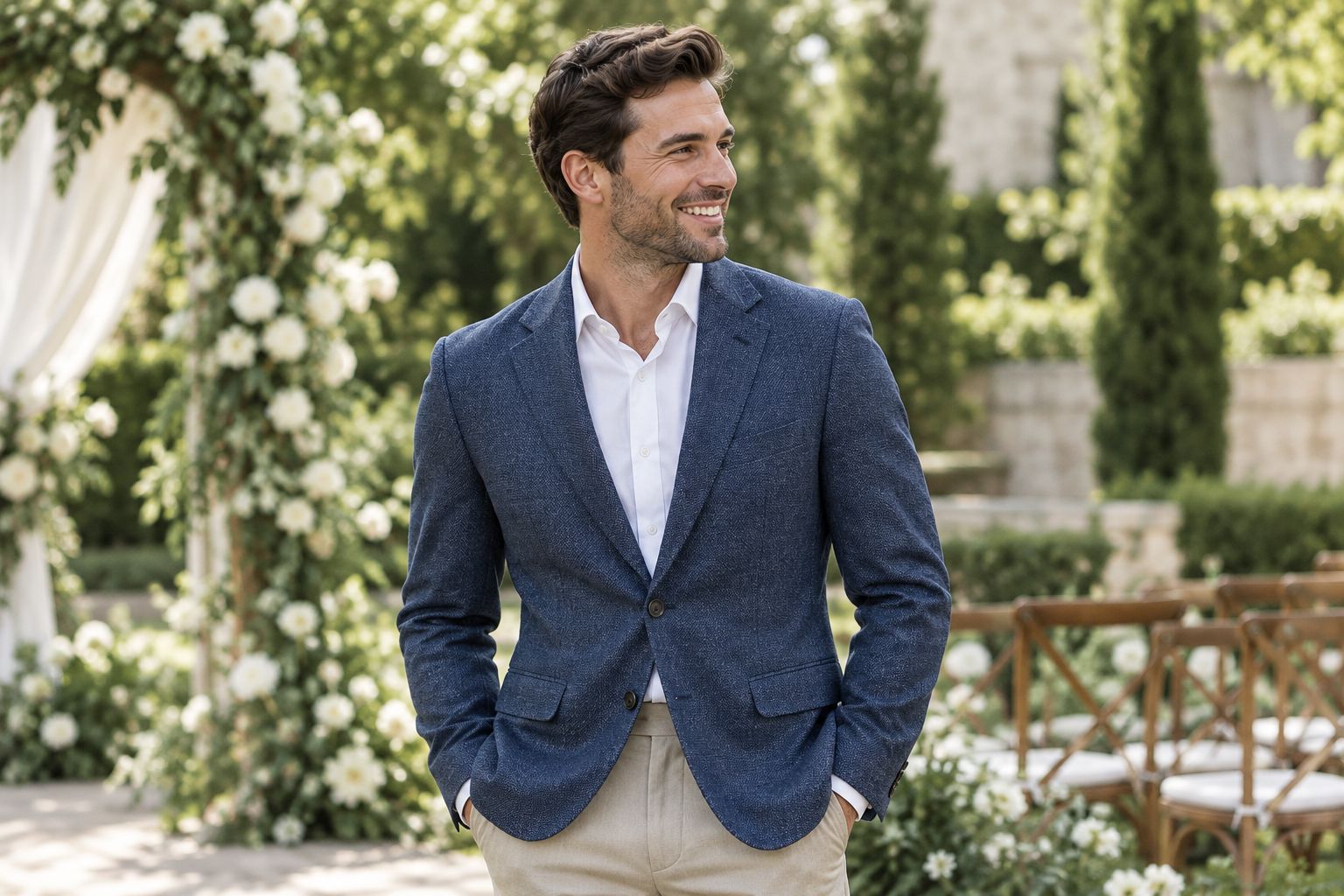
Blkwd is best for groomsmen considering blazers for a relaxed wedding. The RHYS - SLIM BLAZER and EPPING - SLIM BLAZER descriptions both identify wedding styling as a use, making them relevant starting points when the couple approves separates.
Their limitation matters: neither supplied product description establishes a matching trouser. Treat each as a blazer option, not a confirmed complete wedding suit, and assess the slim cut on each wearer rather than assuming it suits the entire party.
- Choose a complete matching suit when the brief requires one.
- Consider RHYS - SLIM BLAZER for its knitted textured look.
- Consider EPPING - SLIM BLAZER for a textured blazer outfit.
- Use contrasting trousers deliberately with standalone blazers.
- Confirm the complete outfit with the couple before committing.


Check each man's fit before approving alterations
Use a well-fitting garment as your starting reference, then check the proposed wedding outfit on the person wearing it. A familiar size label is not a substitute for assessing shoulders, jacket closure, trouser comfort and overall length.
Complete 2 movement checks: sit down, then reach forward as if greeting someone. Neither action should require the wearer to brace against tight fabric or repeatedly rearrange the outfit.
Ask a tailor to assess changes before assuming everything is fixable. The guide to tailoring an off-the-rack suit explains the decision in more detail; substantial structural changes deserve assessment before you commit to the garment.
- Check that the jacket collar rests neatly against the shirt.
- Look for pulling around the fastening when standing naturally.
- Assess the shoulders without lifting or tensing the arms.
- Check the waistband while seated, not only while standing.
- Mark trouser length while wearing the intended wedding shoes.
Test the fabric and layers in realistic conditions
Read the garment's fabric composition and care instructions rather than judging comfort from photographs. Fibre content, weave, lining and fit all affect how clothing feels; the word cotton alone does not describe the whole garment.
For a 2026 outdoor ceremony, rehearse the complete outfit under conditions that resemble the venue where practical. Include the shirt, undershirt if used, tie and jacket instead of testing each piece separately.
Keep the final decision tied to the wedding's formality. A visibly open or heavily textured shirt creates a different effect from a plain dress shirt, even beneath the same jacket.
- Check the composition label on each proposed garment.
- Assess lining and layering alongside the outer fabric.
- Stand, sit and walk in the full outfit.
- Inspect shirt transparency in daylight.
- Follow the care label when preparing garments.
Coordinate shirts, shoes and the groom's distinction
Photograph the shirts and shoes your group already owns together before replacing them. Different whites, collar shapes and shoe finishes become easier to compare when you stop assessing each item in isolation.
Keep the groom's distinction controlled. A different tie, boutonnière or waistcoat can provide the separation without requiring every groomsman to follow an entirely different outfit brief.
For formal styling, judge the shirt collar with the intended neckwear in place. For an approved open-neck outfit, check that the collar sits neatly without relying on a tie to hold the shape.
- Agree on a shirt colour and acceptable collar style.
- Specify shoe colour and level of formality.
- Match belt colour to the footwear where a belt is worn.
- Assign the groom a clearly defined distinguishing detail.
- Photograph the group with jackets both fastened and open.
Record approvals and rehearse the full outfit
Use a shared document or group message to record each groomsman's outfit, fit questions and outstanding decisions. Keep separate headings for the outfit brief, fit checks and final approval so a colour discussion does not obscure an unresolved trouser issue.
For a 2026 wedding party spread across different locations, use a consistent photo checklist. Remote photographs help coordinate appearance, but each wearer still needs to check comfort and movement in person.
Follow the same approval sequence for everyone. Do not approve an outfit from a cropped jacket photo when the trousers and shoes remain undecided.
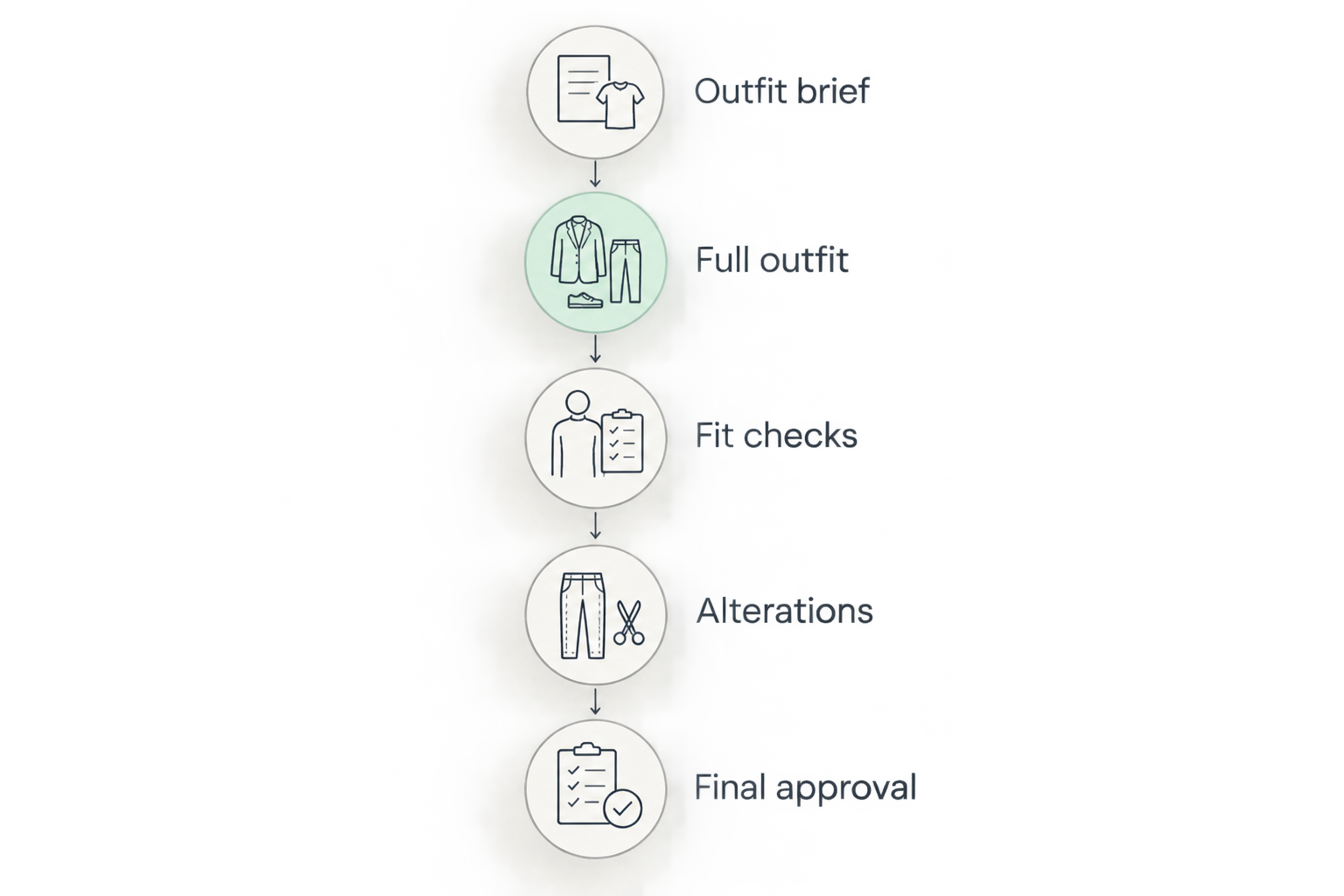
Record the final agreed look alongside the ceremony details. That gives every groomsman the same reference when packing and dressing.
- Save the agreed outfit brief in a shared location.
- Record each wearer's garment choices and fit concerns.
- Assess alterations before marking the outfit complete.
- Photograph the final shirt, jacket, trousers and shoes together.
- Assign responsibility for ties and other shared accessories.
Compare groomsmen's outfit options
Choose the outfit route by dress code and fit, not by the jacket alone. This comparison separates complete suits from coordinated separates so you can make the right decision for your 2026 wedding.
| Option | Best for | Main advantage | Key limitation |
|---|---|---|---|
| Existing matching suit | Groomsmen whose current suit meets the brief | Starts with clothing you can inspect immediately | Different existing suits do not create an exact group match |
| Ready-to-wear matching suit | Wedding parties seeking a consistent suit appearance | Keeps jacket and trousers within a matching design | Each wearer still needs an individual fit assessment |
| Hired formalwear | Wedding parties using formalwear for a specific occasion | Provides a route to occasion-specific dressing | Check the provider's fitting, alteration and return conditions |
| RHYS - SLIM BLAZER | Relaxed weddings permitting textured separates | Knitted textured look with wedding styling stated in its description | A matching trouser is not established in the supplied description |
| EPPING - SLIM BLAZER | Relaxed weddings permitting a textured jacket | Textured look with wedding styling stated in its description | A standalone blazer does not satisfy a matching-suit brief |
For Blkwd blazers, the practical question is whether the complete outfit meets the couple's instructions. Do not treat a product's suggested wedding use as permission to disregard a stricter dress code.
Common mistakes groomsmen make
Treating a colour name as an exact match
Navy is a colour family, not a guarantee that separate garments match. Compare actual fabrics together; if you cannot establish a match, choose a clear contrast or a confirmed matching suit.
Ordering the same cut for every body shape
Uniform styling does not require identical proportions. Preserve the agreed colour and formality while checking each man's shoulders, torso, waist and trouser length individually.
Altering trousers without the wedding shoes
The shoes affect how the trouser hem sits. Wear the intended pair when assessing length so the final result reflects the outfit rather than a barefoot fitting.
Letting each man interpret relaxed differently
One groomsman wearing a tie and another wearing casual footwear creates competing levels of formality. Define the actual garments and accessories instead of relying on a broad description.
Confusing blazer styling with a complete suit
A blazer described for weddings remains a separate jacket unless matching trousers are established. Check the full combination before presenting it to the couple as a suit option.
FAQ
What's the best way to choose wedding suits for groomsmen?
Choose wedding suits for groomsmen by confirming the dress code, deciding how closely outfits must match and checking each man's fit. Approve the complete outfit, including shirt and shoes, before final alterations.
Do all groomsmen have to wear exactly the same suit?
Groomsmen only need identical suits when the couple's outfit brief requires them. Coordinated colours and accessories also work when different cuts or separates are deliberately approved.
Can groomsmen wear a blazer instead of a matching suit?
Groomsmen can wear a blazer when the couple approves separates for the wedding's dress code. A standalone blazer with contrasting trousers is not the same outfit as a matching suit and does not replace black-tie formalwear.
Are Blkwd blazers suitable for groomsmen?
Blkwd blazers are options for groomsmen at relaxed weddings that permit separates. RHYS - SLIM BLAZER and EPPING - SLIM BLAZER both mention wedding styling, but their supplied descriptions do not establish matching trousers.
Should the groom dress differently from the groomsmen?
The groom's outfit should follow the couple's preference, with any distinction chosen deliberately. A different tie, boutonnière or waistcoat creates separation while keeping the wedding party coordinated.
How do you check whether a groomsman's suit fits?
Check the suit while standing, sitting and reaching forward in the actual wedding shirt and shoes. Assess the shoulders, collar, fastening, waistband and trouser length, then ask a tailor about unresolved fit issues.
Can groomsmen wear suits they already own?
Groomsmen can wear existing suits if those suits meet the couple's dress code and coordination brief. Compare the garments together before approving them, because similar colour names do not establish matching fabrics.
One last thing
Approve the outfit without the jacket as well as with it. If jackets come off at the reception, the shirts, trouser fit and accessories become the visible wedding-party outfit. Include that view in your final approval rather than discovering an inconsistent look on the day.