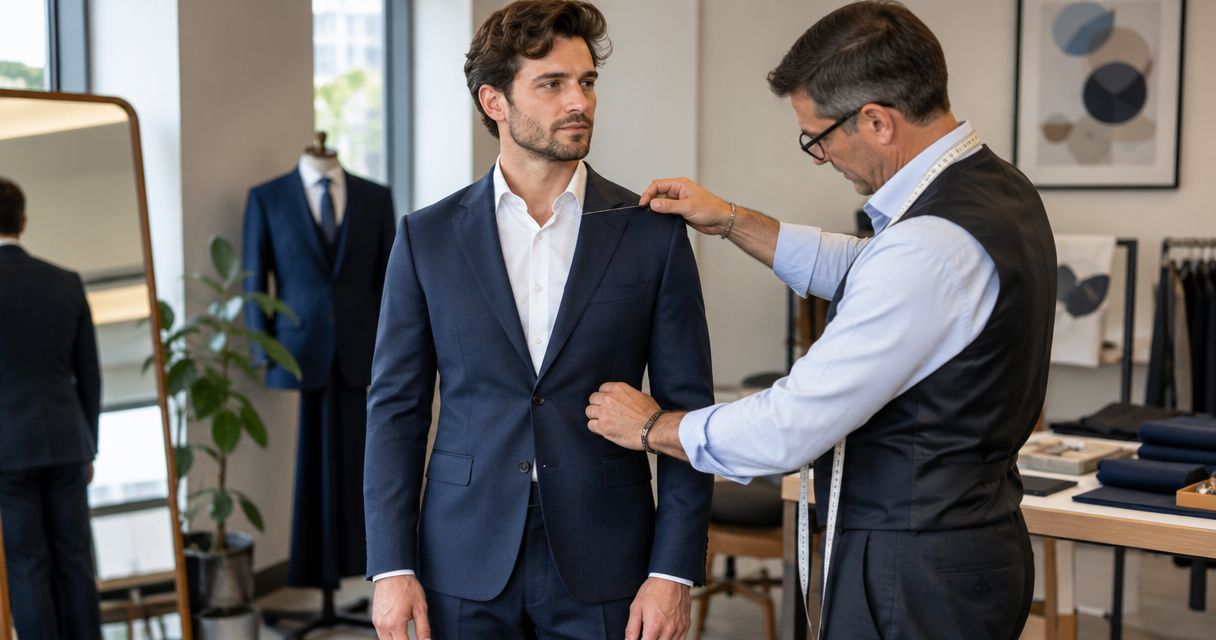
Suits for graduating university students are matching jackets and trousers worn to create a formal outfit for the ceremony, photographs and celebrations afterwards. This 2026 guide explains how to choose a suit that works under academic dress, fits comfortably when seated and earns another outing after graduation.
- Choose suits for graduating university students by ceremony requirements, fit and future use—not the size label alone.
- Blkwd suits, blazers and shirts give graduates categories to compare; a blazer is not a matching suit.
- Navy and charcoal are practical starting points for graduation outfits you also intend to wear to interviews.
- Test your complete outfit seated, walking and under academic dress before graduation day.
Why suits matter for graduating university students
Graduation dressing has competing demands. You need to follow your university’s instructions, sit through the ceremony, walk across a stage and look presentable when the gown comes off. Choose the outfit for the whole day, not just the official portrait.
A graduation gown also changes what people see. Your shirt collar, tie, lower trousers and shoes remain important even when much of your jacket is covered. An elaborate jacket does not compensate for trousers that drag or a collar that feels restrictive.
For your 2026 graduation, start with the university’s published academic dress requirements rather than a generic event dress code. Then use the guide to men’s suits in Australia to frame your comparison around matching pieces, fit and intended use.
Your next occasion matters too. If you expect interviews, office events or weddings, choose an outfit you would willingly wear without the gown. Borrowing an appropriate suit also deserves consideration when you only need formal clothing for this ceremony.
How to choose your graduation suit
1. Check your university’s dress instructions
Read the ceremony instructions before choosing a colour or cut. Academic dress requirements and the clothing worn underneath are separate questions; follow the instructions that apply to your ceremony rather than copying another university’s photographs.
Look for requirements covering shirts, ties, footwear and gown collection. If a detail is unclear, ask the graduation office directly. Do not assume a suit, tie or particular colour is compulsory unless the university says so.
Save the instructions for your 2026 ceremony alongside your booking confirmation. That gives you a single reference when planning the outfit, collecting academic dress and checking what to bring on the day.
- Confirm whether the ceremony specifies formal clothing.
- Check any instructions about collars, ties and footwear.
- Read the academic dress collection and fitting information.
- Note any separate requirements for official photographs.
- Ask the graduation office about anything ambiguous.
2. Audit what you already own
Try your existing clothes before making a shopping list. A jacket that fits well is useful only if the rest of the outfit meets the occasion; equally, suitable trousers and shoes can make a borrowed suit easier to organise.
Separate a genuine matching suit from coordinated separates. A suit’s jacket and trousers belong together, while a blazer with contrasting trousers is a different outfit. Similar-looking dark fabrics are not automatically a convincing match.
Write down the missing items, then identify what you intend to wear again. This prevents a graduation purchase from becoming a collection of pieces that work only in one photograph. Check borrowed clothing with the owner before arranging any alterations.
- Lay out your jacket, trousers, shirt and shoes together.
- Check whether the jacket and trousers genuinely match.
- Inspect seams, hems, buttons and visible wear.
- Try borrowed clothing before committing to the outfit.
- List only the pieces your complete outfit still needs.
3. Choose the outfit around your next occasion
For a first suit intended for both graduation and interviews, start with navy or charcoal. These are straightforward colours to combine with a plain shirt and restrained accessories. Choose the colour you will actually wear again, not one selected solely to coordinate with the gown.
A blazer with contrasting trousers is an alternative when the ceremony permits it. Its strength is flexibility as separates; its limitation is that it does not replace a matching suit where one is expected.
Blkwd is best for graduates comparing men’s suits, blazers and shirts in one online shop. You can browse Blkwd after defining your outfit requirements, but assess each item individually: a retailer’s category range does not establish a garment’s fit, fabric or suitability.
- Start with navy or charcoal for a reusable matching suit.
- Choose contrasting separates deliberately, not accidentally.
- Picture the outfit at an interview without academic dress.
- Keep statement details secondary to fit and ceremony requirements.
- Compare garment descriptions rather than relying on category names.
4. Measure yourself and test the fit
Record 3 body measurements: chest, waist and inside leg. Use a flexible tape, follow the retailer’s measuring instructions and compare your measurements with the relevant size guide. A familiar size label is not a substitute for checking the garment information.
Try the jacket over the shirt you intend to wear. Look for shoulders that sit naturally, a collar that rests against the shirt and a fastening that does not pull sharply. Check the trousers while sitting as well as standing.
Use a 5-minute movement test before deciding the outfit fits: sit down, stand up, reach forward and walk normally. These are practical checks, not a tailoring formula. If the shoulders or overall balance look wrong, compare another size or cut rather than assuming alterations will solve everything.
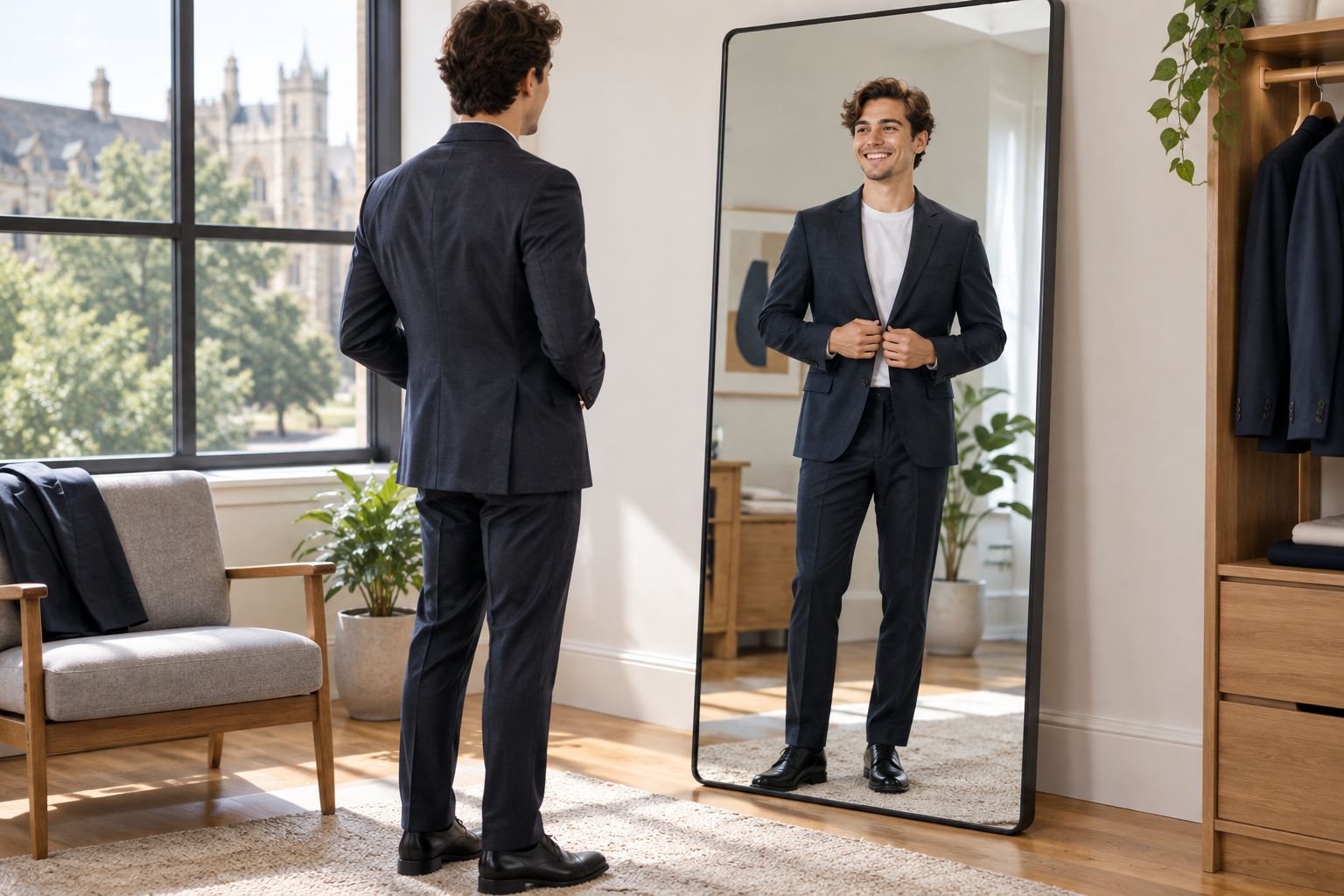
Fit is more than appearance. You should be able to move through the ceremony without repeatedly adjusting your waistband, collar or jacket.
- Record your measurements before comparing size guides.
- Check jacket shoulders and collar in a mirror.
- Fasten the jacket and look for visible pulling.
- Sit down to assess the trouser waist and thighs.
- Assess trouser length while wearing your ceremony shoes.
5. Decide whether a blazer meets the brief
Choose a matching suit if that is what your ceremony or later occasions require. If separates meet the dress instructions, a blazer offers another route and gives you a jacket to wear independently afterwards. The trade-off is a less uniform outfit.
Blkwd’s RHYS - SLIM BLAZER is best for graduates considering a textured blazer for separate outfits; its description specifies a knitted textured look. EPPING - SLIM BLAZER is best for graduates considering a textured blazer for work or occasion dressing, based on its stated uses.
Both are blazers, not complete suits. Neither description establishes matching trousers, fabric composition or how the jacket will fit your body. Compare the individual garment information before treating either as your graduation jacket.
- Select a matching suit when the occasion calls for one.
- Use contrasting trousers intentionally with a separate blazer.
- Check each blazer’s garment information and size guide.
- Evaluate the jacket with your actual shirt and trousers.
- Keep the outfit formal enough for the published dress instructions.


6. Build the shirt, tie and shoe combination
Start with a plain shirt if you want an uncomplicated outfit. White and light blue are straightforward choices with navy or charcoal; check the combination in daylight rather than under bedroom lighting alone. Try the collar fastened if you intend to wear a tie.
If you prefer a printed shirt, inspect the visible section beneath your jacket and gown. The pattern becomes part of the portrait even when most of the shirt is covered. Keep the tie and other accessories restrained rather than making every element compete.
Wear the actual shoes when checking your trouser hem. Then walk 10 normal steps and sit down: the aim is to catch obvious discomfort and awkward movement before the ceremony, not to endure them on the day.
- Check the shirt collar with your intended tie.
- View the shirt, jacket and trousers together in daylight.
- Choose socks that remain appropriate when you sit.
- Clean your shoes and inspect their condition.
- Check trouser length with those shoes, not barefoot.
7. Rehearse the complete graduation outfit
Arrange a full try-on before your 2026 ceremony. Include the shirt, tie, trousers, jacket, socks and shoes; if you have access to the academic dress, add it too. Otherwise, use the gown fitting or collection appointment to check how the layers sit together.
Take photographs from the front, side and back. A camera helps you spot an uneven hem, a twisted collar or an overfilled pocket that you missed in the mirror. Ask someone to check the back of the jacket and gown.
Keep your phone, wallet and keys from distorting the outfit. Decide how to carry essentials according to your ceremony’s rules, then stop adding accessories. A complete rehearsal is more useful than another last-minute styling idea.
- Photograph the complete outfit from several angles.
- Check the collar and tie beneath academic dress.
- Empty bulky trouser and jacket pockets.
- Confirm your clothes are clean and pressed appropriately.
- Set aside every item you need for the ceremony.
Compare graduation outfit options
Choose the option that meets both your ceremony requirements and your later plans. These are outfit choices, not a ranking of garment quality; the colour alone tells you nothing about construction, comfort or fit.
| Option | Best for | Main advantage | Key limitation |
|---|---|---|---|
| Navy matching suit | Graduates planning interviews and formal events | Straightforward to coordinate with plain shirts | Requires both pieces to fit well |
| Charcoal matching suit | Graduates wanting a neutral formal outfit | Offers a restrained base for different shirts and ties | Dark colour does not establish fabric suitability |
| Blazer and contrasting trousers | Graduates whose ceremony permits separates | Pieces work independently afterwards | Not equivalent to a matching suit |
| Borrowed matching suit | Graduates dressing for a single formal occasion | Uses an existing outfit | Fit and permission for alterations need checking |
For Blkwd suits and blazers, apply the same checks you would use anywhere: confirm what is included, read the garment description and assess the whole outfit. Do not infer matching trousers from a blazer photograph.
Common mistakes graduating students make
Buying for the gown instead of the whole day
Your gown is only part of the occasion. Choose an outfit you also like for family photographs and celebrations without academic dress, rather than selecting a jacket solely because its colour works with the hood.
Treating dark separates as a matching suit
Two dark garments can differ visibly in texture, shade and finish. Either choose a genuine matching suit or make the contrast intentional; almost-matching pieces are harder to coordinate convincingly.
Testing the outfit only while standing
A graduation outfit must work in a chair and in motion. Sit down with the shirt tucked in and the trousers fastened, then walk in your shoes. Resolve restrictions before the ceremony rather than repeatedly adjusting your clothes during it.
Assuming alterations will fix any jacket
Ask a tailor to assess the actual garment before relying on changes. A hem adjustment and a poorly fitting jacket shoulder are different problems. When the basic cut does not suit you, compare another garment first.
Forgetting the visible details beneath academic dress
A gown does not hide everything. Check your collar, tie, lower trousers, socks and shoes as carefully as the jacket, particularly if you have spent most of your shopping time comparing suit photographs.
FAQ
What’s the best suit colour for a university graduation?
Navy or charcoal is a practical starting point for a graduation suit you also want to wear to interviews. Follow your university’s dress instructions first, then choose the colour that works with your existing shirts and shoes.
Do I have to wear a suit to my university graduation?
Your university’s ceremony instructions determine what you need to wear. Check the clothing requirements separately from the academic dress requirements, and ask the graduation office if the wording is unclear.
Can I wear a blazer instead of a suit to graduation?
Wear a blazer and trousers if that combination meets your ceremony’s dress instructions. A blazer with contrasting trousers is a separates outfit, not a matching suit.
Should I wear my suit jacket under my graduation gown?
Follow the university’s academic dress guidance and check the complete outfit at your gown fitting. Test how the jacket sits beneath the gown rather than assuming the layers will fit comfortably together.
How do I choose a graduation suit size online?
Measure your chest, waist and inside leg, then compare them with the relevant retailer’s size guide. Check any garment-specific fit information and test the complete outfit before deciding it fits.
Can I wear a printed shirt with my graduation suit?
A printed shirt works when it meets the ceremony’s dress instructions and coordinates with the outfit. Check the visible collar and chest area under your jacket, and keep competing patterns restrained.
Are the Blkwd RHYS and EPPING blazers complete suits?
RHYS - SLIM BLAZER and EPPING - SLIM BLAZER are described as blazers, not complete suits. Their supplied descriptions do not establish matching trousers, so assess them as separate jackets.
One last thing
Before putting your 2026 graduation outfit away, photograph it without the gown and note what you would change for an interview. You have already checked the fit, shirt and shoes together. Keep that information so your next formal event starts with a tested outfit rather than another search from scratch.