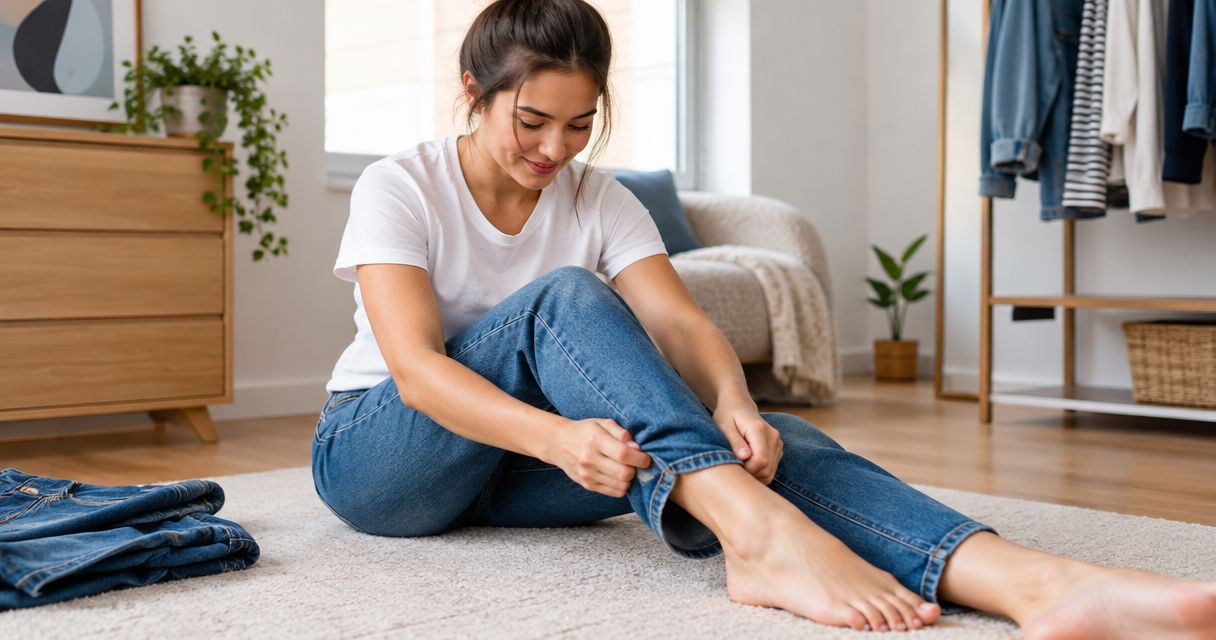
Break in new jeans faster by wearing them during normal daily activities, moving gently and washing only as the care label directs. Stiff denim can soften with use, but breaking it in will not correct a waistband, rise or thigh cut that is too small. This 2026 guide explains what to try, what to avoid and when to choose a different fit.
- How to break in new jeans: use normal wear and gentle movement, not force or high heat.
- Stiff fabric can soften; painful pressure means you need to reassess the fit.
- Follow the care label before washing, soaking or applying any treatment.
- Blkwd offers knitted denim joggers for men considering an alternative to conventional jeans.
Why this matters
New jeans should feel secure without stopping you from sitting, walking or bending comfortably. The useful distinction is between fabric that feels crisp and a garment that physically restricts you. Treating both problems as stiffness leads to unnecessary stretching and washing.
Before changing your washing routine, read can you wash denim jeans in a washing machine. The garment’s own instructions take priority over any general denim advice, including the methods in this guide.
For your 2026 denim purchases, judge the fit before trying to soften the fabric. That keeps the decision simple: wear in a suitable pair, rather than trying to rescue an unsuitable cut.
How to break in new jeans faster
Start with dry jeans that fit, then use everyday movement to work the fabric where your body naturally bends. Avoid pulling hard on the waistband or forcing deep movements through tight seams. The aim is comfortable wear, not the largest possible stretch.
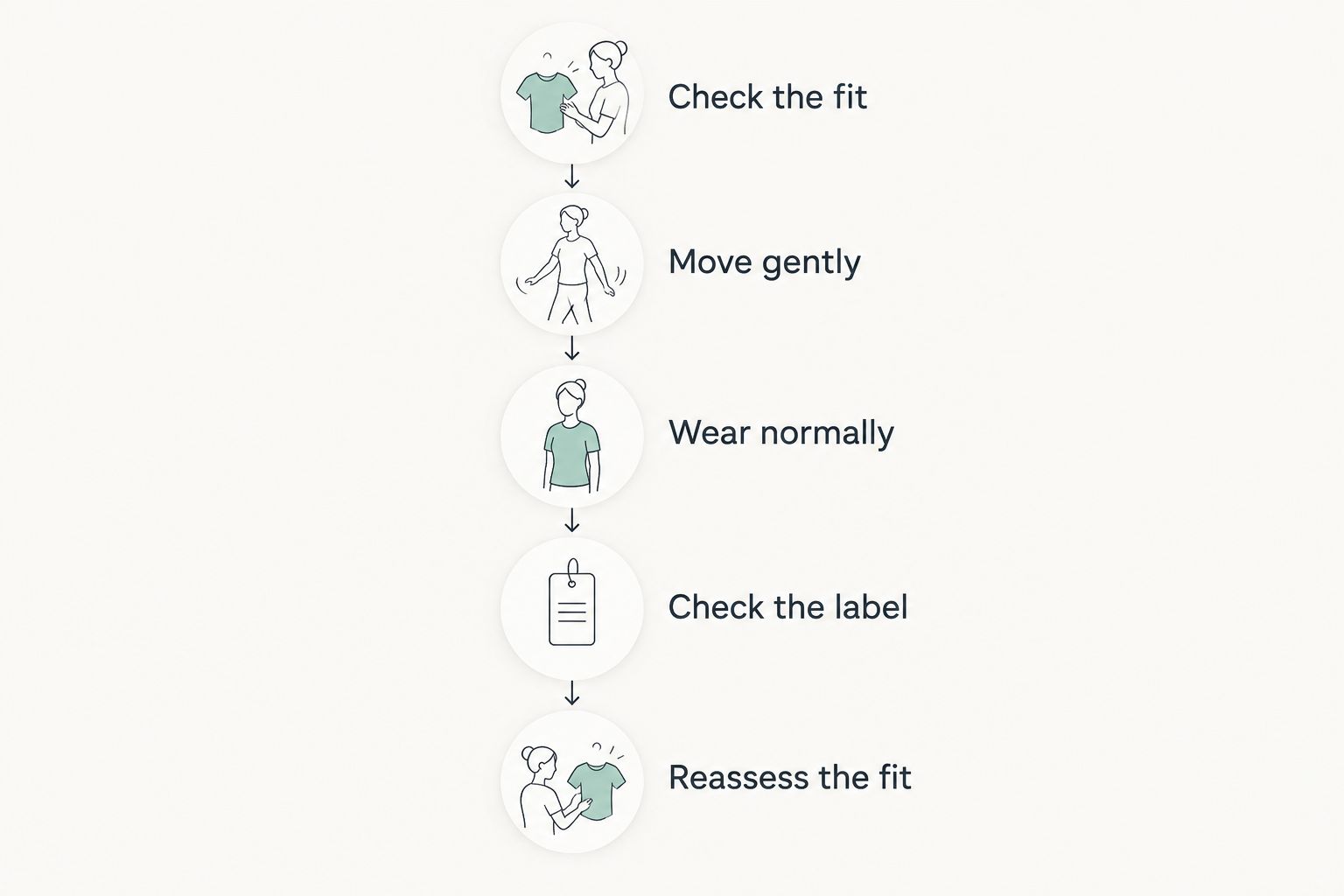
Follow this sequence
- Check the fit. Fasten the jeans normally, without holding your breath or pulling the waistband together with force. Check the seat, thighs and rise as well as the waist.
- Move gently. Walk around, sit in a chair and bend your knees naturally. Stop if you feel pinching, pain or strong resistance across a seam.
- Wear normally. Choose ordinary activities that let you move comfortably. Change out of the jeans if discomfort builds rather than trying to push through it.
- Check the label. When cleaning is needed, follow the stated washing and drying instructions. Do not add heat or extra treatments just to accelerate softening.
- Reassess the fit. Notice whether the fabric feels less rigid while the jeans still sit correctly. If the same pressure points remain, reconsider the size or cut.
There is no reliable universal break-in deadline. Denim construction, finishing, fit and care instructions differ, so a fixed promise would tell you little about your particular pair. Use improved comfort as your measure instead of counting wears.
Which methods should you use?
| Method | Best for | Benefit | Limitation or risk | Recommendation |
|---|---|---|---|---|
| Normal wear | Jeans that fit but feel stiff | Works the fabric through everyday movement | Does not correct an unsuitable cut | Start here |
| Gentle bending and sitting | Checking movement through the seat and knees | Reveals restrictive areas before prolonged wear | Forced movements strain tight areas | Keep movements comfortable |
| Label-approved washing | Jeans that need cleaning | Cleans without deliberately departing from care instructions | Washing is not a dependable resizing method | Wash when needed |
| Hand-stretching | Assessing whether local pressure is a fit problem | Makes the tight area easy to identify | Force can distort fabric or stress seams | Avoid force |
| Hot washing or high-heat drying | No recommended break-in use | Offers no controlled fit correction | Risks shrinkage or damage, depending on the garment | Skip as a shortcut |
How do you break in rigid denim?
For rigid denim, prioritise comfortable movement rather than expecting stretch-fabric behaviour. Check the fibre label instead of assuming that all jeans contain elastane. A crisp feel alone does not mean the jeans are the wrong size.
Wear rigid jeans during activities where you can change clothes if needed. Sitting, standing and walking let you assess whether the fabric is becoming easier to move in without deliberately forcing it. If the waistband digs in sharply or the crotch pulls every time you sit, reassess the fit.
For a 2026 wardrobe update, choose rigid denim because you like its feel and structure, not because you expect a tight pair to become a different size. Softening and resizing are different outcomes.
How do you break in stretch denim?
Stretch denim should accommodate ordinary movement from the start. Check the composition and care label before deciding how to wash or dry it. Do not assume that a fabric’s ability to stretch makes aggressive pulling harmless.
Use the same walking-and-sitting check, then look at how the jeans sit when you stand again. Strong horizontal pulling, uncomfortable pressure or a waistband that repeatedly rolls are reasons to review the cut. Extra stretch does not automatically make every silhouette suitable.
Avoid trying to loosen stretch denim with direct heat. Heat tolerance depends on the fabric and garment instructions, and a hairdryer is not a controlled tailoring method. Keep the break-in process centred on wear rather than treatment.
Why the break-in experience varies
Your jeans’ construction and fit explain more than a promised number of days. These are the factors to check before changing your approach:
- Fibre composition: Cotton-only denim and denim containing stretch fibres behave differently. Read the composition rather than judging by appearance.
- Fabric construction: A knitted denim garment is not the same construction as conventional woven denim. Compare the garment descriptions before expecting the same feel.
- Finishing: Crisp, untreated-feeling denim and already-softened denim do not start from the same point. Feel the fabric separately from assessing tightness.
- Cut and size: Waist, rise, seat and thigh shape affect movement. A suitable waist measurement does not guarantee a suitable fit everywhere else.
- Care instructions: Washing and drying restrictions determine which cleaning methods are appropriate. Another pair’s routine is not automatically suitable for yours.
- Where pressure occurs: General stiffness differs from concentrated pinching at the waistband or crotch. Persistent local pressure calls for a fit check, not harder stretching.
Are my jeans stiff, or are they too small?
Stiffness is a fabric problem; restricted movement is a fit problem. A suitable pair can feel crisp while still letting you fasten the waistband, sit comfortably and walk without pulling. Tight jeans create pressure that ordinary movement does not resolve.
Check the jeans standing and seated, with your pockets empty. A bulky phone or wallet can add local pressure and confuse the assessment. Then check the same movements with the items you normally carry.
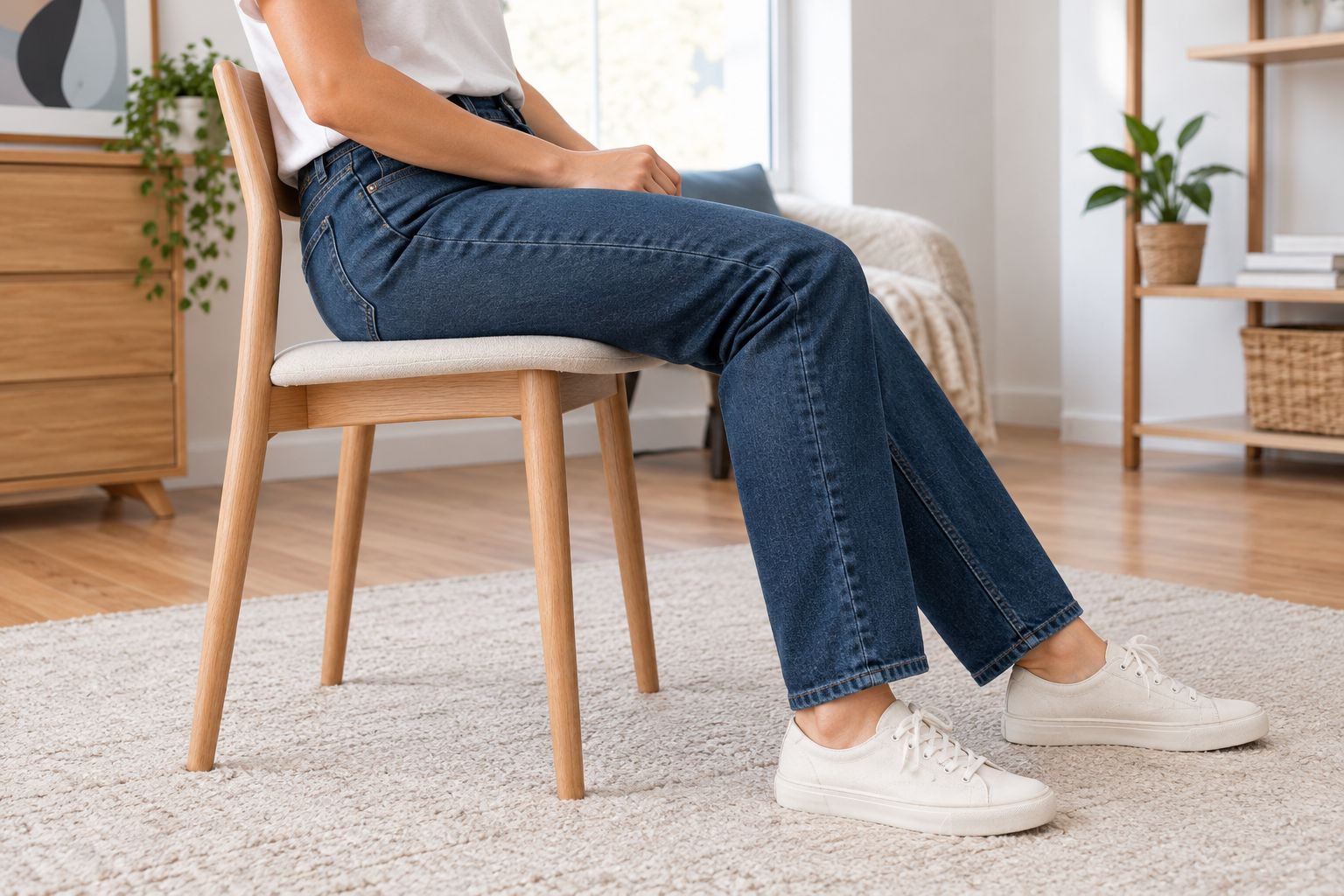
Look for practical signs rather than chasing a perfectly wrinkle-free appearance. Fabric folds when you sit; that alone is not a fit failure. Pain, numbness, inability to fasten comfortably or strong restriction are reasons to stop wearing the pair and reassess.
For online shopping in 2026, keep your fit assessment separate from any alteration attempt. Check the retailer’s applicable return conditions before washing, stretching or changing the garment. Do not assume a modified pair remains eligible for return.
Should I wash new jeans to soften them?
Wash new jeans according to the care label, not as an automatic break-in step. If the label instructs washing before wear, follow it. Otherwise, decide based on cleaning needs and the garment’s instructions rather than assuming every new pair needs an immediate wash.
Use the specified wash process and drying method. Avoid substituting a hotter cycle because the fabric feels stiff, and do not combine repeated washing with forceful stretching. That makes the result harder to control.
Fabric conditioner is not a universal denim treatment either. Check whether it is permitted before adding it, especially when the garment contains stretch fibres or has specific finishing instructions. If the label is unclear, ask for care guidance rather than experimenting.
Can I stretch the waistband instead of breaking in the jeans?
Do not rely on waistband stretching to correct the wrong size. Pulling on a waistband addresses only one area and does not add room through the rise, seat or thighs. A pair that becomes tolerable at the waist can still restrict movement elsewhere.
Avoid chair-back stretching, weighted stretching or yanking on belt loops. These methods apply force without controlling how the garment changes. Belt loops are not handles for resizing jeans.
If the jeans fit well apart from one area, ask a clothing alteration professional to assess what is possible. Get that assessment before applying treatments at home. Alteration depends on the garment’s construction and available fabric, not a generic denim rule.
When should you choose a different denim style?
Choose a different cut when you want more movement than your jeans comfortably allow. Repeated break-in attempts are not a substitute for the right rise, seat or thigh shape. Start by identifying exactly where your current pair restricts you.
| Denim option | Best for | Main advantage | Trade-off |
|---|---|---|---|
| Rigid woven jeans | Men who prefer structured denim | Gives a structured feel without relying on stretch fibres | Requires careful fit selection |
| Stretch woven jeans | Men who want denim with stretch | Accommodates movement through its stretch construction | Still needs the right cut and care |
| Knitted denim joggers | Men who prefer a jogger-style denim garment | Offers a different construction from conventional woven jeans | Does not replace the structure of rigid denim |
Blkwd is best for men shopping for everyday clothing, including knitted denim joggers. Blkwd’s NEWPORT MEDIUM BLUE DENIM JOGGER and NEWPORT BLACK DENIM JOGGER descriptions specify knitted cotton stretch fabric; that makes them relevant alternatives, not evidence that conventional jeans need forceful breaking in.
The trade-off is garment style. Choose Blkwd denim joggers if that construction matches what you want to wear, rather than expecting them to reproduce rigid woven jeans. For your 2026 wardrobe, comfort should begin with the garment choice.
FAQ
What's the fastest safe way to break in new jeans?
Normal wear and gentle everyday movement are the starting point for breaking in jeans that already fit. Avoid forceful stretching and follow the care label when cleaning is needed.
How long does it take to break in new jeans?
There is no universal break-in time for new jeans. Fabric, finishing, fit and care affect the experience, so judge progress by comfort rather than a fixed deadline.
Should new jeans feel tight when I buy them?
New jeans should let you fasten, sit and walk comfortably. A crisp fabric feel is different from painful pressure or restricted movement.
Can I use a tumble dryer to soften new jeans?
Use a tumble dryer only if the jeans’ care label permits it, using the stated settings. Do not add heat as a break-in shortcut.
Will wearing jeans in the bath help break them in?
Wearing jeans in the bath is not a controlled way to improve their fit. Follow the garment’s washing instructions and reassess the cut if dry jeans restrict movement.
Can I break in jeans that are too small?
Breaking in jeans is not a dependable way to correct a pair that is too small. Reassess the size or cut if the waistband, rise, seat or thighs cause persistent pressure.
Are Blkwd denim joggers an alternative to stiff jeans?
Blkwd’s Newport denim jogger descriptions specify knitted cotton stretch fabric, making them an alternative construction to consider. Choose them for the jogger style, not as a direct substitute for rigid woven denim.
One last thing
Check the rise before blaming the waistband. If jeans pull through the crotch when you sit, loosening the waist alone will not necessarily address the problem. Your next pair needs to fit your seated body as well as your standing silhouette.