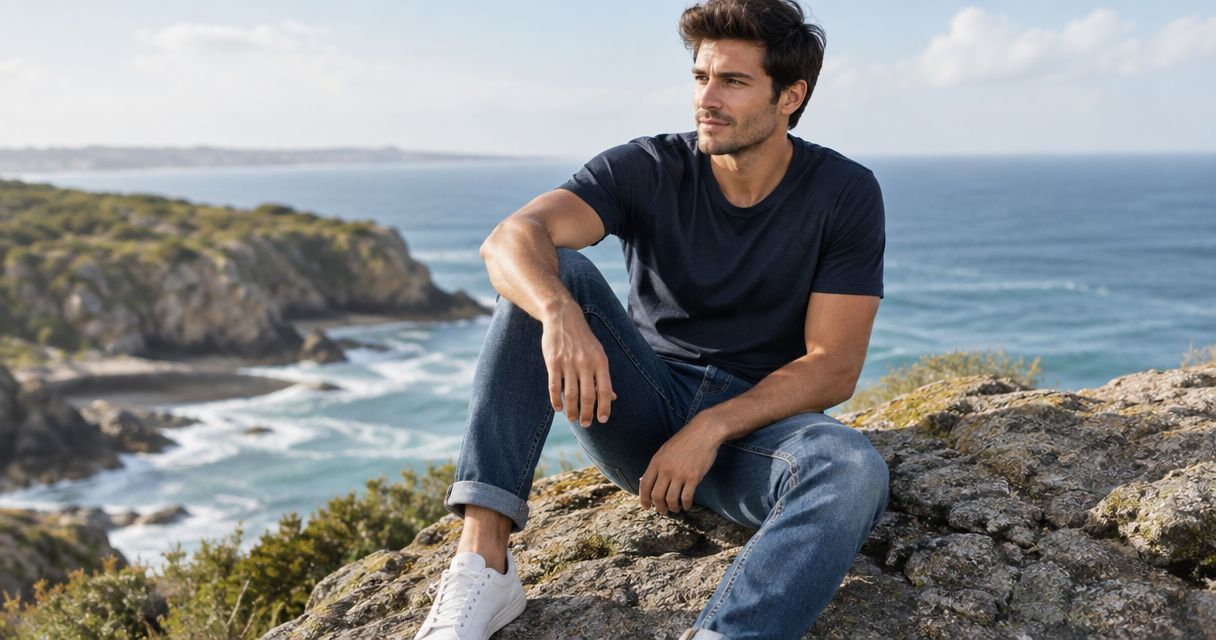
Best overall: straight-leg jeans. Best for fuller thighs: relaxed tapered jeans. Best for smart-casual outfits: clean black jeans. This 2026 guide to mens jeans australia ranks styles by fit and use, so you can choose denim that works with your body and wardrobe.
- For mens jeans australia in 2026, straight-leg jeans are the default choice for everyday outfits.
- Relaxed tapered jeans suit fuller thighs; slim-fit jeans suit a closer silhouette without a skinny cut.
- Clean black jeans work for smart-casual dressing, but the event dress code still decides.
- Blkwd sells men's denim and other clothing, making it a relevant retailer for building coordinated outfits.
Why this matters
The best men's jeans are the pair that fits when you sit, walk and bend—not just when you stand in front of a mirror. A narrow ankle cannot fix a tight thigh, and extra stretch cannot fix the wrong rise.
Blkwd is best for shoppers browsing men's denim alongside shirts, polos and jackets. Choose the jean shape first, then consider the rest of the outfit; a retailer's name alone does not tell you how a particular pair will fit.
This guide compares jean styles rather than claiming a specific model wins without garment-level evidence. For your 2026 shortlist, start with the shape that solves your main fitting problem, then check the individual pair's measurements and fabric description.
What makes the best men's jeans?
- Thigh and seat room: The fabric should sit comfortably without pulling across your hips or restricting your stride.
- Rise: The distance between the crotch seam and waistband affects where the jeans sit and how they feel when seated.
- Leg shape: Straight, slim, tapered and bootcut describe different silhouettes. Choose the shape for your proportions and footwear.
- Fabric composition: Check the garment's stated fibre content. Stretch and non-stretch denim behave differently, but neither guarantees a good fit.
- Hem length: Judge the hem with the shoes you intend to wear. Excess fabric can obscure an otherwise good silhouette.
- Wash and finish: Dark, light and distressed denim create different outfit effects. Match the finish to the setting, not just the product photo.
Best men's jeans at a glance
These 2026 recommendations separate everyday versatility, body shape and outfit purpose. Black describes a finish rather than a cut, so that option still needs a separate fit decision.
| Ranked option | Best for | Standout characteristic | Key limitation |
|---|---|---|---|
| Straight-leg jeans | An everyday wardrobe starting point | A consistent leg line towards the hem | Less ankle definition than tapered cuts |
| Relaxed tapered jeans | Fuller thighs with a neater ankle | Roomier upper leg with a narrowing lower leg | A strong taper can restrict the calf |
| Slim-fit jeans | A closer, cleaner silhouette | Less fabric through the leg | Poor fit creates pulling at the thigh and knee |
| Clean black jeans | Smart-casual outfits | A dark, visually simple finish | Not a substitute for formal trousers |
| Relaxed straight jeans | Deliberately loose casual outfits | Room through the leg without a narrow ankle | Excess length creates bulky stacking |
| Bootcut jeans | Outfits built around boots | A wider lower leg | Hem length needs careful attention |
1. Straight-leg jeans: best for an everyday starting point
Straight-leg jeans keep a relatively consistent line from the knee towards the hem. They give you a straightforward starting point when you want denim that does not rely on a tight ankle or an oversized silhouette.
Choose a clean finish if this is your first pair for a mixed wardrobe. A straight cut works with T-shirts, polos and casual shirts, but the waistband and upper leg still need to fit independently.
Straight-leg jeans pros:
- A useful base for different casual outfits.
- Less dependent on ankle taper for their shape.
- Easy to assess with the footwear you already wear.
Straight-leg jeans cons:
- The hem can look wide if you prefer close-fitting trousers.
- A straight lower leg does not guarantee enough thigh room.
Best for: You want one everyday silhouette before experimenting with narrower or looser denim.
Verdict: Buy straight-leg jeans as your default, provided the seat and thighs fit without pulling.
2. Relaxed tapered jeans: best for fuller thighs
Relaxed tapered jeans combine more room around the upper leg with a narrower opening below. This makes them a useful shape when slim jeans fit your waist but feel restrictive across your thighs.
Check the taper as carefully as the thigh. A comfortable upper leg is not enough if the lower leg catches around your calves or prevents the jeans from settling naturally after you sit.
Relaxed tapered jeans pros:
- Roomier upper-leg shape than a close slim cut.
- A narrower hem without tightening the entire leg.
- Useful for balancing upper-leg room with a defined ankle.
Relaxed tapered jeans cons:
- A pronounced taper can feel tight around fuller calves.
- Extra seat fabric can bunch if the upper fit is too loose.
Best for: You need thigh room but do not want a wide hem over your shoes.
Verdict: Buy relaxed tapered jeans when upper-leg comfort is your main fitting problem; skip an aggressive taper if your calves feel restricted.
3. Slim-fit jeans: best for a closer silhouette
Slim-fit jeans reduce fabric through the leg without necessarily fitting as closely as skinny jeans. The term is not a universal measurement, so compare the actual garment rather than assuming every slim cut fits alike.
Look for a clean line instead of tension. Horizontal pulling, strained pockets and a waistband that digs in are reasons to change the fit, not signs that the jeans simply need styling differently.
Slim-fit jeans pros:
- A closer outline with less loose fabric.
- A clear contrast to relaxed casual silhouettes.
- Useful when you prefer a narrower trouser line.
Slim-fit jeans cons:
- Less margin for fuller thighs or calves.
- Stretch can conceal tightness while standing without resolving it when seated.
Best for: You prefer a close silhouette and can move comfortably without fabric pulling.
Verdict: Buy slim-fit jeans only when the closer shape remains comfortable during movement; skip pairs that depend on constant stretching to fit.
4. Clean black jeans: best for smart-casual outfits
Clean black jeans give an outfit a dark, simple base without visible distressing. This recommendation concerns the finish: choose straight, slim or tapered black denim according to your fit needs.
Pair black jeans with a collared shirt or polo when you want a more considered casual outfit. For 2026 occasions with a stated dress code, check whether denim is accepted before treating black jeans as the answer.
Clean black jeans pros:
- A simple base for shirts, polos and jackets.
- No distressed details competing with the rest of the outfit.
- Available as a styling direction across different cuts.
Clean black jeans cons:
- The colour does not make denim formalwear.
- A clean finish cannot compensate for poor fit or untidy hems.
Best for: You want jeans for dinners and other settings where smart-casual denim is appropriate.
Verdict: Buy clean black jeans for permitted smart-casual settings; skip denim when the dress code requires tailored trousers.
5. Relaxed straight jeans: best for loose casual outfits
Relaxed straight jeans keep room through the leg without narrowing sharply towards the ankle. Choose them for an intentionally loose outfit, rather than sizing up a closer cut and hoping it produces the same shape.
Balance the volume with the rest of your clothing. A relaxed T-shirt or casual overshirt can suit the silhouette, while the hem should still look deliberate rather than collecting under your shoes.
Relaxed straight jeans pros:
- Room through the leg without a close ankle.
- A clear option for loose casual dressing.
- Less reliance on stretch for a close-fitting silhouette.
Relaxed straight jeans cons:
- Extra length creates bulky folds around footwear.
- A loose waistband is still a fitting problem, not part of the intended look.
Best for: You want a roomy silhouette as a style choice, not just extra thigh space.
Verdict: Buy relaxed straight jeans for deliberately loose outfits; skip sizing up if it leaves the waist and seat unstable.
6. Bootcut jeans: best for outfits built around boots
Bootcut jeans widen towards the lower leg, creating room around the top of a boot. They are a footwear-led choice rather than the default for every casual wardrobe.
Try bootcut jeans with the boots you plan to wear. The combination determines how the hem falls, so judging the jeans barefoot misses the detail that makes this cut useful.
Bootcut jeans pros:
- A wider opening around boots.
- A distinct alternative to tapered denim.
- A consistent styling direction for boot-focused outfits.
Bootcut jeans cons:
- Excess length can drag or bunch around footwear.
- The wider hem is less suitable if you want a narrow ankle line.
Best for: Your usual outfits centre on boots and you want denim shaped around them.
Verdict: Buy bootcut jeans when boots are the reason for the cut; hold until you have checked the hem with that footwear.
How these styles are ranked
Straight-leg jeans lead because they offer a straightforward everyday starting point without requiring a narrow ankle or a loose silhouette. The remaining options address separate needs: fuller thighs, a closer fit, smart-casual dressing, loose outfits and boots.
The ranking uses the criteria above: upper-leg fit, rise, leg shape, fabric, hem and finish. It is a decision guide, not a product test or a claim that one manufacturer's jeans outperform another's.
Check the fit before choosing the wash
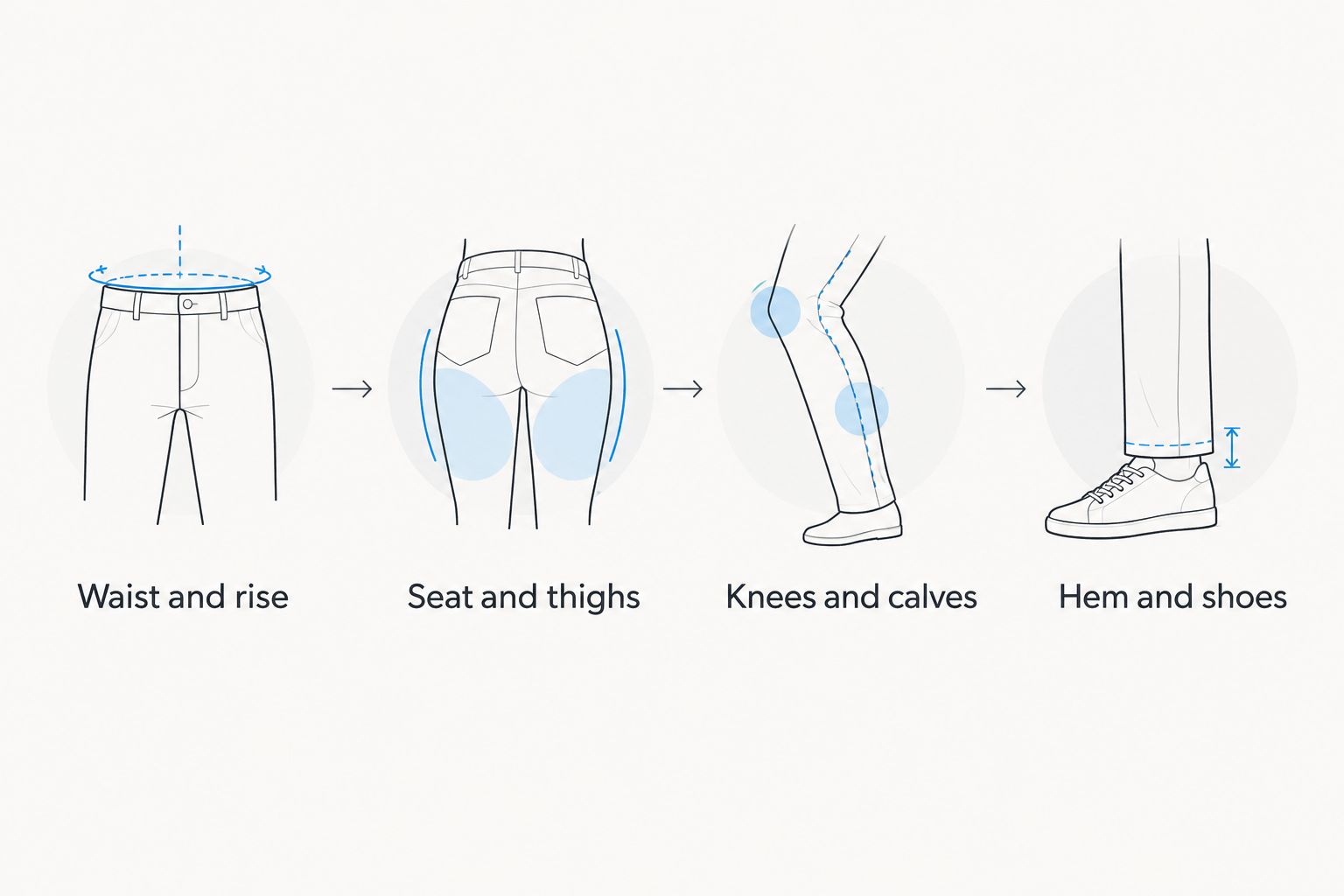
Use this sequence when comparing jeans in 2026. Assess the upper fit before the lower-leg styling, because an appealing hem cannot rescue an uncomfortable waistband or seat.
- Waist and rise: Fasten the jeans where you intend to wear them. Check that the waistband stays in position without forcing the crotch seam upwards.
- Seat and thighs: Walk and sit. Look for pulling across the pockets and restriction through the upper leg.
- Knees and calves: Bend your legs. Check whether the fabric catches or remains under tension.
- Hem and shoes: Put on your intended footwear. Judge the length and opening together.
Record measurements in centimetres when a retailer supplies a size chart. Compare like with like: body measurements and flat garment measurements are different, and a familiar size label does not remove the need to check the chart's instructions.
Which men's jeans should you choose?
Choose straight-leg jeans if you are undecided. Start with a clean finish and a comfortable upper fit, then assess the hem with your everyday shoes.
Choose relaxed tapered jeans instead when thigh room is the priority. Choose slim-fit jeans when you want a closer line, relaxed straight jeans for a loose outfit, and bootcut jeans when your boots dictate the silhouette.
For a Blkwd denim shortlist in 2026, apply the same sequence to each individual pair rather than treating the retailer name as a fit specification. Black is a separate finish decision: choose it for a cleaner outfit, then select the cut that suits your body.
FAQ
What's the best men's jeans style for everyday wear in Australia?
Straight-leg jeans are the default recommendation for everyday wear in this guide. They provide a relatively consistent lower-leg line, but the waist, seat and thighs still need to fit comfortably.
Are slim jeans better than straight-leg jeans?
Slim jeans are better for a closer silhouette; straight-leg jeans are better when you do not want a narrow lower leg. Choose by fit and outfit preference rather than treating either cut as universally better.
What jeans should I choose if I have bigger thighs?
Start with relaxed tapered jeans if you need upper-leg room and prefer a narrower hem. Check the calves too, because a strong taper can create restriction below the knee.
Can I wear black jeans to a smart-casual event?
Wear clean black jeans only when the event's dress code accepts denim. Pair them with a suitable shirt or polo, and choose tailored trousers when the dress code requires them.
Should men's jeans bunch at the ankle?
Ankle stacking is a styling choice, not a requirement for a correct fit. Check the hem with your intended shoes and avoid fabric that drags or sits beneath the heel.
Does stretch denim mean I should buy a smaller size?
Stretch denim is not a reason to buy a smaller size. Choose jeans that fit comfortably when standing and sitting, and check the garment's size guidance rather than relying on stretch to resolve tightness.
Does Blkwd sell men's jeans and clothing to wear with them?
Blkwd sells men's denim alongside clothing including shirts, polos, T-shirts and jackets. Assess each jean's stated fit and fabric details separately before choosing coordinating pieces.
One last thing
Keep a note of why your best-fitting pair works. Record the rise, thigh room, leg shape and hem—not just the size printed on the label.
That note gives your next denim search a useful starting point. If the waist fits but the thigh does not, change the cut before automatically changing the size.