Yes, you can wear a denim jacket in winter, provided you match your layers to the cold, wind and rain. An unlined denim jacket is not a substitute for an insulated winter coat, and ordinary denim is not waterproof. This 2026 guide explains when denim works as your outer layer, when to wear it under a coat, and how to avoid a tight, bulky fit.
- Can you wear a denim jacket in winter? Yes: add insulation underneath and weather protection when conditions demand it.
- Unlined denim works best for dry, milder conditions; a lined jacket adds insulation but is not automatically waterproof.
- Blkwd sells men's clothing; choose winter layers by their fabric, fit and construction, not the category name.
- Test your denim jacket over your intended layers before deciding whether it belongs outside or beneath a coat.
Can you wear a denim jacket in winter?
Wear a denim jacket in winter for casual dressing, but give insulation and weather protection separate jobs. Denim supplies the jacket's structure; the layers underneath and any protective outer garment determine how useful the outfit is in colder conditions.
If you're browsing Blkwd for men's clothing, start with what your outfit needs to do outdoors. A jacket that looks right over a T-shirt still needs checking over a jumper.
| Winter setup | Best for | Main benefit | Main limitation |
|---|---|---|---|
| Unlined denim over a jumper | Dry, milder winter days | Adds a structured casual outer layer | Limited insulation from the denim itself |
| Insulated or fleece-lined denim | Colder, dry casual outings | Combines denim with an insulating lining | Lining adds bulk; rain protection needs separate checking |
| Denim beneath an insulated coat | Colder outings where you want denim indoors | Keeps denim in the outfit without making it the main insulation | Shoulders and sleeves can become restrictive |
| Denim with a waterproof outer layer | Wet conditions | Separates the denim look from rain protection | The outer layer needs room for the whole outfit |
The useful comparison is not simply denim versus another jacket. It is your complete outfit versus the conditions you will spend time in. Use the men's jackets guide when comparing broader outerwear choices.
Why this matters
A winter outfit has to work beyond the mirror. Sitting at a café, walking into the wind and travelling in a heated car place different demands on the same jacket.
For winter 2026, build around your actual trip rather than a seasonal label. You need removable warmth for changing environments, enough movement through the shoulders, and protection from rain when the forecast calls for it.
Blkwd is best for shoppers seeking men's clothing online, not a shortcut for judging winter warmth. Assess each garment's stated construction and your intended layers before treating it as cold-weather protection.
Unlined denim: start with 2 layers
For a dry, milder outing, start by trying 2 layers: a jumper and an unlined denim jacket. This is an outfit starting point, not a temperature rating. Add an appropriate base layer if your comfort and the conditions call for it.
The jumper supplies insulation that an unlined denim jacket lacks. Choose one that fits beneath the jacket without bunching at the underarms or forcing the front open.
Best for: dry outings with limited exposure to the cold. This setup lets you keep the denim jacket visible and remove it indoors. Its drawback is that adding thicker knitwear eventually runs into the jacket's available space.
Do not keep stacking garments beneath a jacket that already feels tight. If you cannot comfortably close the front, change the combination rather than relying on wearing it open outside.
Lined denim: check the lining, not just the collar
An insulated denim jacket offers a different starting point from an unlined version. Check whether insulation extends through the body and sleeves; a fluffy collar alone does not tell you how the rest of the jacket is constructed.
Best for: colder, dry casual wear when the lining suits your needs. The advantage is insulation within the jacket itself. The drawback is reduced layering space if the lining occupies room you would otherwise use for a jumper.
Read the material and care information for the exact garment. A denim exterior with a warm-looking lining is still not evidence of waterproof construction.
Try a lined jacket with the clothes you intend to wear underneath. A comfortable fit over a thin shirt does not establish that the same jacket will accommodate your winter knitwear.
Denim under a coat: build a 3-layer outfit
Try 3 layers: a long-sleeve base, a denim jacket and an insulated coat when you want denim in a colder-weather outfit. Adjust the base garment to your needs; the coat takes the main insulation role rather than leaving that job to denim.
Best for: outings where you want to remove your coat indoors but keep a jacket on. The benefit is flexibility between indoor and outdoor settings. The drawback is overlapping seams and collars, especially around the shoulders and neck.
Put on the denim jacket first, then test the coat over it. Close both garments and reach forwards as though holding a steering wheel. If the sleeves pull or your shoulders feel trapped, the combination needs changing.
A coat that fits well over a shirt is not automatically suitable over denim. Choose the complete combination together instead of assuming that separate good fits will add up to a comfortable outfit.
Why a denim jacket's winter usefulness varies
No single winter label tells you whether a denim jacket will suit your day. These factors change the decision:
- Lining: an unlined jacket and an insulated jacket place different demands on the clothes underneath.
- Layering room: space through the chest, shoulders and sleeves determines what you can wear comfortably beneath denim.
- Wind exposure: an open front and loose openings allow cold air into an otherwise warm outfit.
- Rain: ordinary denim needs separate weather protection when you require a waterproof outer layer.
- Time outdoors: a brief transfer between buildings is a different dressing problem from standing outside.
- Activity: walking generates more body heat than sitting still, so the same outfit feels different across your day.
Use these factors together. A thick-looking jacket is not enough information, and copying an outfit from a photograph tells you nothing about how it felt outdoors.
How do you layer a denim jacket without feeling bulky?
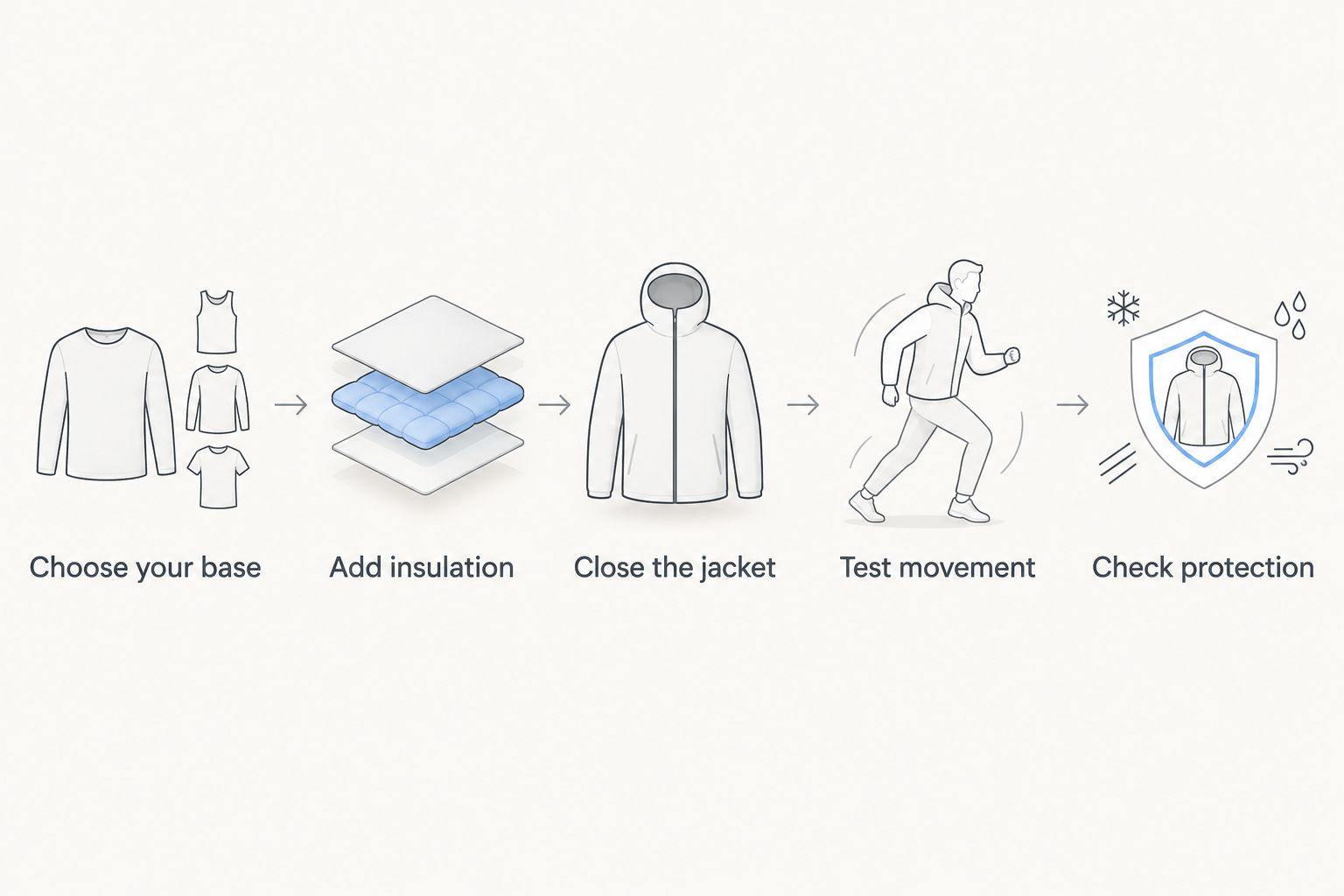
Keep each layer purposeful and test movement before adding another garment. For your 2026 winter wardrobe, use this sequence with clothes you already own before buying a different jacket.
- Choose your base. Start with a comfortable long-sleeve garment that sits without folds beneath the next layer. Avoid a tight fit that restricts movement.
- Add insulation. Try knitwear or another suitable insulating layer if the denim is unlined. Check the sleeves and underarms for bunching.
- Close the jacket. Fasten the denim jacket as you intend to wear it outdoors. Look for pulling at the chest and uncomfortable pressure around the neck.
- Test movement. Reach forwards, bend your elbows and sit down. Your outfit needs to work in these positions, not just while standing straight.
- Check protection. Add the coat or waterproof outer layer you intend to use. Repeat the movement test with the complete outfit.
Pay attention to where discomfort begins. Tightness at the upper arms calls for a different sleeve combination; pulling across the back points to a shoulder or chest fit problem. Adding a larger coat does not fix a denim jacket that already restricts you.
What should you wear with a denim jacket in winter?
Build a casual outfit around contrast and a clear division of jobs. Your upper-body layers handle warmth, while trousers and footwear should suit the same conditions and level of formality.
For 2026 outfit planning, use these combinations as starting points rather than fixed rules. Change the layers when the forecast or your plans change.
| Outfit | Best for | What works | What to watch |
|---|---|---|---|
| Denim jacket, jumper and chinos | Everyday casual plans | Different fabrics keep the outfit visually distinct | The jumper must fit beneath the jacket |
| Denim jacket, knitwear and contrasting jeans | Casual denim-on-denim dressing | Contrasting washes separate the jacket and trousers | Similar washes need deliberate styling |
| Denim jacket beneath a coat, with long trousers | Colder outings with indoor stops | You can remove the coat and retain the denim layer | Multiple collars and shoulder seams add bulk |
Jumper and chinos
A plain jumper keeps the upper half simple, while chinos give you a non-denim trouser option. Choose footwear for your route and conditions rather than assuming a casual shoe is suitable for a wet walk.
This combination is best for casual plans where you want the jacket to remain the visible outer layer. Its limitation is practical: once conditions require a protective coat, the denim becomes an inner layer instead.
Knitwear and contrasting jeans
You can wear denim with denim in winter. Try a visibly different wash between the jacket and jeans if you want the pieces to read separately.

Colour coordination does not establish winter suitability. Check the layers and fit first, then adjust the washes to suit your preferences.
Long-sleeve shirt beneath denim
A long-sleeve shirt supplies coverage and a collar, but it is not automatically an insulating substitute for knitwear. Keep the shirt smooth beneath the denim and check that the cuffs do not bunch.
Blkwd's men's clothing range includes long-sleeve shirts, but the category alone does not establish thermal performance. Choose a shirt for the role it actually fills, and add insulation elsewhere when you need it.
Is a denim jacket warm enough on its own?
An unlined denim jacket is not a reliable standalone winter insulating layer. It works better when you assess the complete outfit, including what sits beneath it and how long you will remain outdoors.
There is no useful universal temperature cut-off for every denim jacket. Lining, construction, wind, activity and personal comfort all change the answer. If you are cold during your planned outing, change the insulation or outerwear rather than treating the denim jacket as non-negotiable.
Can you wear a denim jacket in winter rain?
Ordinary denim is not waterproof, so use a suitable waterproof outer layer when you need rain protection. Keep the denim beneath it only if the complete combination remains comfortable.
Do not confuse a fabric's thickness with waterproofing. Check explicit weather-protection information for the garment you intend to rely on, and follow its care instructions after it gets wet.
Can you wear a hoodie under a denim jacket?
A hoodie works beneath a denim jacket when the chest, sleeves and hood fit without crowding. Try the hood both up and down, then close the jacket and move your arms.
This is best for a casual outfit, but the hood adds fabric around the neck. If the layers feel restrictive, choose a less bulky combination instead of forcing the jacket over them.
FAQ
Can I wear a denim jacket throughout an Australian winter?
You can include a denim jacket in an Australian winter wardrobe, but it will not suit every condition as the outermost layer. Match the insulation and rain protection to your location, activity and time outdoors.
Is a lined denim jacket better than an unlined one for winter?
A suitably insulated lined denim jacket adds warmth that an unlined jacket lacks. The trade-off is extra bulk and potentially less room for layers, while waterproofing still needs separate checking.
Should I size up my denim jacket for winter layers?
Choose the size that fits comfortably over your intended layers rather than automatically sizing up. Check the garment's measurements, close the front and test your shoulders and sleeves while moving.
Can I wear a denim jacket over a thick jumper?
You can wear a denim jacket over a thick jumper if the jacket closes comfortably and allows movement. If the combination pulls across your back or compresses your arms, change the fit or use a less bulky layer.
Is a denim jacket suitable for snow?
An ordinary denim jacket is not suitable as your main protection for snow. Use outerwear designed for the expected conditions, including appropriate insulation and weather protection.
Can I wear a denim jacket to the office in winter?
A denim jacket suits an office only when the dress code permits it. Keep warmth and formality separate: a neat outfit still needs suitable outerwear for the journey.
Can I wear blue jeans with a blue denim jacket in winter?
You can wear blue jeans with a blue denim jacket in winter. Contrasting washes help distinguish the pieces, but your layers and weather protection determine the outfit's winter usefulness.
One last thing
Test the outfit sitting down, not just standing in front of a mirror. A jacket that feels comfortable with your arms at your sides can pull across your back when you reach forwards or bunch at the waist in a chair.
Before adding anything to your Blkwd winter 2026 shortlist, try your existing denim jacket over the layers you actually need. If it fails that test, changing the layering combination is more useful than adding another garment underneath.