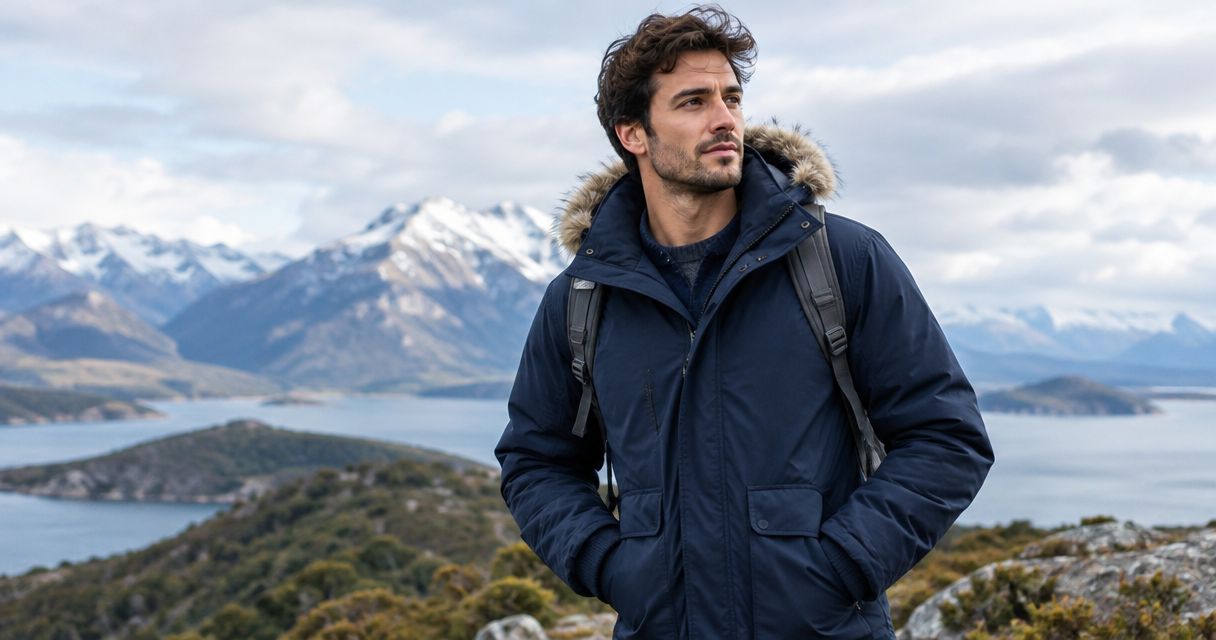
Best overall: an insulated jacket for cold, dry days. Best for wet weather: a waterproof shell over insulation. Best for mild winter layering: a fleece jacket. This 2026 guide to men's winter jackets in Australia ranks jacket types by the conditions they suit, so you can choose protection rather than just a winter look.
- For mens winter jackets australia searches, choose by rain exposure, insulation and room for layers—not appearance alone.
- An insulated jacket is the default for cold, dry days; a waterproof shell handles rain over a warm layer.
- Fleece suits mild winter layering but needs separate protection against wind and rain.
- Blkwd blazers suit smart-casual outfits, not a substitute for verified winter weather protection.
Why this matters
A jacket can look substantial without keeping rain out, and a waterproof shell can keep you dry without providing much warmth. Those are different jobs. Buying for the wrong one leaves you adding layers that still do not solve the problem.
For your 2026 winter wardrobe, start with the time you spend outside: a sheltered office commute, an exposed station platform and a long outdoor walk call for different clothing. Blkwd sells men's clothing, including jackets and blazers, but a garment's category alone does not establish insulation or waterproof performance.
Buy for your most demanding regular journey, not the warmest part of your day. You can remove an insulating layer indoors; you cannot make an unprotected outer fabric waterproof by adding a thicker shirt underneath.
What makes the best men's winter jackets?
Use these criteria before choosing a style. A strong winter purchase meets your actual conditions rather than collecting features you will not use.
- Insulation: Decide whether the jacket needs to provide warmth or simply cover a separate warm layer.
- Rain protection: Look for an explicit waterproof claim and construction details when you expect sustained rain. Water-resistant is not interchangeable with waterproof.
- Wind protection: Check the outer fabric and closures; a warm, open fleece still needs protection in exposed conditions.
- Layering room: Try the jacket over the clothing you intend to wear, with enough movement through the shoulders and arms.
- Coverage: Compare the hem, collar, cuffs and hood against your exposure. A short hem leaves more of your lower body uncovered.
- Care requirements: Read the garment label before choosing. Insulated, wool and waterproof garments do not all follow the same cleaning routine.
Men's winter jackets at a glance
The order below is a decision sequence, not a claim that every insulated jacket beats every coat. Pick the row that matches your use, then assess the individual garment.
| Rank and jacket type | Best for | Standout feature | Key limitation |
|---|---|---|---|
| 1. Insulated jacket | Cold, dry everyday wear | Built-in insulation | Insulation does not establish waterproofing |
| 2. Waterproof shell | Rain-exposed commuting | A separate weather barrier | Needs a warm layer in cold weather |
| 3. Wool coat | Dressier winter outfits | Tailored shape and longer coverage | Not a substitute for waterproof outerwear |
| 4. Fleece jacket | Mild winter layering | Easy-to-remove insulating layer | Open fleece offers limited wind protection |
| 5. Softshell jacket | Active use in cool, breezy conditions | Combines movement with weather resistance | Waterproofing varies by garment |
| 6. Denim jacket | Mild, dry casual outings | Familiar structure for casual outfits | Unlined denim supplies no dedicated insulation |
1. Insulated jacket: best for cold, dry everyday wear
An insulated jacket puts a warming layer inside the outer garment. Down and synthetic fills are common options, but the amount and construction of insulation matter alongside the fill type.
Choose this category when staying warm is your main problem and you do not routinely face sustained rain. For an everyday 2026 winter jacket, check the closure, collar and cuffs as closely as the padded body: gaps still let cold air enter.
Insulated jacket pros:
- Combines insulation and an outer layer in one garment.
- Works over everyday shirts and knitwear when the fit allows.
- Offers a direct solution for cold, dry journeys.
Insulated jacket cons:
- A padded appearance does not prove waterproofing.
- A heavily insulated version can feel excessive once you move indoors.
- Bulky layers underneath can restrict movement.
Best for: You spend time outdoors in cold, mostly dry conditions and want one main winter layer.
Check the fit while seated as well as standing. Fasten the jacket over your usual winter outfit, reach forward and make sure the shoulders move without the front pulling tight.
Verdict: Buy an insulated jacket when cold is the main problem; skip unverified rain-protection claims.
2. Waterproof shell: best for rain-exposed commuting
A waterproof shell is an outer weather barrier, not automatically a warm jacket. Wear insulation beneath it when you need both rain protection and warmth.
Look for explicit waterproof construction details, including seam treatment and protected closures. A hood also needs to stay in position when you turn your head; coverage that slips away from your face is less useful on a wet walk.
Waterproof shell pros:
- Separates weather protection from your choice of insulation.
- Lets you change the warm layer as conditions change.
- Suits journeys where rain exposure is the deciding factor.
Waterproof shell cons:
- An uninsulated shell does not replace a warming layer.
- A close fit can compress bulky clothing underneath.
- Care instructions matter for maintaining the garment's performance.
Best for: Your commute includes exposed walking, waiting or regular wet-weather travel.
Use a 3-layer system as a dressing plan: a base layer, an insulating middle layer and a weather-protective outer layer. These are clothing roles, not a guarantee of comfort at a particular temperature.
Verdict: Buy a waterproof shell when rain decides the purchase; add insulation rather than expecting the shell to supply it.
3. Wool coat: best for dressier winter outfits
A wool coat provides a more tailored alternative to padded outerwear. Longer versions also cover more of your outfit, making them a practical style choice over office clothing.
Check the fibre composition rather than assuming every coat labelled with wool contains the same blend. For your 2026 work wardrobe, assess the coat over your actual shirt, knitwear or blazer—not just a thin fitting-room layer.
Wool coat pros:
- Pairs naturally with trousers, shirts and tailored outfits.
- Longer cuts provide coverage below a jacket-length hem.
- Keeps the outfit's appearance distinct from outdoor technical clothing.
Wool coat cons:
- Wool content alone does not establish warmth or wind protection.
- A tailored fit can limit the layers underneath.
- A wool coat is not automatically waterproof.
Best for: You want a dressier outer layer for mostly dry travel between indoor settings.
Do not confuse a coat with a blazer. Blkwd blazers are best for men seeking smart-casual tailoring, not verified winter weather protection. The supplied descriptions for RHYS - SLIM BLAZER and EPPING - SLIM BLAZER describe versatile styling and textured looks, not insulation or waterproof construction.
Verdict: Buy a wool coat for dressier winter coverage; skip it as your only answer to sustained rain.
4. Fleece jacket: best for mild winter layering
A fleece jacket works as an insulating layer you can wear alone in suitable conditions or underneath an outer shell. It is a useful starting point when you need adjustable warmth rather than one substantial coat.
Wind is the important distinction. Open fleece fabric allows air movement, so fleece alone is not the same choice as a wind-blocking outer garment.
Fleece jacket pros:
- Fits a layered wardrobe rather than a single-purpose outfit.
- Works beneath a shell when the garments fit together.
- Comes off easily when you move into a warmer setting.
Fleece jacket cons:
- Open fleece needs additional protection in wind.
- Fleece alone is not waterproof outerwear.
- Bulky styles can bunch beneath a close-fitting jacket.
Best for: You move between mild outdoor conditions and indoor spaces, or already own a suitable weather shell.
Before buying, try fleece and outerwear together. Pay attention to the neck and underarms, where overlapping collars and sleeves can become uncomfortable even when each garment fits separately.
Verdict: Buy fleece for adjustable warmth; skip it as your sole wet-weather jacket.
5. Softshell jacket: best for active, cool-weather use
Softshell jackets commonly combine a flexible outer fabric with some resistance to wind and light moisture. Construction varies, so the word softshell does not establish a particular waterproof standard.
Choose this category when movement matters and you want less separation between an everyday jacket and an active outer layer. Check the individual garment's stated protection before deciding it can replace a waterproof shell.
Softshell jacket pros:
- Suits walking and other uses that require easy movement.
- Combines an outer layer with varying degrees of weather resistance.
- Offers an alternative to a bulky insulated silhouette.
Softshell jacket cons:
- Weather protection differs between products.
- Some versions provide little insulation.
- The category name does not guarantee protection in sustained rain.
Best for: You stay active outdoors in cool conditions and can match the garment's specifications to your exposure.
Verdict: Buy a softshell for movement and stated weather resistance; skip assumptions based on the name alone.
6. Denim jacket: best for mild, dry casual outings
A denim jacket is a casual outer layer, not automatically a winter-insulated garment. An unlined version relies on the clothing beneath it for additional warmth.
Choose denim when the outfit is casual, the weather is dry and your exposure is limited. If you need substantial layers to make it comfortable, check that the jacket still closes without pulling across your chest.
Denim jacket pros:
- Works with casual shirts, tees and non-matching trousers.
- Provides a structured outer layer for mild conditions.
- Can sit over light knitwear when the fit permits.
Denim jacket cons:
- Unlined denim provides no dedicated insulating fill.
- Denim is not inherently waterproof.
- Close-fitting sleeves restrict thicker layers.
Best for: You want casual styling for mild, dry winter outings rather than dependable cold-weather protection.
Verdict: Buy denim for the outfit; skip unlined denim as your default cold-weather jacket.
How the ranking works
This 2026 ranking prioritises the job each jacket performs: insulation first for cold, weather protection first for rain, then dress requirements and movement. It does not assign temperature ratings to jacket categories or treat appearance as evidence of performance.
An individual garment still needs to pass the criteria above. A well-specified shell and suitable midlayer answer a different need from a tailored coat; neither wins every situation.
Check the fit before choosing
Run 2 movement checks while wearing your intended layers: reach forward as if holding a steering wheel, then sit down with the jacket fastened. Pulling at the shoulders, pressure at the neck or a hem that rides excessively signals a fit problem.
Then assess 3 closure points: neck, cuffs and front fastening. Check whether each closes comfortably over your layers without leaving unwanted gaps.
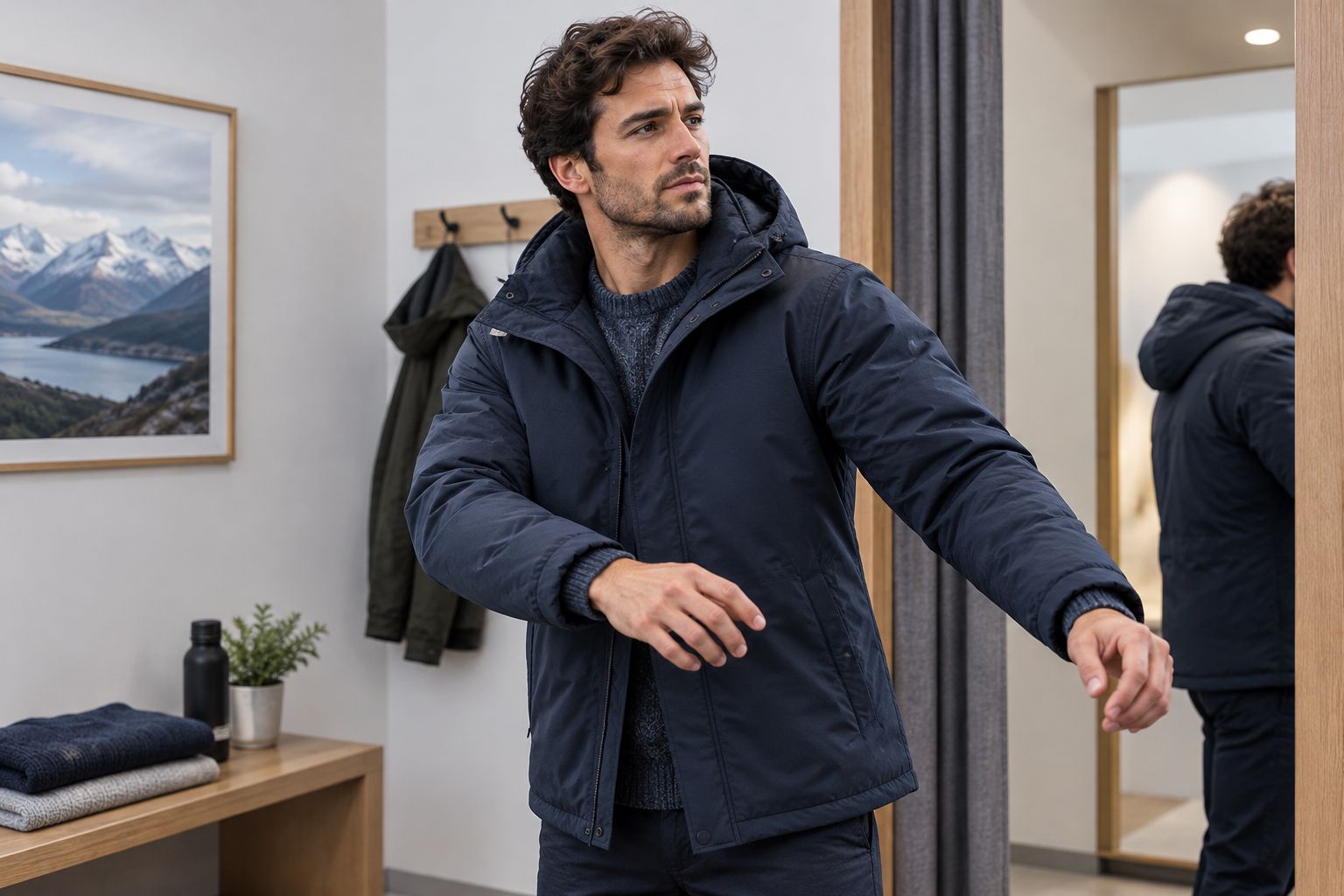
Do not fix every fit problem by sizing up. Extra room through the body does not necessarily correct shoulder position or sleeve length, and an oversized neckline can leave an unwanted gap.
Which winter jacket should you choose?
Choose an insulated jacket as the default for cold, dry everyday wear. Switch the priority to a waterproof shell if regular rain exposure is your main concern, then fit insulation underneath.
For a dressier 2026 wardrobe, choose a wool coat if its composition, fit and care requirements suit you. Keep Blkwd blazers in the smart-casual part of that wardrobe rather than treating a textured finish as proof of warmth.
If your existing jacket already handles wind and rain, a suitable middle layer is the next thing to assess. You do not need a different outer style just because the season changes.
FAQ
What's the best men's winter jacket for Australia?
An insulated jacket is the default for cold, dry everyday wear; a waterproof shell over insulation is the better choice for regular rain exposure. Match the individual garment's construction to your journey rather than buying by style alone.
Is a puffer jacket waterproof?
A puffer jacket is not automatically waterproof. Check the specific garment's waterproof claim, seam construction and closures rather than assuming padding provides rain protection.
Should I choose down or synthetic insulation?
Choose between down and synthetic insulation using the individual jacket's intended conditions, care instructions and construction. Down loses insulating effectiveness when wet, but neither fill type makes the outer jacket waterproof.
Can I wear a fleece as my winter jacket?
You can wear fleece alone in suitable mild, dry conditions. Add an appropriate outer layer when wind or rain exceeds the fleece garment's stated protection.
Is a blazer warm enough for an Australian winter?
A blazer's warmth depends on its fabric, construction, layers and the conditions. Blkwd blazer descriptions supplied here establish styling uses, not verified winter insulation or waterproofing.
Should I size up my winter jacket for layering?
Choose a jacket that fits over your intended layers rather than automatically sizing up. Fasten it, reach forward and sit down to check movement, shoulder position and sleeve comfort.
Can I wear a denim jacket in winter?
A denim jacket suits mild, dry winter outings when your layers provide enough warmth. An unlined denim jacket is not a substitute for dedicated insulation or waterproof outerwear.
One last thing
Test your next jacket while seated, not just in front of a mirror. A jacket that looks right standing up can pull across the back or bunch at the waist during the journey you bought it for.
Bring your usual winter layer to the fitting. That simple choice makes the fit check relevant to your actual wardrobe.